
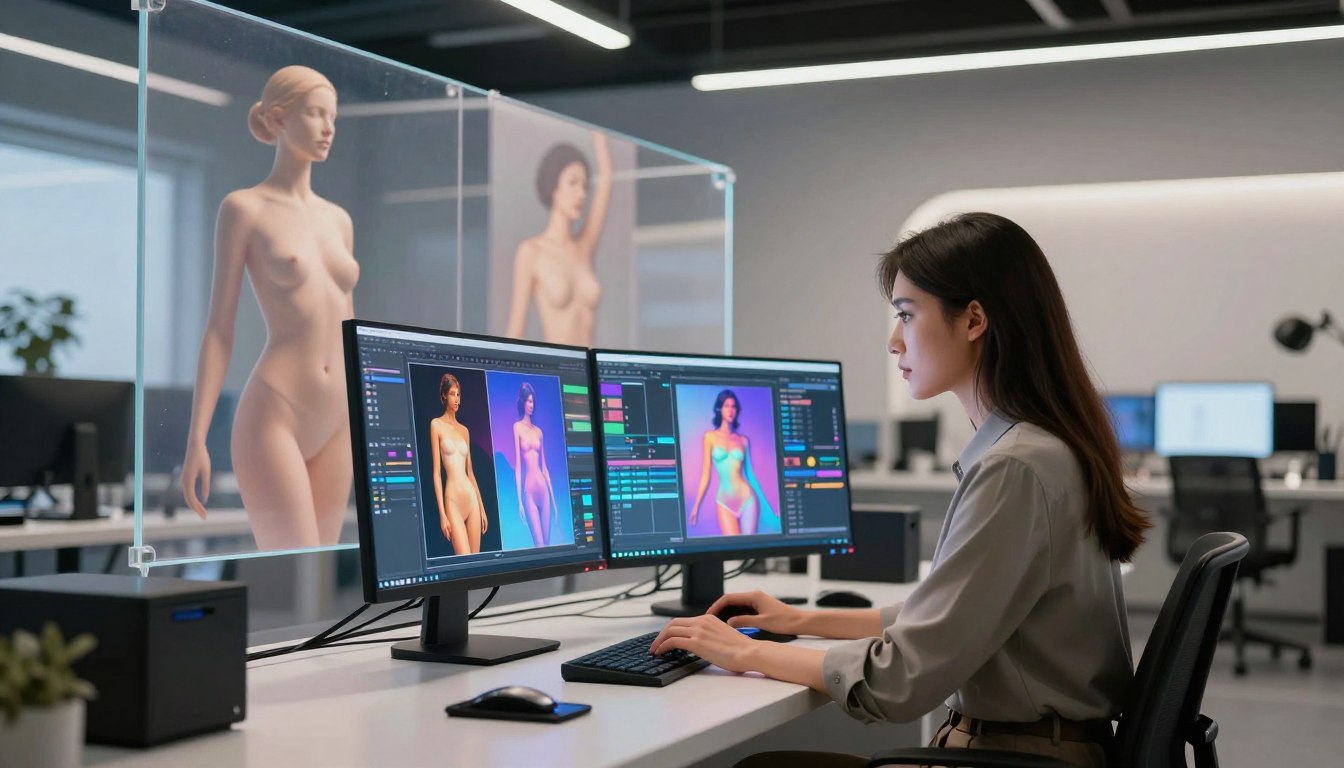
Can a few clicks truly turn an ordinary image into a realistic nude—without a designer?
This review defines what “Deep AI Nude” refers to: a class of deepnude-style tools that use modern technology to simulate nude output from a regular photo. We focus on what these services promise: speed, convenience, and basic customization, and what they cannot promise: perfect realism every time.
We frame this piece with consent first: discussion concerns consenting adults and lawful use in the United States. The article is a practical product review that compares marketing claims to real results.
You will learn how this editing works, which features matter, expected image quality, pricing models, and privacy risks. We also explain why the niche has grown now: easier tools lower the skill barrier, so complex edits no longer need advanced design skills.
Key Takeaways
- The term describes automated deepnude-style photo editing driven by new technology.
- This review highlights speed, workflow, supported photos, and realism limits.
- Use only with consenting adults and within U.S. law.
- Expect convenience, but not flawless outputs every time.
- Pay attention to privacy, pricing, and the gap between ads and actual images.
Deep AI Nude Review: What It Is and Who It’s For
A growing category of photo tools promises quick undress-style edits for consenting adults.
In plain terms, you upload a photo and a generator predicts and fills areas beneath clothing to simulate nudity. Results vary by pose, lighting, and the tool’s model.
Who should consider these services: adult users working with their own photos or with explicit permission from the person shown. Use must follow U.S. law and platform rules.
- Common use cases include nudify/undress edits, sexy portrait modes, and deepfake-style image transformations.
- Typical offerings: remove-clothes toggles, portrait filters, and face-swap options that change appearance or pose.
- Platform access matters: browser tools give fast web access across devices; an app can speed camera-roll uploads but needs install and storage.
Adopt a buyer mindset: evaluate control, consistency, speed, output options, and privacy protections. Note that marketers often use “deepnude” and “deep nude” interchangeably—focus on features and policies, not just names.
How Deep AI Nude Works: Undress, Deepnude, and AI Image Generation
In simple terms, the system treats a photo as a puzzle. It first locates clothing areas, then uses trained models and algorithms to synthesize skin, shading, and body detail where fabric once appeared.
Core mechanism
The “remove clothes” step is a reconstruction problem, not a literal reveal. Algorithms predict plausible anatomy and textures based on pose, lighting, and clothing cues.
Inputs that shape results
Clear face visibility and front-facing poses help the model match proportions. Tight clothing with distinct contours usually yields better output than loose or layered outfits.
Speed and common workflow
Expect results in seconds to a few minutes depending on load and plan. Typical flow: upload a photo, click the generate button, tweak realism settings, and regenerate until satisfied.
“Remember: generated images can differ from real anatomy — mistakes often come from complex poses, occlusions, or harsh shadows.”
- Tip: Use well-lit, simple photos for the best generation results.
- Note: Errors often appear where clothes hide body contours or the face is not visible.
Key Features and Editing Tools That Matter
Good editing starts with tools that let you target problem areas and fine-tune realism fast.
Core controls: Strong nudify settings, adjustable realism sliders, and consistent skin texture handling are the features that move the needle. These reduce odd seams and improve overall image quality.
Precise selection and brush tools
Manual selection matters. A paint-brush remover or lasso reduces weird edges where clothing meets skin. It gives you control when auto-masks fail.
Pose, style, and preset modes
Look for lingerie looks, sexy-portrait presets, and portrait generation toggles. These style modes can change shading and pose assumptions, improving believable outputs for certain photos.
Face swap and motion outputs
Face swap is a major differentiator. Some platforms swap faces in still photos only. Others extend into GIF or short video pipelines with larger file and realism needs.
Export and platform options
HD exports, watermark-free files, and body-tuning sliders are common premium perks. Browser-first platforms give fast access for testing, while an app can speed repeat edits.
“Controls, manual tools, styles, face swap, export quality, and depth of customization form a practical checklist when comparing tools.”
- Controls: strong nudify + realism sliders
- Manual tools: paint brush and masking
- Styles: lingerie, portrait presets
- Face swap: photo vs GIF/video capability
- Export: HD, watermark-free, body tuning
Image Quality and Results: Realism, Artifacts, and What to Expect
Image realism is what buyers judge first. Good edits show consistent lighting, believable skin texture, and anatomically plausible body proportions. A clean transition where clothing once was makes an edit feel authentic.
What high-quality realistic images look like
Realistic results include even skin tones, natural shadows, and a coherent silhouette. Faces that stay aligned help the model keep identity consistent. Small details, like sharp edges and correct nipples or navel placement, signal higher quality.
Common artifacts and why they happen
Even strong tools produce artifacts. Expect warped anatomy, odd hands, blurred edges, or texture smearing. These appear because algorithms guess missing pixels from patterns and training examples.
Complex poses, occlusions, and layered clothing reduce the data the model can infer. That makes errors more likely.
How to improve your results
Try front-facing photos with good, even light. Tight clothing that outlines the body helps the algorithm predict shapes accurately. Clear faces and visible contours improve identity retention.
Don’t force one difficult photo. Generate multiple versions, zoom in on edges, and compare results at full resolution.
“Compare several generations and inspect edges closely to judge whether the edited body looks coherent at full size.”
- Use simple, well-lit photos rather than busy backgrounds.
- Choose outfits that show clear contours over baggy clothes.
- Run two or three generations and pick the best result.
| Issue | Visible sign | Why it happens | Quick fix |
|---|---|---|---|
| Warped anatomy | Strange limb shape or torso | Poor pose data; occlusion | Use front-facing photo; retake with clear contours |
| Odd hands | Extra fingers or blurred fingers | Hands are hard to model from few pixels | Crop out or reposition hand before edit |
| Texture smearing | Blurry skin or inconsistent pores | Model averaging when unsure | Choose higher realism settings; try a different photo |
Pricing, Free Trials, and Value for Money
Understanding credits and tiers helps U.S. users match cost to expected workflow and output needs. Pricing varies by platform, but the model is familiar: free trials, pay-as-you-go credits, or monthly subscriptions.
Free access typically gives a small number of test generations, a standard-speed queue, and limited export options so users can check basic image quality before committing.
How trials and credits work
Most websites offer bundles like 5 / 20 / 80 requests. Each request usually maps to one generated image or one edit action.
Paid tiers often add perks: HD exports, watermark-free files, and queue priority that cuts wait seconds. Higher plans may include skip-ahead or bulk discounts for frequent users.
What to test during a trial
- Upload 2–3 different photos to compare realism across poses and lighting.
- Try varying settings on the generator to check consistency and edge handling.
- Confirm export resolution and whether the platform removes watermarks.
“Check how many requests you get per month and whether unused credits roll over.”
Two common buyer questions: How much will this cost monthly? And what happens if you run out of credits mid-project? Costs vary by use: casual tests fit small credit packs; steady editing often justifies a monthly tier for speed and consistency. If credits run out, most platforms pause generation until you buy more or upgrade.
| Model | Typical bundle | Key perks | Best for |
|---|---|---|---|
| Pay-as-you-go | 5–20 requests | No subscription, one-off credits | Occasional users testing a few images |
| Monthly tier | 20–200 requests | Queue priority, HD export, no watermark | Regular users who need speed and consistency |
| Free trial | 1–5 test generations | Standard queue, limited export | First-time users checking quality and access |
Prices and features change over years, so always verify current plan details on the platform’s website before you buy. Match the plan to real life needs: occasional experiments can live on credits; ongoing projects often save time and money with a subscription.
Privacy, Security, and Ethical Use in the United States
Before you try any edits, make consent the primary rule for every photo you process.
Consent-first editing
Only upload photos you own or those for which you have explicit permission. In the U.S., every subject must be 18 or older.
Age and content restrictions
Reputable platforms ban minors and non-consensual uploads. Read site rules before you use any remove clothes feature or similar tool.
Data handling claims
Many services promise temporary storage, auto-deletion after processing, or history clearing after 48 hours. Treat those claims as helpful but not absolute. Minimize sensitive uploads when possible.
Protecting privacy and reducing risk
- Strip metadata and avoid unique locations in photos.
- Crop or blur a face if identity is not needed.
- Use strong passwords and limit platform access on shared devices.
“Privacy is a process: choose what to upload, check the website terms, and protect accounts.”
Ethical bottom line: if consent is missing, do not generate, store, or share nudes or nude-style images, even if the technology makes it easy.
Conclusion
Deciding whether to use a deepnude or deep nude generator comes down to control, privacy, and the quality of the source photo you supply.
Pick a service that offers strong export options, manual touch-ups, and a clear privacy policy. Test with the same photos so you can compare image realism and artifacts side by side.
Expectations matter: a well-lit, simple portrait usually yields better nude or nudes edits than complex poses. Keep faces visible only when identity disclosure is intentional.
For a safe workflow, get explicit consent, limit identifiable data, and use short trials before you buy. If you plan to share with friends, confirm permission first.
Next step: shortlist two generators, run a small test set, and decide if this kind of photo art fits your needs before spending money.