

Curious how a comfort-first clothing label also doubles as a fast, transparent AI image generator for shoppers? This page explains both the style experience and the simple generator workflow so you can decide whether to start free, upgrade, or use API access.
At heart, n8ked blends style and ease. We promise quick turnaround, clear pricing, and strong quality. You can try the Free option with 3 credits or pick a Pro plan or API access based on your needs.
Pay only for what you use means no subscriptions and credit-based pricing. Free accounts get basic output and clear guardrails. Paid options boost speed, remove watermarks, and improve final output quality.
Scroll down to compare plans, learn how uploads move to downloads, and see how privacy and content rules — including handling sensitive prompts like deepnude or nude references — are enforced.
Key Takeaways
- The site combines a comfort-focused brand with an easy AI generator workflow.
- Free tier includes 3 credits; paid tiers increase speed and output quality.
- Pricing is credit-based — no hidden fees or subscriptions.
- Expect quick uploads, simple edits, and fast downloads.
- Plans differ by queue speed, watermarks, and privacy protections.
Meet n8ked: Comfort-First Style for Everyday Wear
Comfort drives every choice, from fabric to cut, so pieces fit into any routine. This label focuses on dependable everyday wear with an easy-to-like fit and a consistent feel that becomes a wardrobe staple across the United States.
Who it’s for: casual shoppers and busy users who want fast, straightforward results without complex editing or manual brushing workflows. The collection aims to be repeatable and low-maintenance.
Quality, fit, and feel: what to expect from today’s collection
The line prioritizes durable fabrics, predictable sizing, and soft hand-feel. Expect consistent quality across washes and wear, with cuts that sit comfortably for daily activities.
“Our technology supports a better shopping experience by pairing garment design with superior image tools.”
Technology note: the brand uses AI and computer vision to generate images and previews without manual brushing. That model delivers superior results faster than competitors when inputs are clear and well-lit.
- Easy to use: quick previews and repeatable outputs.
- Designed for U.S. shoppers: dependable fits and classic silhouettes.
- What to look for: queue speed, watermarks, resolution, and credits when choosing a plan.
| Feature | What it means | Why it matters |
|---|---|---|
| Queue speed | Slow vs. fast processing | Affects turnaround time for image outputs |
| Watermarks | Visible on free outputs | Removed on paid plans for clean results |
| Resolution | Standard or high-res downloads | Higher quality for print or detailed views |
| Credits | Pay-per-image model | Control cost without subscriptions |
How n8ked Works for Image Technology Users
Getting great image results starts with a simple, three-step workflow users can trust. The steps are clear and repeatable so anyone can try the generator and learn quickly.

Upload image
Step 1: Upload a photo from your device. Use a clear, well-lit shot with a natural pose for best results. Image clarity, lighting, and framing all affect realism—especially for sensitive transformations like deepnude images.
AI processing time in seconds
Step 2: The AI runs automatically. Many reviews report outputs in about 5 seconds, though actual time varies by demand and queue. “Instant” in marketing terms typically means low seconds under a fast queue.
Download outputs and file quality considerations
Step 3: Download your outputs. Free results may include watermarks and medium resolution. Paid options deliver higher resolution and no watermark. Note that compression and format affect perceived detail.
Queue basics: what “slow queue” and “fast queue” mean for results
Slow queue is shared capacity—good for occasional use. Fast queue prioritizes your job so you can iterate quickly and test more images.
| Stage | What to expect | Why it matters |
|---|---|---|
| Upload | Photo quality check | Better input = better outputs |
| Processing | Seconds to minutes by queue | Faster feedback speeds iteration |
| Download | Resolution & watermark vary | Impacts final use and sharing |
Features That Impact Results, Outputs, and Quality
Behind every polished output are resolution, queue priority, and watermark rules working together. These settings affect what you see, how quickly you get it, and whether the file is ready to share.
Output resolution and “excellent quality” positioning
Excellent quality on Pro and API means higher resolution renders and finer detail in generated images. That improves clarity for close-up views and print use.
The free tier uses medium quality. Expect softer detail and lower resolution when you choose the slow queue and free credits.
Watermarks and what changes when they’re removed
Free outputs include visible watermarks to protect the service and limit commercial sharing.
Removing watermarks on paid plans makes images usable for marketing, social posts, or client review without overlays that distract from composition.
Credits-based access and what “per image” implies
Credits are bought one-time and consumed per image generated. Each render uses credits, so your budget rises with volume.
That pay-as-you-go model avoids subscriptions and gives clear cost control for testing or bulk work.
Queue priority and workflow impact
Fast queue on Pro/API speeds iterations, letting you test many variations quickly. Slow queue is fine for occasional edits and keeps free usage fair.
Privacy-by-design: deletion and anonymization
“We promptly delete processed files and apply anonymization to reduce traceability of generated material.”
This tool states it deletes data after processing and uses anonymization techniques. That helps protect users and supports trust when working with sensitive prompts like deepnude images.
| Feature | Free | Pro / API |
|---|---|---|
| Resolution | Medium | High (excellent quality) |
| Watermarks | Yes | No |
| Queue | Slow | Fast |
| Billing model | Credits (per image) | Credits (per image) |
| Privacy | Deletion & anonymization claimed | Deletion & anonymization claimed |
Decision tip: If watermark-free outputs, speed, and top-tier quality matter, Pro or API is the better fit. For casual tests, free credits and the slow queue are a simple way to try the generator and assess results.
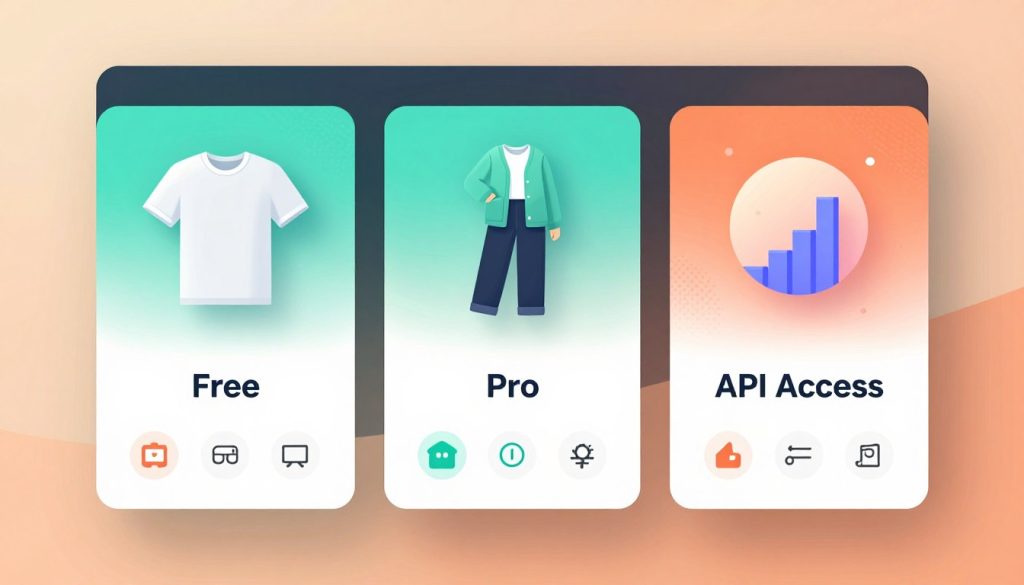
Pricing and Plans: Free, Pro, and API Access
Deciding between free credits and paid access comes down to speed, image quality, and whether you need watermark-free downloads.
Free plan highlights
Safe trial: 3 free credits let you test the generator. Outputs use medium quality and include watermarks. Jobs run on a slow queue so casual users can try features without cost.
Pro plan highlights
$0.20 per image: Unlock excellent quality, no watermarks, a fast queue, and priority support. This plan suits individuals who need clean, ready-to-share images quickly.
API plan highlights
$0.10 per image: Developer-focused model with excellent quality, no watermarks, and fast queue priority. This is the cheapest option for building integrations or scaling image services.
No subscriptions: Buy credits as a one-time payment. There are no hidden fees.
| Tier | Cost (per image) | Key features |
|---|---|---|
| Free | $0.00 (3 credits) | Medium quality, watermarks, slow queue |
| Pro | $0.20 | Excellent quality, no watermarks, fast queue, support |
| API | $0.10 | Excellent quality, no watermarks, fast queue, developer tools |
Quick cost guide: 50 images/week at Pro ≈ $10/week; at API ≈ $5/week. Choose Free to test, Pro for premium single-user work, and API for team or production integrations.
Trust, Reviews, and Brand Status Signals in the Present
Community feedback highlights a tool’s practical strengths: fast renders, high-res output, and responsive support.
What users say about speed, quality, and process
Common themes: many users praise quick turnaround—some note edits finish in about 5 seconds. Reviews call out very high-res renders, realistic detail, and straightforward workflow.
Customers also mention quick bug fixes and occasional credit gifts after issues are resolved. Those actions suggest active maintenance and care for the user experience.
How verification and listings affect perceived legitimacy
Third-party listings and verification badges shape trust. Verified entries can reassure buyers, while unverified reviews need careful reading because anyone can post on platforms like Trustpilot.
What “not approved” claims mean today
One listing shows “no longer approved” and notes a denied verification request. That flag is a signal to investigate, not an automatic disqualifier.
“Review badges and listings should be one input among price, privacy, and sample outputs.”
- Test with free credits to judge image quality and process yourself.
- Check current policies and privacy guarantees before uploading sensitive content.
- Weigh reviews, verification status, and your risk tolerance when deciding.
| Signal | What reviewers report | Buyer action |
|---|---|---|
| Speed | Finishes in seconds; fast queue praised | Try a quick test image |
| Quality | High-res, realistic outputs noted | Inspect downloaded results for detail |
| Support | Responsive fixes; credits gifted | Monitor response time after a bug |
| Listings | “Not approved” flags on some directories | Cross-check official policies and verify claims |
Conclusion
A clear payoff: fast previews, predictable pricing, and options that scale from solo shoppers to developer workflows. The generator and the tool let you test output quickly and decide which plan fits your needs.
Free starts with 3 credits, medium quality, visible watermarks, and a slow queue. Pro ($0.20 per image) and API ($0.10 per image) deliver excellent quality, no watermarks, and a fast queue. All billing is credit-based per image with no subscriptions.
Privacy notes claim deletion and anonymization after processing. Check reviews and third-party listings before scaling, and avoid sensitive prompts like deepnude or deepnude images unless you confirm policy limits on nude content.
Action: start with free credits, compare results, then pick Pro or API if you need speed or developer features today.
FAQ
What is n8ked: Stylish and Comfortable Apparel for Every Occasion?
What makes n8ked a wardrobe staple in the United States?
What should I expect in terms of quality, fit, and feel from today’s collection?
How does n8ked work for image technology users?
How do I upload an image for processing?
How long is AI processing time in seconds?
How do I download outputs and what affects file quality?
What do “slow queue” and “fast queue” mean for results?
What output resolution and “excellent quality” positioning can I expect?
Are watermarks applied and what changes when they’re removed?
How does credits-based access work and what does “per image” imply?
What privacy measures exist, including deletion after processing and anonymization?
What does the Free plan include: medium quality, watermarks, slow queue, free credits?
What does the Pro plan include:
What is n8ked: Stylish and Comfortable Apparel for Every Occasion?
n8ked is a comfort-first apparel brand offering everyday wear designed for soft feel, versatile fit, and simple styling. The collection focuses on breathable fabrics and reliable construction so pieces move with you from home to errands and casual outings. Expect modern basics that prioritize comfort without sacrificing shape or durability.What makes n8ked a wardrobe staple in the United States?Customers across the U.S. choose n8ked for its consistent fit, easy-care fabrics, and pieces that layer well. Items ship nationwide with clear size guidance and honest product images to help shoppers pick the right options. Positive reviews often highlight repeat purchases and the brand’s emphasis on wearable, low-maintenance clothing.What should I expect in terms of quality, fit, and feel from today’s collection?The collection emphasizes soft, breathable textiles, reinforced stitching at stress points, and relaxed yet flattering silhouettes. Sizes run true to the provided charts, and fabric blends are selected to reduce pilling and maintain shape after washing. Care labels give straightforward instructions to preserve the feel and fit.How does n8ked work for image technology users?The platform accepts user-provided photos for processing by image tools tied to product previews and personalization features. Upload images through the web interface or API, select the processing options you want, and the system will queue and process your files. The service is designed to be simple and fast for casual users and developers alike.How do I upload an image for processing?Use the upload button on the web dashboard or submit images via the API endpoints. Supported file types and size limits are listed in the upload modal. Be sure your image is clear and well-lit for the best results—this helps the AI produce accurate outputs.How long is AI processing time in seconds?Processing time varies by plan and queue. Typical single-image jobs in the fast queue complete within seconds to a minute. The slow queue may take several minutes during peak times. If you need guaranteed speed, choose a plan that includes fast-queue priority.How do I download outputs and what affects file quality?After processing, download links appear in your account or are returned by the API. Output quality depends on the selected resolution, original image quality, and plan level. Higher-resolution outputs and pro-level models produce clearer results suitable for larger prints or detailed previews.What do “slow queue” and “fast queue” mean for results?The slow queue is a standard processing line with lower priority, ideal for free-plan users and non-urgent jobs. The fast queue offers priority compute, reducing wait times and often delivering higher throughput and more consistent quality. Fast queue access is typically included in paid plans or available as an upgrade.What output resolution and “excellent quality” positioning can I expect?Plans that advertise “excellent quality” provide higher-resolution outputs, better artifact handling, and more refined model parameters. This yields sharper images and smoother edges. If you need a specific DPI or pixel dimension, check the plan details to confirm the maximum supported resolution.Are watermarks applied and what changes when they’re removed?Free-tier outputs usually include watermarks to protect assets and indicate trial usage. Removing watermarks is a common feature of paid plans and API access; once removed, outputs are cleaner for commercial use. Note that watermark removal is subject to the provider’s terms and appropriate content policies.How does credits-based access work and what does “per image” imply?Credits are the unit used to pay for processing. “Per image” means each processed file consumes a set number of credits based on resolution and processing options. Buy credit packs as needed, and the system deducts credits automatically when jobs complete. This pay-per-use model avoids recurring subscriptions for many users.What privacy measures exist, including deletion after processing and anonymization?The platform practices privacy-by-design: temporary storage for processing, automatic deletion after a retention window, and optional anonymization features that strip metadata. API users can request immediate deletion of files via endpoints. Review the privacy policy for retention periods and data-handling specifics.What does the Free plan include: medium quality, watermarks, slow queue, free credits?The Free plan typically offers medium-resolution outputs, watermarked results, access to the slow queue, and a small allocation of free credits to try the service. It’s intended for evaluation and casual use, not high-volume or commercial workflows.What does the Pro plan include:
FAQ
What is n8ked: Stylish and Comfortable Apparel for Every Occasion?
n8ked is a comfort-first apparel brand offering everyday wear designed for soft feel, versatile fit, and simple styling. The collection focuses on breathable fabrics and reliable construction so pieces move with you from home to errands and casual outings. Expect modern basics that prioritize comfort without sacrificing shape or durability.
What makes n8ked a wardrobe staple in the United States?
Customers across the U.S. choose n8ked for its consistent fit, easy-care fabrics, and pieces that layer well. Items ship nationwide with clear size guidance and honest product images to help shoppers pick the right options. Positive reviews often highlight repeat purchases and the brand’s emphasis on wearable, low-maintenance clothing.
What should I expect in terms of quality, fit, and feel from today’s collection?
The collection emphasizes soft, breathable textiles, reinforced stitching at stress points, and relaxed yet flattering silhouettes. Sizes run true to the provided charts, and fabric blends are selected to reduce pilling and maintain shape after washing. Care labels give straightforward instructions to preserve the feel and fit.
How does n8ked work for image technology users?
The platform accepts user-provided photos for processing by image tools tied to product previews and personalization features. Upload images through the web interface or API, select the processing options you want, and the system will queue and process your files. The service is designed to be simple and fast for casual users and developers alike.
How do I upload an image for processing?
Use the upload button on the web dashboard or submit images via the API endpoints. Supported file types and size limits are listed in the upload modal. Be sure your image is clear and well-lit for the best results—this helps the AI produce accurate outputs.
How long is AI processing time in seconds?
Processing time varies by plan and queue. Typical single-image jobs in the fast queue complete within seconds to a minute. The slow queue may take several minutes during peak times. If you need guaranteed speed, choose a plan that includes fast-queue priority.
How do I download outputs and what affects file quality?
After processing, download links appear in your account or are returned by the API. Output quality depends on the selected resolution, original image quality, and plan level. Higher-resolution outputs and pro-level models produce clearer results suitable for larger prints or detailed previews.
What do “slow queue” and “fast queue” mean for results?
The slow queue is a standard processing line with lower priority, ideal for free-plan users and non-urgent jobs. The fast queue offers priority compute, reducing wait times and often delivering higher throughput and more consistent quality. Fast queue access is typically included in paid plans or available as an upgrade.
What output resolution and “excellent quality” positioning can I expect?
Plans that advertise “excellent quality” provide higher-resolution outputs, better artifact handling, and more refined model parameters. This yields sharper images and smoother edges. If you need a specific DPI or pixel dimension, check the plan details to confirm the maximum supported resolution.
Are watermarks applied and what changes when they’re removed?
Free-tier outputs usually include watermarks to protect assets and indicate trial usage. Removing watermarks is a common feature of paid plans and API access; once removed, outputs are cleaner for commercial use. Note that watermark removal is subject to the provider’s terms and appropriate content policies.
How does credits-based access work and what does “per image” imply?
Credits are the unit used to pay for processing. “Per image” means each processed file consumes a set number of credits based on resolution and processing options. Buy credit packs as needed, and the system deducts credits automatically when jobs complete. This pay-per-use model avoids recurring subscriptions for many users.
What privacy measures exist, including deletion after processing and anonymization?
The platform practices privacy-by-design: temporary storage for processing, automatic deletion after a retention window, and optional anonymization features that strip metadata. API users can request immediate deletion of files via endpoints. Review the privacy policy for retention periods and data-handling specifics.
What does the Free plan include: medium quality, watermarks, slow queue, free credits?
The Free plan typically offers medium-resolution outputs, watermarked results, access to the slow queue, and a small allocation of free credits to try the service. It’s intended for evaluation and casual use, not high-volume or commercial workflows.
What does the Pro plan include:
FAQ
What is n8ked: Stylish and Comfortable Apparel for Every Occasion?
n8ked is a comfort-first apparel brand offering everyday wear designed for soft feel, versatile fit, and simple styling. The collection focuses on breathable fabrics and reliable construction so pieces move with you from home to errands and casual outings. Expect modern basics that prioritize comfort without sacrificing shape or durability.
What makes n8ked a wardrobe staple in the United States?
Customers across the U.S. choose n8ked for its consistent fit, easy-care fabrics, and pieces that layer well. Items ship nationwide with clear size guidance and honest product images to help shoppers pick the right options. Positive reviews often highlight repeat purchases and the brand’s emphasis on wearable, low-maintenance clothing.
What should I expect in terms of quality, fit, and feel from today’s collection?
The collection emphasizes soft, breathable textiles, reinforced stitching at stress points, and relaxed yet flattering silhouettes. Sizes run true to the provided charts, and fabric blends are selected to reduce pilling and maintain shape after washing. Care labels give straightforward instructions to preserve the feel and fit.
How does n8ked work for image technology users?
The platform accepts user-provided photos for processing by image tools tied to product previews and personalization features. Upload images through the web interface or API, select the processing options you want, and the system will queue and process your files. The service is designed to be simple and fast for casual users and developers alike.
How do I upload an image for processing?
Use the upload button on the web dashboard or submit images via the API endpoints. Supported file types and size limits are listed in the upload modal. Be sure your image is clear and well-lit for the best results—this helps the AI produce accurate outputs.
How long is AI processing time in seconds?
Processing time varies by plan and queue. Typical single-image jobs in the fast queue complete within seconds to a minute. The slow queue may take several minutes during peak times. If you need guaranteed speed, choose a plan that includes fast-queue priority.
How do I download outputs and what affects file quality?
After processing, download links appear in your account or are returned by the API. Output quality depends on the selected resolution, original image quality, and plan level. Higher-resolution outputs and pro-level models produce clearer results suitable for larger prints or detailed previews.
What do “slow queue” and “fast queue” mean for results?
The slow queue is a standard processing line with lower priority, ideal for free-plan users and non-urgent jobs. The fast queue offers priority compute, reducing wait times and often delivering higher throughput and more consistent quality. Fast queue access is typically included in paid plans or available as an upgrade.
What output resolution and “excellent quality” positioning can I expect?
Plans that advertise “excellent quality” provide higher-resolution outputs, better artifact handling, and more refined model parameters. This yields sharper images and smoother edges. If you need a specific DPI or pixel dimension, check the plan details to confirm the maximum supported resolution.
Are watermarks applied and what changes when they’re removed?
Free-tier outputs usually include watermarks to protect assets and indicate trial usage. Removing watermarks is a common feature of paid plans and API access; once removed, outputs are cleaner for commercial use. Note that watermark removal is subject to the provider’s terms and appropriate content policies.
How does credits-based access work and what does “per image” imply?
Credits are the unit used to pay for processing. “Per image” means each processed file consumes a set number of credits based on resolution and processing options. Buy credit packs as needed, and the system deducts credits automatically when jobs complete. This pay-per-use model avoids recurring subscriptions for many users.
What privacy measures exist, including deletion after processing and anonymization?
The platform practices privacy-by-design: temporary storage for processing, automatic deletion after a retention window, and optional anonymization features that strip metadata. API users can request immediate deletion of files via endpoints. Review the privacy policy for retention periods and data-handling specifics.
What does the Free plan include: medium quality, watermarks, slow queue, free credits?
The Free plan typically offers medium-resolution outputs, watermarked results, access to the slow queue, and a small allocation of free credits to try the service. It’s intended for evaluation and casual use, not high-volume or commercial workflows.
What does the Pro plan include: $0.20 per image, no watermarks, fast queue, priority support?
The Pro plan removes watermarks, provides fast-queue processing, and often includes priority customer support. Pricing examples list $0.20 per image, though actual rates depend on chosen options. Pro users benefit from higher-quality outputs and faster turnaround times than the Free tier.
What does the API plan include: $0.10 per image, no watermarks, fast queue, developer-focused?
The API plan is tailored for developers and high-volume users. It commonly offers lower per-image pricing—for example, $0.10 per image—no watermarks, fast queue access, and programmatic controls for batch processing. This plan supports integration into apps and automation pipelines.
Are there subscriptions or hidden fees, or is it one-time credit purchases?
Many providers advertise one-time credit purchases without mandatory subscriptions. This model lets users top up credits as needed. Always check the billing terms to confirm there are no recurring charges or service fees tied to specific features like priority support.
What do users say about speed, quality, and the overall process?
User reviews commonly praise fast turnaround on paid tiers, improved image clarity at higher resolutions, and clear account dashboards. Critiques usually focus on slow-queue wait times or inconsistent results on low-quality uploads. Reviews help new users set expectations around output quality and processing speed.
How do verification and listings affect perceived legitimacy?
Verified accounts, third-party listings, and positive platform reviews boost trust. Presence on reputable marketplaces or favorable coverage from tech publications signals reliability. Conversely, lack of verification or limited transparency can raise questions about service claims or data practices.
What does “not approved” mean when evaluating a tool today?
“Not approved” often indicates the tool or specific feature hasn’t met platform rules, regulatory standards, or marketplace policies. It can affect discoverability, payment processing, or integration options. Investigate the reason for non-approval before relying on the tool for critical workflows.
.20 per image, no watermarks, fast queue, priority support?The Pro plan removes watermarks, provides fast-queue processing, and often includes priority customer support. Pricing examples list
FAQ
What is n8ked: Stylish and Comfortable Apparel for Every Occasion?
n8ked is a comfort-first apparel brand offering everyday wear designed for soft feel, versatile fit, and simple styling. The collection focuses on breathable fabrics and reliable construction so pieces move with you from home to errands and casual outings. Expect modern basics that prioritize comfort without sacrificing shape or durability.
What makes n8ked a wardrobe staple in the United States?
Customers across the U.S. choose n8ked for its consistent fit, easy-care fabrics, and pieces that layer well. Items ship nationwide with clear size guidance and honest product images to help shoppers pick the right options. Positive reviews often highlight repeat purchases and the brand’s emphasis on wearable, low-maintenance clothing.
What should I expect in terms of quality, fit, and feel from today’s collection?
The collection emphasizes soft, breathable textiles, reinforced stitching at stress points, and relaxed yet flattering silhouettes. Sizes run true to the provided charts, and fabric blends are selected to reduce pilling and maintain shape after washing. Care labels give straightforward instructions to preserve the feel and fit.
How does n8ked work for image technology users?
The platform accepts user-provided photos for processing by image tools tied to product previews and personalization features. Upload images through the web interface or API, select the processing options you want, and the system will queue and process your files. The service is designed to be simple and fast for casual users and developers alike.
How do I upload an image for processing?
Use the upload button on the web dashboard or submit images via the API endpoints. Supported file types and size limits are listed in the upload modal. Be sure your image is clear and well-lit for the best results—this helps the AI produce accurate outputs.
How long is AI processing time in seconds?
Processing time varies by plan and queue. Typical single-image jobs in the fast queue complete within seconds to a minute. The slow queue may take several minutes during peak times. If you need guaranteed speed, choose a plan that includes fast-queue priority.
How do I download outputs and what affects file quality?
After processing, download links appear in your account or are returned by the API. Output quality depends on the selected resolution, original image quality, and plan level. Higher-resolution outputs and pro-level models produce clearer results suitable for larger prints or detailed previews.
What do “slow queue” and “fast queue” mean for results?
The slow queue is a standard processing line with lower priority, ideal for free-plan users and non-urgent jobs. The fast queue offers priority compute, reducing wait times and often delivering higher throughput and more consistent quality. Fast queue access is typically included in paid plans or available as an upgrade.
What output resolution and “excellent quality” positioning can I expect?
Plans that advertise “excellent quality” provide higher-resolution outputs, better artifact handling, and more refined model parameters. This yields sharper images and smoother edges. If you need a specific DPI or pixel dimension, check the plan details to confirm the maximum supported resolution.
Are watermarks applied and what changes when they’re removed?
Free-tier outputs usually include watermarks to protect assets and indicate trial usage. Removing watermarks is a common feature of paid plans and API access; once removed, outputs are cleaner for commercial use. Note that watermark removal is subject to the provider’s terms and appropriate content policies.
How does credits-based access work and what does “per image” imply?
Credits are the unit used to pay for processing. “Per image” means each processed file consumes a set number of credits based on resolution and processing options. Buy credit packs as needed, and the system deducts credits automatically when jobs complete. This pay-per-use model avoids recurring subscriptions for many users.
What privacy measures exist, including deletion after processing and anonymization?
The platform practices privacy-by-design: temporary storage for processing, automatic deletion after a retention window, and optional anonymization features that strip metadata. API users can request immediate deletion of files via endpoints. Review the privacy policy for retention periods and data-handling specifics.
What does the Free plan include: medium quality, watermarks, slow queue, free credits?
The Free plan typically offers medium-resolution outputs, watermarked results, access to the slow queue, and a small allocation of free credits to try the service. It’s intended for evaluation and casual use, not high-volume or commercial workflows.
What does the Pro plan include:
FAQ
What is n8ked: Stylish and Comfortable Apparel for Every Occasion?
n8ked is a comfort-first apparel brand offering everyday wear designed for soft feel, versatile fit, and simple styling. The collection focuses on breathable fabrics and reliable construction so pieces move with you from home to errands and casual outings. Expect modern basics that prioritize comfort without sacrificing shape or durability.
What makes n8ked a wardrobe staple in the United States?
Customers across the U.S. choose n8ked for its consistent fit, easy-care fabrics, and pieces that layer well. Items ship nationwide with clear size guidance and honest product images to help shoppers pick the right options. Positive reviews often highlight repeat purchases and the brand’s emphasis on wearable, low-maintenance clothing.
What should I expect in terms of quality, fit, and feel from today’s collection?
The collection emphasizes soft, breathable textiles, reinforced stitching at stress points, and relaxed yet flattering silhouettes. Sizes run true to the provided charts, and fabric blends are selected to reduce pilling and maintain shape after washing. Care labels give straightforward instructions to preserve the feel and fit.
How does n8ked work for image technology users?
The platform accepts user-provided photos for processing by image tools tied to product previews and personalization features. Upload images through the web interface or API, select the processing options you want, and the system will queue and process your files. The service is designed to be simple and fast for casual users and developers alike.
How do I upload an image for processing?
Use the upload button on the web dashboard or submit images via the API endpoints. Supported file types and size limits are listed in the upload modal. Be sure your image is clear and well-lit for the best results—this helps the AI produce accurate outputs.
How long is AI processing time in seconds?
Processing time varies by plan and queue. Typical single-image jobs in the fast queue complete within seconds to a minute. The slow queue may take several minutes during peak times. If you need guaranteed speed, choose a plan that includes fast-queue priority.
How do I download outputs and what affects file quality?
After processing, download links appear in your account or are returned by the API. Output quality depends on the selected resolution, original image quality, and plan level. Higher-resolution outputs and pro-level models produce clearer results suitable for larger prints or detailed previews.
What do “slow queue” and “fast queue” mean for results?
The slow queue is a standard processing line with lower priority, ideal for free-plan users and non-urgent jobs. The fast queue offers priority compute, reducing wait times and often delivering higher throughput and more consistent quality. Fast queue access is typically included in paid plans or available as an upgrade.
What output resolution and “excellent quality” positioning can I expect?
Plans that advertise “excellent quality” provide higher-resolution outputs, better artifact handling, and more refined model parameters. This yields sharper images and smoother edges. If you need a specific DPI or pixel dimension, check the plan details to confirm the maximum supported resolution.
Are watermarks applied and what changes when they’re removed?
Free-tier outputs usually include watermarks to protect assets and indicate trial usage. Removing watermarks is a common feature of paid plans and API access; once removed, outputs are cleaner for commercial use. Note that watermark removal is subject to the provider’s terms and appropriate content policies.
How does credits-based access work and what does “per image” imply?
Credits are the unit used to pay for processing. “Per image” means each processed file consumes a set number of credits based on resolution and processing options. Buy credit packs as needed, and the system deducts credits automatically when jobs complete. This pay-per-use model avoids recurring subscriptions for many users.
What privacy measures exist, including deletion after processing and anonymization?
The platform practices privacy-by-design: temporary storage for processing, automatic deletion after a retention window, and optional anonymization features that strip metadata. API users can request immediate deletion of files via endpoints. Review the privacy policy for retention periods and data-handling specifics.
What does the Free plan include: medium quality, watermarks, slow queue, free credits?
The Free plan typically offers medium-resolution outputs, watermarked results, access to the slow queue, and a small allocation of free credits to try the service. It’s intended for evaluation and casual use, not high-volume or commercial workflows.
What does the Pro plan include: $0.20 per image, no watermarks, fast queue, priority support?
The Pro plan removes watermarks, provides fast-queue processing, and often includes priority customer support. Pricing examples list $0.20 per image, though actual rates depend on chosen options. Pro users benefit from higher-quality outputs and faster turnaround times than the Free tier.
What does the API plan include: $0.10 per image, no watermarks, fast queue, developer-focused?
The API plan is tailored for developers and high-volume users. It commonly offers lower per-image pricing—for example, $0.10 per image—no watermarks, fast queue access, and programmatic controls for batch processing. This plan supports integration into apps and automation pipelines.
Are there subscriptions or hidden fees, or is it one-time credit purchases?
Many providers advertise one-time credit purchases without mandatory subscriptions. This model lets users top up credits as needed. Always check the billing terms to confirm there are no recurring charges or service fees tied to specific features like priority support.
What do users say about speed, quality, and the overall process?
User reviews commonly praise fast turnaround on paid tiers, improved image clarity at higher resolutions, and clear account dashboards. Critiques usually focus on slow-queue wait times or inconsistent results on low-quality uploads. Reviews help new users set expectations around output quality and processing speed.
How do verification and listings affect perceived legitimacy?
Verified accounts, third-party listings, and positive platform reviews boost trust. Presence on reputable marketplaces or favorable coverage from tech publications signals reliability. Conversely, lack of verification or limited transparency can raise questions about service claims or data practices.
What does “not approved” mean when evaluating a tool today?
“Not approved” often indicates the tool or specific feature hasn’t met platform rules, regulatory standards, or marketplace policies. It can affect discoverability, payment processing, or integration options. Investigate the reason for non-approval before relying on the tool for critical workflows.
.20 per image, though actual rates depend on chosen options. Pro users benefit from higher-quality outputs and faster turnaround times than the Free tier.What does the API plan include:
FAQ
What is n8ked: Stylish and Comfortable Apparel for Every Occasion?
n8ked is a comfort-first apparel brand offering everyday wear designed for soft feel, versatile fit, and simple styling. The collection focuses on breathable fabrics and reliable construction so pieces move with you from home to errands and casual outings. Expect modern basics that prioritize comfort without sacrificing shape or durability.
What makes n8ked a wardrobe staple in the United States?
Customers across the U.S. choose n8ked for its consistent fit, easy-care fabrics, and pieces that layer well. Items ship nationwide with clear size guidance and honest product images to help shoppers pick the right options. Positive reviews often highlight repeat purchases and the brand’s emphasis on wearable, low-maintenance clothing.
What should I expect in terms of quality, fit, and feel from today’s collection?
The collection emphasizes soft, breathable textiles, reinforced stitching at stress points, and relaxed yet flattering silhouettes. Sizes run true to the provided charts, and fabric blends are selected to reduce pilling and maintain shape after washing. Care labels give straightforward instructions to preserve the feel and fit.
How does n8ked work for image technology users?
The platform accepts user-provided photos for processing by image tools tied to product previews and personalization features. Upload images through the web interface or API, select the processing options you want, and the system will queue and process your files. The service is designed to be simple and fast for casual users and developers alike.
How do I upload an image for processing?
Use the upload button on the web dashboard or submit images via the API endpoints. Supported file types and size limits are listed in the upload modal. Be sure your image is clear and well-lit for the best results—this helps the AI produce accurate outputs.
How long is AI processing time in seconds?
Processing time varies by plan and queue. Typical single-image jobs in the fast queue complete within seconds to a minute. The slow queue may take several minutes during peak times. If you need guaranteed speed, choose a plan that includes fast-queue priority.
How do I download outputs and what affects file quality?
After processing, download links appear in your account or are returned by the API. Output quality depends on the selected resolution, original image quality, and plan level. Higher-resolution outputs and pro-level models produce clearer results suitable for larger prints or detailed previews.
What do “slow queue” and “fast queue” mean for results?
The slow queue is a standard processing line with lower priority, ideal for free-plan users and non-urgent jobs. The fast queue offers priority compute, reducing wait times and often delivering higher throughput and more consistent quality. Fast queue access is typically included in paid plans or available as an upgrade.
What output resolution and “excellent quality” positioning can I expect?
Plans that advertise “excellent quality” provide higher-resolution outputs, better artifact handling, and more refined model parameters. This yields sharper images and smoother edges. If you need a specific DPI or pixel dimension, check the plan details to confirm the maximum supported resolution.
Are watermarks applied and what changes when they’re removed?
Free-tier outputs usually include watermarks to protect assets and indicate trial usage. Removing watermarks is a common feature of paid plans and API access; once removed, outputs are cleaner for commercial use. Note that watermark removal is subject to the provider’s terms and appropriate content policies.
How does credits-based access work and what does “per image” imply?
Credits are the unit used to pay for processing. “Per image” means each processed file consumes a set number of credits based on resolution and processing options. Buy credit packs as needed, and the system deducts credits automatically when jobs complete. This pay-per-use model avoids recurring subscriptions for many users.
What privacy measures exist, including deletion after processing and anonymization?
The platform practices privacy-by-design: temporary storage for processing, automatic deletion after a retention window, and optional anonymization features that strip metadata. API users can request immediate deletion of files via endpoints. Review the privacy policy for retention periods and data-handling specifics.
What does the Free plan include: medium quality, watermarks, slow queue, free credits?
The Free plan typically offers medium-resolution outputs, watermarked results, access to the slow queue, and a small allocation of free credits to try the service. It’s intended for evaluation and casual use, not high-volume or commercial workflows.
What does the Pro plan include:
FAQ
What is n8ked: Stylish and Comfortable Apparel for Every Occasion?
n8ked is a comfort-first apparel brand offering everyday wear designed for soft feel, versatile fit, and simple styling. The collection focuses on breathable fabrics and reliable construction so pieces move with you from home to errands and casual outings. Expect modern basics that prioritize comfort without sacrificing shape or durability.
What makes n8ked a wardrobe staple in the United States?
Customers across the U.S. choose n8ked for its consistent fit, easy-care fabrics, and pieces that layer well. Items ship nationwide with clear size guidance and honest product images to help shoppers pick the right options. Positive reviews often highlight repeat purchases and the brand’s emphasis on wearable, low-maintenance clothing.
What should I expect in terms of quality, fit, and feel from today’s collection?
The collection emphasizes soft, breathable textiles, reinforced stitching at stress points, and relaxed yet flattering silhouettes. Sizes run true to the provided charts, and fabric blends are selected to reduce pilling and maintain shape after washing. Care labels give straightforward instructions to preserve the feel and fit.
How does n8ked work for image technology users?
The platform accepts user-provided photos for processing by image tools tied to product previews and personalization features. Upload images through the web interface or API, select the processing options you want, and the system will queue and process your files. The service is designed to be simple and fast for casual users and developers alike.
How do I upload an image for processing?
Use the upload button on the web dashboard or submit images via the API endpoints. Supported file types and size limits are listed in the upload modal. Be sure your image is clear and well-lit for the best results—this helps the AI produce accurate outputs.
How long is AI processing time in seconds?
Processing time varies by plan and queue. Typical single-image jobs in the fast queue complete within seconds to a minute. The slow queue may take several minutes during peak times. If you need guaranteed speed, choose a plan that includes fast-queue priority.
How do I download outputs and what affects file quality?
After processing, download links appear in your account or are returned by the API. Output quality depends on the selected resolution, original image quality, and plan level. Higher-resolution outputs and pro-level models produce clearer results suitable for larger prints or detailed previews.
What do “slow queue” and “fast queue” mean for results?
The slow queue is a standard processing line with lower priority, ideal for free-plan users and non-urgent jobs. The fast queue offers priority compute, reducing wait times and often delivering higher throughput and more consistent quality. Fast queue access is typically included in paid plans or available as an upgrade.
What output resolution and “excellent quality” positioning can I expect?
Plans that advertise “excellent quality” provide higher-resolution outputs, better artifact handling, and more refined model parameters. This yields sharper images and smoother edges. If you need a specific DPI or pixel dimension, check the plan details to confirm the maximum supported resolution.
Are watermarks applied and what changes when they’re removed?
Free-tier outputs usually include watermarks to protect assets and indicate trial usage. Removing watermarks is a common feature of paid plans and API access; once removed, outputs are cleaner for commercial use. Note that watermark removal is subject to the provider’s terms and appropriate content policies.
How does credits-based access work and what does “per image” imply?
Credits are the unit used to pay for processing. “Per image” means each processed file consumes a set number of credits based on resolution and processing options. Buy credit packs as needed, and the system deducts credits automatically when jobs complete. This pay-per-use model avoids recurring subscriptions for many users.
What privacy measures exist, including deletion after processing and anonymization?
The platform practices privacy-by-design: temporary storage for processing, automatic deletion after a retention window, and optional anonymization features that strip metadata. API users can request immediate deletion of files via endpoints. Review the privacy policy for retention periods and data-handling specifics.
What does the Free plan include: medium quality, watermarks, slow queue, free credits?
The Free plan typically offers medium-resolution outputs, watermarked results, access to the slow queue, and a small allocation of free credits to try the service. It’s intended for evaluation and casual use, not high-volume or commercial workflows.
What does the Pro plan include: $0.20 per image, no watermarks, fast queue, priority support?
The Pro plan removes watermarks, provides fast-queue processing, and often includes priority customer support. Pricing examples list $0.20 per image, though actual rates depend on chosen options. Pro users benefit from higher-quality outputs and faster turnaround times than the Free tier.
What does the API plan include: $0.10 per image, no watermarks, fast queue, developer-focused?
The API plan is tailored for developers and high-volume users. It commonly offers lower per-image pricing—for example, $0.10 per image—no watermarks, fast queue access, and programmatic controls for batch processing. This plan supports integration into apps and automation pipelines.
Are there subscriptions or hidden fees, or is it one-time credit purchases?
Many providers advertise one-time credit purchases without mandatory subscriptions. This model lets users top up credits as needed. Always check the billing terms to confirm there are no recurring charges or service fees tied to specific features like priority support.
What do users say about speed, quality, and the overall process?
User reviews commonly praise fast turnaround on paid tiers, improved image clarity at higher resolutions, and clear account dashboards. Critiques usually focus on slow-queue wait times or inconsistent results on low-quality uploads. Reviews help new users set expectations around output quality and processing speed.
How do verification and listings affect perceived legitimacy?
Verified accounts, third-party listings, and positive platform reviews boost trust. Presence on reputable marketplaces or favorable coverage from tech publications signals reliability. Conversely, lack of verification or limited transparency can raise questions about service claims or data practices.
What does “not approved” mean when evaluating a tool today?
“Not approved” often indicates the tool or specific feature hasn’t met platform rules, regulatory standards, or marketplace policies. It can affect discoverability, payment processing, or integration options. Investigate the reason for non-approval before relying on the tool for critical workflows.
.10 per image, no watermarks, fast queue, developer-focused?The API plan is tailored for developers and high-volume users. It commonly offers lower per-image pricing—for example,
FAQ
What is n8ked: Stylish and Comfortable Apparel for Every Occasion?
n8ked is a comfort-first apparel brand offering everyday wear designed for soft feel, versatile fit, and simple styling. The collection focuses on breathable fabrics and reliable construction so pieces move with you from home to errands and casual outings. Expect modern basics that prioritize comfort without sacrificing shape or durability.
What makes n8ked a wardrobe staple in the United States?
Customers across the U.S. choose n8ked for its consistent fit, easy-care fabrics, and pieces that layer well. Items ship nationwide with clear size guidance and honest product images to help shoppers pick the right options. Positive reviews often highlight repeat purchases and the brand’s emphasis on wearable, low-maintenance clothing.
What should I expect in terms of quality, fit, and feel from today’s collection?
The collection emphasizes soft, breathable textiles, reinforced stitching at stress points, and relaxed yet flattering silhouettes. Sizes run true to the provided charts, and fabric blends are selected to reduce pilling and maintain shape after washing. Care labels give straightforward instructions to preserve the feel and fit.
How does n8ked work for image technology users?
The platform accepts user-provided photos for processing by image tools tied to product previews and personalization features. Upload images through the web interface or API, select the processing options you want, and the system will queue and process your files. The service is designed to be simple and fast for casual users and developers alike.
How do I upload an image for processing?
Use the upload button on the web dashboard or submit images via the API endpoints. Supported file types and size limits are listed in the upload modal. Be sure your image is clear and well-lit for the best results—this helps the AI produce accurate outputs.
How long is AI processing time in seconds?
Processing time varies by plan and queue. Typical single-image jobs in the fast queue complete within seconds to a minute. The slow queue may take several minutes during peak times. If you need guaranteed speed, choose a plan that includes fast-queue priority.
How do I download outputs and what affects file quality?
After processing, download links appear in your account or are returned by the API. Output quality depends on the selected resolution, original image quality, and plan level. Higher-resolution outputs and pro-level models produce clearer results suitable for larger prints or detailed previews.
What do “slow queue” and “fast queue” mean for results?
The slow queue is a standard processing line with lower priority, ideal for free-plan users and non-urgent jobs. The fast queue offers priority compute, reducing wait times and often delivering higher throughput and more consistent quality. Fast queue access is typically included in paid plans or available as an upgrade.
What output resolution and “excellent quality” positioning can I expect?
Plans that advertise “excellent quality” provide higher-resolution outputs, better artifact handling, and more refined model parameters. This yields sharper images and smoother edges. If you need a specific DPI or pixel dimension, check the plan details to confirm the maximum supported resolution.
Are watermarks applied and what changes when they’re removed?
Free-tier outputs usually include watermarks to protect assets and indicate trial usage. Removing watermarks is a common feature of paid plans and API access; once removed, outputs are cleaner for commercial use. Note that watermark removal is subject to the provider’s terms and appropriate content policies.
How does credits-based access work and what does “per image” imply?
Credits are the unit used to pay for processing. “Per image” means each processed file consumes a set number of credits based on resolution and processing options. Buy credit packs as needed, and the system deducts credits automatically when jobs complete. This pay-per-use model avoids recurring subscriptions for many users.
What privacy measures exist, including deletion after processing and anonymization?
The platform practices privacy-by-design: temporary storage for processing, automatic deletion after a retention window, and optional anonymization features that strip metadata. API users can request immediate deletion of files via endpoints. Review the privacy policy for retention periods and data-handling specifics.
What does the Free plan include: medium quality, watermarks, slow queue, free credits?
The Free plan typically offers medium-resolution outputs, watermarked results, access to the slow queue, and a small allocation of free credits to try the service. It’s intended for evaluation and casual use, not high-volume or commercial workflows.
What does the Pro plan include:
FAQ
What is n8ked: Stylish and Comfortable Apparel for Every Occasion?
n8ked is a comfort-first apparel brand offering everyday wear designed for soft feel, versatile fit, and simple styling. The collection focuses on breathable fabrics and reliable construction so pieces move with you from home to errands and casual outings. Expect modern basics that prioritize comfort without sacrificing shape or durability.
What makes n8ked a wardrobe staple in the United States?
Customers across the U.S. choose n8ked for its consistent fit, easy-care fabrics, and pieces that layer well. Items ship nationwide with clear size guidance and honest product images to help shoppers pick the right options. Positive reviews often highlight repeat purchases and the brand’s emphasis on wearable, low-maintenance clothing.
What should I expect in terms of quality, fit, and feel from today’s collection?
The collection emphasizes soft, breathable textiles, reinforced stitching at stress points, and relaxed yet flattering silhouettes. Sizes run true to the provided charts, and fabric blends are selected to reduce pilling and maintain shape after washing. Care labels give straightforward instructions to preserve the feel and fit.
How does n8ked work for image technology users?
The platform accepts user-provided photos for processing by image tools tied to product previews and personalization features. Upload images through the web interface or API, select the processing options you want, and the system will queue and process your files. The service is designed to be simple and fast for casual users and developers alike.
How do I upload an image for processing?
Use the upload button on the web dashboard or submit images via the API endpoints. Supported file types and size limits are listed in the upload modal. Be sure your image is clear and well-lit for the best results—this helps the AI produce accurate outputs.
How long is AI processing time in seconds?
Processing time varies by plan and queue. Typical single-image jobs in the fast queue complete within seconds to a minute. The slow queue may take several minutes during peak times. If you need guaranteed speed, choose a plan that includes fast-queue priority.
How do I download outputs and what affects file quality?
After processing, download links appear in your account or are returned by the API. Output quality depends on the selected resolution, original image quality, and plan level. Higher-resolution outputs and pro-level models produce clearer results suitable for larger prints or detailed previews.
What do “slow queue” and “fast queue” mean for results?
The slow queue is a standard processing line with lower priority, ideal for free-plan users and non-urgent jobs. The fast queue offers priority compute, reducing wait times and often delivering higher throughput and more consistent quality. Fast queue access is typically included in paid plans or available as an upgrade.
What output resolution and “excellent quality” positioning can I expect?
Plans that advertise “excellent quality” provide higher-resolution outputs, better artifact handling, and more refined model parameters. This yields sharper images and smoother edges. If you need a specific DPI or pixel dimension, check the plan details to confirm the maximum supported resolution.
Are watermarks applied and what changes when they’re removed?
Free-tier outputs usually include watermarks to protect assets and indicate trial usage. Removing watermarks is a common feature of paid plans and API access; once removed, outputs are cleaner for commercial use. Note that watermark removal is subject to the provider’s terms and appropriate content policies.
How does credits-based access work and what does “per image” imply?
Credits are the unit used to pay for processing. “Per image” means each processed file consumes a set number of credits based on resolution and processing options. Buy credit packs as needed, and the system deducts credits automatically when jobs complete. This pay-per-use model avoids recurring subscriptions for many users.
What privacy measures exist, including deletion after processing and anonymization?
The platform practices privacy-by-design: temporary storage for processing, automatic deletion after a retention window, and optional anonymization features that strip metadata. API users can request immediate deletion of files via endpoints. Review the privacy policy for retention periods and data-handling specifics.
What does the Free plan include: medium quality, watermarks, slow queue, free credits?
The Free plan typically offers medium-resolution outputs, watermarked results, access to the slow queue, and a small allocation of free credits to try the service. It’s intended for evaluation and casual use, not high-volume or commercial workflows.
What does the Pro plan include: $0.20 per image, no watermarks, fast queue, priority support?
The Pro plan removes watermarks, provides fast-queue processing, and often includes priority customer support. Pricing examples list $0.20 per image, though actual rates depend on chosen options. Pro users benefit from higher-quality outputs and faster turnaround times than the Free tier.
What does the API plan include: $0.10 per image, no watermarks, fast queue, developer-focused?
The API plan is tailored for developers and high-volume users. It commonly offers lower per-image pricing—for example, $0.10 per image—no watermarks, fast queue access, and programmatic controls for batch processing. This plan supports integration into apps and automation pipelines.
Are there subscriptions or hidden fees, or is it one-time credit purchases?
Many providers advertise one-time credit purchases without mandatory subscriptions. This model lets users top up credits as needed. Always check the billing terms to confirm there are no recurring charges or service fees tied to specific features like priority support.
What do users say about speed, quality, and the overall process?
User reviews commonly praise fast turnaround on paid tiers, improved image clarity at higher resolutions, and clear account dashboards. Critiques usually focus on slow-queue wait times or inconsistent results on low-quality uploads. Reviews help new users set expectations around output quality and processing speed.
How do verification and listings affect perceived legitimacy?
Verified accounts, third-party listings, and positive platform reviews boost trust. Presence on reputable marketplaces or favorable coverage from tech publications signals reliability. Conversely, lack of verification or limited transparency can raise questions about service claims or data practices.
What does “not approved” mean when evaluating a tool today?
“Not approved” often indicates the tool or specific feature hasn’t met platform rules, regulatory standards, or marketplace policies. It can affect discoverability, payment processing, or integration options. Investigate the reason for non-approval before relying on the tool for critical workflows.
.10 per image—no watermarks, fast queue access, and programmatic controls for batch processing. This plan supports integration into apps and automation pipelines.Are there subscriptions or hidden fees, or is it one-time credit purchases?Many providers advertise one-time credit purchases without mandatory subscriptions. This model lets users top up credits as needed. Always check the billing terms to confirm there are no recurring charges or service fees tied to specific features like priority support.What do users say about speed, quality, and the overall process?User reviews commonly praise fast turnaround on paid tiers, improved image clarity at higher resolutions, and clear account dashboards. Critiques usually focus on slow-queue wait times or inconsistent results on low-quality uploads. Reviews help new users set expectations around output quality and processing speed.How do verification and listings affect perceived legitimacy?Verified accounts, third-party listings, and positive platform reviews boost trust. Presence on reputable marketplaces or favorable coverage from tech publications signals reliability. Conversely, lack of verification or limited transparency can raise questions about service claims or data practices.What does “not approved” mean when evaluating a tool today?“Not approved” often indicates the tool or specific feature hasn’t met platform rules, regulatory standards, or marketplace policies. It can affect discoverability, payment processing, or integration options. Investigate the reason for non-approval before relying on the tool for critical workflows.
.20 per image, no watermarks, fast queue, priority support?
The Pro plan removes watermarks, provides fast-queue processing, and often includes priority customer support. Pricing examples list
FAQ
What is n8ked: Stylish and Comfortable Apparel for Every Occasion?
n8ked is a comfort-first apparel brand offering everyday wear designed for soft feel, versatile fit, and simple styling. The collection focuses on breathable fabrics and reliable construction so pieces move with you from home to errands and casual outings. Expect modern basics that prioritize comfort without sacrificing shape or durability.
What makes n8ked a wardrobe staple in the United States?
Customers across the U.S. choose n8ked for its consistent fit, easy-care fabrics, and pieces that layer well. Items ship nationwide with clear size guidance and honest product images to help shoppers pick the right options. Positive reviews often highlight repeat purchases and the brand’s emphasis on wearable, low-maintenance clothing.
What should I expect in terms of quality, fit, and feel from today’s collection?
The collection emphasizes soft, breathable textiles, reinforced stitching at stress points, and relaxed yet flattering silhouettes. Sizes run true to the provided charts, and fabric blends are selected to reduce pilling and maintain shape after washing. Care labels give straightforward instructions to preserve the feel and fit.
How does n8ked work for image technology users?
The platform accepts user-provided photos for processing by image tools tied to product previews and personalization features. Upload images through the web interface or API, select the processing options you want, and the system will queue and process your files. The service is designed to be simple and fast for casual users and developers alike.
How do I upload an image for processing?
Use the upload button on the web dashboard or submit images via the API endpoints. Supported file types and size limits are listed in the upload modal. Be sure your image is clear and well-lit for the best results—this helps the AI produce accurate outputs.
How long is AI processing time in seconds?
Processing time varies by plan and queue. Typical single-image jobs in the fast queue complete within seconds to a minute. The slow queue may take several minutes during peak times. If you need guaranteed speed, choose a plan that includes fast-queue priority.
How do I download outputs and what affects file quality?
After processing, download links appear in your account or are returned by the API. Output quality depends on the selected resolution, original image quality, and plan level. Higher-resolution outputs and pro-level models produce clearer results suitable for larger prints or detailed previews.
What do “slow queue” and “fast queue” mean for results?
The slow queue is a standard processing line with lower priority, ideal for free-plan users and non-urgent jobs. The fast queue offers priority compute, reducing wait times and often delivering higher throughput and more consistent quality. Fast queue access is typically included in paid plans or available as an upgrade.
What output resolution and “excellent quality” positioning can I expect?
Plans that advertise “excellent quality” provide higher-resolution outputs, better artifact handling, and more refined model parameters. This yields sharper images and smoother edges. If you need a specific DPI or pixel dimension, check the plan details to confirm the maximum supported resolution.
Are watermarks applied and what changes when they’re removed?
Free-tier outputs usually include watermarks to protect assets and indicate trial usage. Removing watermarks is a common feature of paid plans and API access; once removed, outputs are cleaner for commercial use. Note that watermark removal is subject to the provider’s terms and appropriate content policies.
How does credits-based access work and what does “per image” imply?
Credits are the unit used to pay for processing. “Per image” means each processed file consumes a set number of credits based on resolution and processing options. Buy credit packs as needed, and the system deducts credits automatically when jobs complete. This pay-per-use model avoids recurring subscriptions for many users.
What privacy measures exist, including deletion after processing and anonymization?
The platform practices privacy-by-design: temporary storage for processing, automatic deletion after a retention window, and optional anonymization features that strip metadata. API users can request immediate deletion of files via endpoints. Review the privacy policy for retention periods and data-handling specifics.
What does the Free plan include: medium quality, watermarks, slow queue, free credits?
The Free plan typically offers medium-resolution outputs, watermarked results, access to the slow queue, and a small allocation of free credits to try the service. It’s intended for evaluation and casual use, not high-volume or commercial workflows.
What does the Pro plan include: $0.20 per image, no watermarks, fast queue, priority support?
The Pro plan removes watermarks, provides fast-queue processing, and often includes priority customer support. Pricing examples list $0.20 per image, though actual rates depend on chosen options. Pro users benefit from higher-quality outputs and faster turnaround times than the Free tier.
What does the API plan include: $0.10 per image, no watermarks, fast queue, developer-focused?
The API plan is tailored for developers and high-volume users. It commonly offers lower per-image pricing—for example, $0.10 per image—no watermarks, fast queue access, and programmatic controls for batch processing. This plan supports integration into apps and automation pipelines.
Are there subscriptions or hidden fees, or is it one-time credit purchases?
Many providers advertise one-time credit purchases without mandatory subscriptions. This model lets users top up credits as needed. Always check the billing terms to confirm there are no recurring charges or service fees tied to specific features like priority support.
What do users say about speed, quality, and the overall process?
User reviews commonly praise fast turnaround on paid tiers, improved image clarity at higher resolutions, and clear account dashboards. Critiques usually focus on slow-queue wait times or inconsistent results on low-quality uploads. Reviews help new users set expectations around output quality and processing speed.
How do verification and listings affect perceived legitimacy?
Verified accounts, third-party listings, and positive platform reviews boost trust. Presence on reputable marketplaces or favorable coverage from tech publications signals reliability. Conversely, lack of verification or limited transparency can raise questions about service claims or data practices.
What does “not approved” mean when evaluating a tool today?
“Not approved” often indicates the tool or specific feature hasn’t met platform rules, regulatory standards, or marketplace policies. It can affect discoverability, payment processing, or integration options. Investigate the reason for non-approval before relying on the tool for critical workflows.
.20 per image, though actual rates depend on chosen options. Pro users benefit from higher-quality outputs and faster turnaround times than the Free tier.
What does the API plan include:
FAQ
What is n8ked: Stylish and Comfortable Apparel for Every Occasion?
n8ked is a comfort-first apparel brand offering everyday wear designed for soft feel, versatile fit, and simple styling. The collection focuses on breathable fabrics and reliable construction so pieces move with you from home to errands and casual outings. Expect modern basics that prioritize comfort without sacrificing shape or durability.
What makes n8ked a wardrobe staple in the United States?
Customers across the U.S. choose n8ked for its consistent fit, easy-care fabrics, and pieces that layer well. Items ship nationwide with clear size guidance and honest product images to help shoppers pick the right options. Positive reviews often highlight repeat purchases and the brand’s emphasis on wearable, low-maintenance clothing.
What should I expect in terms of quality, fit, and feel from today’s collection?
The collection emphasizes soft, breathable textiles, reinforced stitching at stress points, and relaxed yet flattering silhouettes. Sizes run true to the provided charts, and fabric blends are selected to reduce pilling and maintain shape after washing. Care labels give straightforward instructions to preserve the feel and fit.
How does n8ked work for image technology users?
The platform accepts user-provided photos for processing by image tools tied to product previews and personalization features. Upload images through the web interface or API, select the processing options you want, and the system will queue and process your files. The service is designed to be simple and fast for casual users and developers alike.
How do I upload an image for processing?
Use the upload button on the web dashboard or submit images via the API endpoints. Supported file types and size limits are listed in the upload modal. Be sure your image is clear and well-lit for the best results—this helps the AI produce accurate outputs.
How long is AI processing time in seconds?
Processing time varies by plan and queue. Typical single-image jobs in the fast queue complete within seconds to a minute. The slow queue may take several minutes during peak times. If you need guaranteed speed, choose a plan that includes fast-queue priority.
How do I download outputs and what affects file quality?
After processing, download links appear in your account or are returned by the API. Output quality depends on the selected resolution, original image quality, and plan level. Higher-resolution outputs and pro-level models produce clearer results suitable for larger prints or detailed previews.
What do “slow queue” and “fast queue” mean for results?
The slow queue is a standard processing line with lower priority, ideal for free-plan users and non-urgent jobs. The fast queue offers priority compute, reducing wait times and often delivering higher throughput and more consistent quality. Fast queue access is typically included in paid plans or available as an upgrade.
What output resolution and “excellent quality” positioning can I expect?
Plans that advertise “excellent quality” provide higher-resolution outputs, better artifact handling, and more refined model parameters. This yields sharper images and smoother edges. If you need a specific DPI or pixel dimension, check the plan details to confirm the maximum supported resolution.
Are watermarks applied and what changes when they’re removed?
Free-tier outputs usually include watermarks to protect assets and indicate trial usage. Removing watermarks is a common feature of paid plans and API access; once removed, outputs are cleaner for commercial use. Note that watermark removal is subject to the provider’s terms and appropriate content policies.
How does credits-based access work and what does “per image” imply?
Credits are the unit used to pay for processing. “Per image” means each processed file consumes a set number of credits based on resolution and processing options. Buy credit packs as needed, and the system deducts credits automatically when jobs complete. This pay-per-use model avoids recurring subscriptions for many users.
What privacy measures exist, including deletion after processing and anonymization?
The platform practices privacy-by-design: temporary storage for processing, automatic deletion after a retention window, and optional anonymization features that strip metadata. API users can request immediate deletion of files via endpoints. Review the privacy policy for retention periods and data-handling specifics.
What does the Free plan include: medium quality, watermarks, slow queue, free credits?
The Free plan typically offers medium-resolution outputs, watermarked results, access to the slow queue, and a small allocation of free credits to try the service. It’s intended for evaluation and casual use, not high-volume or commercial workflows.
What does the Pro plan include: $0.20 per image, no watermarks, fast queue, priority support?
The Pro plan removes watermarks, provides fast-queue processing, and often includes priority customer support. Pricing examples list $0.20 per image, though actual rates depend on chosen options. Pro users benefit from higher-quality outputs and faster turnaround times than the Free tier.
What does the API plan include: $0.10 per image, no watermarks, fast queue, developer-focused?
The API plan is tailored for developers and high-volume users. It commonly offers lower per-image pricing—for example, $0.10 per image—no watermarks, fast queue access, and programmatic controls for batch processing. This plan supports integration into apps and automation pipelines.
Are there subscriptions or hidden fees, or is it one-time credit purchases?
Many providers advertise one-time credit purchases without mandatory subscriptions. This model lets users top up credits as needed. Always check the billing terms to confirm there are no recurring charges or service fees tied to specific features like priority support.
What do users say about speed, quality, and the overall process?
User reviews commonly praise fast turnaround on paid tiers, improved image clarity at higher resolutions, and clear account dashboards. Critiques usually focus on slow-queue wait times or inconsistent results on low-quality uploads. Reviews help new users set expectations around output quality and processing speed.
How do verification and listings affect perceived legitimacy?
Verified accounts, third-party listings, and positive platform reviews boost trust. Presence on reputable marketplaces or favorable coverage from tech publications signals reliability. Conversely, lack of verification or limited transparency can raise questions about service claims or data practices.
What does “not approved” mean when evaluating a tool today?
“Not approved” often indicates the tool or specific feature hasn’t met platform rules, regulatory standards, or marketplace policies. It can affect discoverability, payment processing, or integration options. Investigate the reason for non-approval before relying on the tool for critical workflows.
.10 per image, no watermarks, fast queue, developer-focused?
The API plan is tailored for developers and high-volume users. It commonly offers lower per-image pricing—for example,
FAQ
What is n8ked: Stylish and Comfortable Apparel for Every Occasion?
n8ked is a comfort-first apparel brand offering everyday wear designed for soft feel, versatile fit, and simple styling. The collection focuses on breathable fabrics and reliable construction so pieces move with you from home to errands and casual outings. Expect modern basics that prioritize comfort without sacrificing shape or durability.
What makes n8ked a wardrobe staple in the United States?
Customers across the U.S. choose n8ked for its consistent fit, easy-care fabrics, and pieces that layer well. Items ship nationwide with clear size guidance and honest product images to help shoppers pick the right options. Positive reviews often highlight repeat purchases and the brand’s emphasis on wearable, low-maintenance clothing.
What should I expect in terms of quality, fit, and feel from today’s collection?
The collection emphasizes soft, breathable textiles, reinforced stitching at stress points, and relaxed yet flattering silhouettes. Sizes run true to the provided charts, and fabric blends are selected to reduce pilling and maintain shape after washing. Care labels give straightforward instructions to preserve the feel and fit.
How does n8ked work for image technology users?
The platform accepts user-provided photos for processing by image tools tied to product previews and personalization features. Upload images through the web interface or API, select the processing options you want, and the system will queue and process your files. The service is designed to be simple and fast for casual users and developers alike.
How do I upload an image for processing?
Use the upload button on the web dashboard or submit images via the API endpoints. Supported file types and size limits are listed in the upload modal. Be sure your image is clear and well-lit for the best results—this helps the AI produce accurate outputs.
How long is AI processing time in seconds?
Processing time varies by plan and queue. Typical single-image jobs in the fast queue complete within seconds to a minute. The slow queue may take several minutes during peak times. If you need guaranteed speed, choose a plan that includes fast-queue priority.
How do I download outputs and what affects file quality?
After processing, download links appear in your account or are returned by the API. Output quality depends on the selected resolution, original image quality, and plan level. Higher-resolution outputs and pro-level models produce clearer results suitable for larger prints or detailed previews.
What do “slow queue” and “fast queue” mean for results?
The slow queue is a standard processing line with lower priority, ideal for free-plan users and non-urgent jobs. The fast queue offers priority compute, reducing wait times and often delivering higher throughput and more consistent quality. Fast queue access is typically included in paid plans or available as an upgrade.
What output resolution and “excellent quality” positioning can I expect?
Plans that advertise “excellent quality” provide higher-resolution outputs, better artifact handling, and more refined model parameters. This yields sharper images and smoother edges. If you need a specific DPI or pixel dimension, check the plan details to confirm the maximum supported resolution.
Are watermarks applied and what changes when they’re removed?
Free-tier outputs usually include watermarks to protect assets and indicate trial usage. Removing watermarks is a common feature of paid plans and API access; once removed, outputs are cleaner for commercial use. Note that watermark removal is subject to the provider’s terms and appropriate content policies.
How does credits-based access work and what does “per image” imply?
Credits are the unit used to pay for processing. “Per image” means each processed file consumes a set number of credits based on resolution and processing options. Buy credit packs as needed, and the system deducts credits automatically when jobs complete. This pay-per-use model avoids recurring subscriptions for many users.
What privacy measures exist, including deletion after processing and anonymization?
The platform practices privacy-by-design: temporary storage for processing, automatic deletion after a retention window, and optional anonymization features that strip metadata. API users can request immediate deletion of files via endpoints. Review the privacy policy for retention periods and data-handling specifics.
What does the Free plan include: medium quality, watermarks, slow queue, free credits?
The Free plan typically offers medium-resolution outputs, watermarked results, access to the slow queue, and a small allocation of free credits to try the service. It’s intended for evaluation and casual use, not high-volume or commercial workflows.
What does the Pro plan include: $0.20 per image, no watermarks, fast queue, priority support?
The Pro plan removes watermarks, provides fast-queue processing, and often includes priority customer support. Pricing examples list $0.20 per image, though actual rates depend on chosen options. Pro users benefit from higher-quality outputs and faster turnaround times than the Free tier.
What does the API plan include: $0.10 per image, no watermarks, fast queue, developer-focused?
The API plan is tailored for developers and high-volume users. It commonly offers lower per-image pricing—for example, $0.10 per image—no watermarks, fast queue access, and programmatic controls for batch processing. This plan supports integration into apps and automation pipelines.
Are there subscriptions or hidden fees, or is it one-time credit purchases?
Many providers advertise one-time credit purchases without mandatory subscriptions. This model lets users top up credits as needed. Always check the billing terms to confirm there are no recurring charges or service fees tied to specific features like priority support.
What do users say about speed, quality, and the overall process?
User reviews commonly praise fast turnaround on paid tiers, improved image clarity at higher resolutions, and clear account dashboards. Critiques usually focus on slow-queue wait times or inconsistent results on low-quality uploads. Reviews help new users set expectations around output quality and processing speed.
How do verification and listings affect perceived legitimacy?
Verified accounts, third-party listings, and positive platform reviews boost trust. Presence on reputable marketplaces or favorable coverage from tech publications signals reliability. Conversely, lack of verification or limited transparency can raise questions about service claims or data practices.
What does “not approved” mean when evaluating a tool today?
“Not approved” often indicates the tool or specific feature hasn’t met platform rules, regulatory standards, or marketplace policies. It can affect discoverability, payment processing, or integration options. Investigate the reason for non-approval before relying on the tool for critical workflows.
.10 per image—no watermarks, fast queue access, and programmatic controls for batch processing. This plan supports integration into apps and automation pipelines.
Are there subscriptions or hidden fees, or is it one-time credit purchases?
Many providers advertise one-time credit purchases without mandatory subscriptions. This model lets users top up credits as needed. Always check the billing terms to confirm there are no recurring charges or service fees tied to specific features like priority support.
What do users say about speed, quality, and the overall process?
User reviews commonly praise fast turnaround on paid tiers, improved image clarity at higher resolutions, and clear account dashboards. Critiques usually focus on slow-queue wait times or inconsistent results on low-quality uploads. Reviews help new users set expectations around output quality and processing speed.
How do verification and listings affect perceived legitimacy?
Verified accounts, third-party listings, and positive platform reviews boost trust. Presence on reputable marketplaces or favorable coverage from tech publications signals reliability. Conversely, lack of verification or limited transparency can raise questions about service claims or data practices.
What does “not approved” mean when evaluating a tool today?
“Not approved” often indicates the tool or specific feature hasn’t met platform rules, regulatory standards, or marketplace policies. It can affect discoverability, payment processing, or integration options. Investigate the reason for non-approval before relying on the tool for critical workflows.
FAQ
What is n8ked: Stylish and Comfortable Apparel for Every Occasion?
n8ked is a comfort-first apparel brand offering everyday wear designed for soft feel, versatile fit, and simple styling. The collection focuses on breathable fabrics and reliable construction so pieces move with you from home to errands and casual outings. Expect modern basics that prioritize comfort without sacrificing shape or durability.
What makes n8ked a wardrobe staple in the United States?
Customers across the U.S. choose n8ked for its consistent fit, easy-care fabrics, and pieces that layer well. Items ship nationwide with clear size guidance and honest product images to help shoppers pick the right options. Positive reviews often highlight repeat purchases and the brand’s emphasis on wearable, low-maintenance clothing.
What should I expect in terms of quality, fit, and feel from today’s collection?
The collection emphasizes soft, breathable textiles, reinforced stitching at stress points, and relaxed yet flattering silhouettes. Sizes run true to the provided charts, and fabric blends are selected to reduce pilling and maintain shape after washing. Care labels give straightforward instructions to preserve the feel and fit.
How does n8ked work for image technology users?
The platform accepts user-provided photos for processing by image tools tied to product previews and personalization features. Upload images through the web interface or API, select the processing options you want, and the system will queue and process your files. The service is designed to be simple and fast for casual users and developers alike.
How do I upload an image for processing?
Use the upload button on the web dashboard or submit images via the API endpoints. Supported file types and size limits are listed in the upload modal. Be sure your image is clear and well-lit for the best results—this helps the AI produce accurate outputs.
How long is AI processing time in seconds?
Processing time varies by plan and queue. Typical single-image jobs in the fast queue complete within seconds to a minute. The slow queue may take several minutes during peak times. If you need guaranteed speed, choose a plan that includes fast-queue priority.
How do I download outputs and what affects file quality?
After processing, download links appear in your account or are returned by the API. Output quality depends on the selected resolution, original image quality, and plan level. Higher-resolution outputs and pro-level models produce clearer results suitable for larger prints or detailed previews.
What do “slow queue” and “fast queue” mean for results?
The slow queue is a standard processing line with lower priority, ideal for free-plan users and non-urgent jobs. The fast queue offers priority compute, reducing wait times and often delivering higher throughput and more consistent quality. Fast queue access is typically included in paid plans or available as an upgrade.
What output resolution and “excellent quality” positioning can I expect?
Plans that advertise “excellent quality” provide higher-resolution outputs, better artifact handling, and more refined model parameters. This yields sharper images and smoother edges. If you need a specific DPI or pixel dimension, check the plan details to confirm the maximum supported resolution.
Are watermarks applied and what changes when they’re removed?
Free-tier outputs usually include watermarks to protect assets and indicate trial usage. Removing watermarks is a common feature of paid plans and API access; once removed, outputs are cleaner for commercial use. Note that watermark removal is subject to the provider’s terms and appropriate content policies.
How does credits-based access work and what does “per image” imply?
Credits are the unit used to pay for processing. “Per image” means each processed file consumes a set number of credits based on resolution and processing options. Buy credit packs as needed, and the system deducts credits automatically when jobs complete. This pay-per-use model avoids recurring subscriptions for many users.
What privacy measures exist, including deletion after processing and anonymization?
The platform practices privacy-by-design: temporary storage for processing, automatic deletion after a retention window, and optional anonymization features that strip metadata. API users can request immediate deletion of files via endpoints. Review the privacy policy for retention periods and data-handling specifics.
What does the Free plan include: medium quality, watermarks, slow queue, free credits?
The Free plan typically offers medium-resolution outputs, watermarked results, access to the slow queue, and a small allocation of free credits to try the service. It’s intended for evaluation and casual use, not high-volume or commercial workflows.
What does the Pro plan include:
FAQ
What is n8ked: Stylish and Comfortable Apparel for Every Occasion?
n8ked is a comfort-first apparel brand offering everyday wear designed for soft feel, versatile fit, and simple styling. The collection focuses on breathable fabrics and reliable construction so pieces move with you from home to errands and casual outings. Expect modern basics that prioritize comfort without sacrificing shape or durability.
What makes n8ked a wardrobe staple in the United States?
Customers across the U.S. choose n8ked for its consistent fit, easy-care fabrics, and pieces that layer well. Items ship nationwide with clear size guidance and honest product images to help shoppers pick the right options. Positive reviews often highlight repeat purchases and the brand’s emphasis on wearable, low-maintenance clothing.
What should I expect in terms of quality, fit, and feel from today’s collection?
The collection emphasizes soft, breathable textiles, reinforced stitching at stress points, and relaxed yet flattering silhouettes. Sizes run true to the provided charts, and fabric blends are selected to reduce pilling and maintain shape after washing. Care labels give straightforward instructions to preserve the feel and fit.
How does n8ked work for image technology users?
The platform accepts user-provided photos for processing by image tools tied to product previews and personalization features. Upload images through the web interface or API, select the processing options you want, and the system will queue and process your files. The service is designed to be simple and fast for casual users and developers alike.
How do I upload an image for processing?
Use the upload button on the web dashboard or submit images via the API endpoints. Supported file types and size limits are listed in the upload modal. Be sure your image is clear and well-lit for the best results—this helps the AI produce accurate outputs.
How long is AI processing time in seconds?
Processing time varies by plan and queue. Typical single-image jobs in the fast queue complete within seconds to a minute. The slow queue may take several minutes during peak times. If you need guaranteed speed, choose a plan that includes fast-queue priority.
How do I download outputs and what affects file quality?
After processing, download links appear in your account or are returned by the API. Output quality depends on the selected resolution, original image quality, and plan level. Higher-resolution outputs and pro-level models produce clearer results suitable for larger prints or detailed previews.
What do “slow queue” and “fast queue” mean for results?
The slow queue is a standard processing line with lower priority, ideal for free-plan users and non-urgent jobs. The fast queue offers priority compute, reducing wait times and often delivering higher throughput and more consistent quality. Fast queue access is typically included in paid plans or available as an upgrade.
What output resolution and “excellent quality” positioning can I expect?
Plans that advertise “excellent quality” provide higher-resolution outputs, better artifact handling, and more refined model parameters. This yields sharper images and smoother edges. If you need a specific DPI or pixel dimension, check the plan details to confirm the maximum supported resolution.
Are watermarks applied and what changes when they’re removed?
Free-tier outputs usually include watermarks to protect assets and indicate trial usage. Removing watermarks is a common feature of paid plans and API access; once removed, outputs are cleaner for commercial use. Note that watermark removal is subject to the provider’s terms and appropriate content policies.
How does credits-based access work and what does “per image” imply?
Credits are the unit used to pay for processing. “Per image” means each processed file consumes a set number of credits based on resolution and processing options. Buy credit packs as needed, and the system deducts credits automatically when jobs complete. This pay-per-use model avoids recurring subscriptions for many users.
What privacy measures exist, including deletion after processing and anonymization?
The platform practices privacy-by-design: temporary storage for processing, automatic deletion after a retention window, and optional anonymization features that strip metadata. API users can request immediate deletion of files via endpoints. Review the privacy policy for retention periods and data-handling specifics.
What does the Free plan include: medium quality, watermarks, slow queue, free credits?
The Free plan typically offers medium-resolution outputs, watermarked results, access to the slow queue, and a small allocation of free credits to try the service. It’s intended for evaluation and casual use, not high-volume or commercial workflows.
What does the Pro plan include: $0.20 per image, no watermarks, fast queue, priority support?
The Pro plan removes watermarks, provides fast-queue processing, and often includes priority customer support. Pricing examples list $0.20 per image, though actual rates depend on chosen options. Pro users benefit from higher-quality outputs and faster turnaround times than the Free tier.
What does the API plan include: $0.10 per image, no watermarks, fast queue, developer-focused?
The API plan is tailored for developers and high-volume users. It commonly offers lower per-image pricing—for example, $0.10 per image—no watermarks, fast queue access, and programmatic controls for batch processing. This plan supports integration into apps and automation pipelines.
Are there subscriptions or hidden fees, or is it one-time credit purchases?
Many providers advertise one-time credit purchases without mandatory subscriptions. This model lets users top up credits as needed. Always check the billing terms to confirm there are no recurring charges or service fees tied to specific features like priority support.
What do users say about speed, quality, and the overall process?
User reviews commonly praise fast turnaround on paid tiers, improved image clarity at higher resolutions, and clear account dashboards. Critiques usually focus on slow-queue wait times or inconsistent results on low-quality uploads. Reviews help new users set expectations around output quality and processing speed.
How do verification and listings affect perceived legitimacy?
Verified accounts, third-party listings, and positive platform reviews boost trust. Presence on reputable marketplaces or favorable coverage from tech publications signals reliability. Conversely, lack of verification or limited transparency can raise questions about service claims or data practices.
What does “not approved” mean when evaluating a tool today?
“Not approved” often indicates the tool or specific feature hasn’t met platform rules, regulatory standards, or marketplace policies. It can affect discoverability, payment processing, or integration options. Investigate the reason for non-approval before relying on the tool for critical workflows.
.20 per image, no watermarks, fast queue, priority support?The Pro plan removes watermarks, provides fast-queue processing, and often includes priority customer support. Pricing examples list
FAQ
What is n8ked: Stylish and Comfortable Apparel for Every Occasion?
n8ked is a comfort-first apparel brand offering everyday wear designed for soft feel, versatile fit, and simple styling. The collection focuses on breathable fabrics and reliable construction so pieces move with you from home to errands and casual outings. Expect modern basics that prioritize comfort without sacrificing shape or durability.
What makes n8ked a wardrobe staple in the United States?
Customers across the U.S. choose n8ked for its consistent fit, easy-care fabrics, and pieces that layer well. Items ship nationwide with clear size guidance and honest product images to help shoppers pick the right options. Positive reviews often highlight repeat purchases and the brand’s emphasis on wearable, low-maintenance clothing.
What should I expect in terms of quality, fit, and feel from today’s collection?
The collection emphasizes soft, breathable textiles, reinforced stitching at stress points, and relaxed yet flattering silhouettes. Sizes run true to the provided charts, and fabric blends are selected to reduce pilling and maintain shape after washing. Care labels give straightforward instructions to preserve the feel and fit.
How does n8ked work for image technology users?
The platform accepts user-provided photos for processing by image tools tied to product previews and personalization features. Upload images through the web interface or API, select the processing options you want, and the system will queue and process your files. The service is designed to be simple and fast for casual users and developers alike.
How do I upload an image for processing?
Use the upload button on the web dashboard or submit images via the API endpoints. Supported file types and size limits are listed in the upload modal. Be sure your image is clear and well-lit for the best results—this helps the AI produce accurate outputs.
How long is AI processing time in seconds?
Processing time varies by plan and queue. Typical single-image jobs in the fast queue complete within seconds to a minute. The slow queue may take several minutes during peak times. If you need guaranteed speed, choose a plan that includes fast-queue priority.
How do I download outputs and what affects file quality?
After processing, download links appear in your account or are returned by the API. Output quality depends on the selected resolution, original image quality, and plan level. Higher-resolution outputs and pro-level models produce clearer results suitable for larger prints or detailed previews.
What do “slow queue” and “fast queue” mean for results?
The slow queue is a standard processing line with lower priority, ideal for free-plan users and non-urgent jobs. The fast queue offers priority compute, reducing wait times and often delivering higher throughput and more consistent quality. Fast queue access is typically included in paid plans or available as an upgrade.
What output resolution and “excellent quality” positioning can I expect?
Plans that advertise “excellent quality” provide higher-resolution outputs, better artifact handling, and more refined model parameters. This yields sharper images and smoother edges. If you need a specific DPI or pixel dimension, check the plan details to confirm the maximum supported resolution.
Are watermarks applied and what changes when they’re removed?
Free-tier outputs usually include watermarks to protect assets and indicate trial usage. Removing watermarks is a common feature of paid plans and API access; once removed, outputs are cleaner for commercial use. Note that watermark removal is subject to the provider’s terms and appropriate content policies.
How does credits-based access work and what does “per image” imply?
Credits are the unit used to pay for processing. “Per image” means each processed file consumes a set number of credits based on resolution and processing options. Buy credit packs as needed, and the system deducts credits automatically when jobs complete. This pay-per-use model avoids recurring subscriptions for many users.
What privacy measures exist, including deletion after processing and anonymization?
The platform practices privacy-by-design: temporary storage for processing, automatic deletion after a retention window, and optional anonymization features that strip metadata. API users can request immediate deletion of files via endpoints. Review the privacy policy for retention periods and data-handling specifics.
What does the Free plan include: medium quality, watermarks, slow queue, free credits?
The Free plan typically offers medium-resolution outputs, watermarked results, access to the slow queue, and a small allocation of free credits to try the service. It’s intended for evaluation and casual use, not high-volume or commercial workflows.
What does the Pro plan include:
FAQ
What is n8ked: Stylish and Comfortable Apparel for Every Occasion?
n8ked is a comfort-first apparel brand offering everyday wear designed for soft feel, versatile fit, and simple styling. The collection focuses on breathable fabrics and reliable construction so pieces move with you from home to errands and casual outings. Expect modern basics that prioritize comfort without sacrificing shape or durability.
What makes n8ked a wardrobe staple in the United States?
Customers across the U.S. choose n8ked for its consistent fit, easy-care fabrics, and pieces that layer well. Items ship nationwide with clear size guidance and honest product images to help shoppers pick the right options. Positive reviews often highlight repeat purchases and the brand’s emphasis on wearable, low-maintenance clothing.
What should I expect in terms of quality, fit, and feel from today’s collection?
The collection emphasizes soft, breathable textiles, reinforced stitching at stress points, and relaxed yet flattering silhouettes. Sizes run true to the provided charts, and fabric blends are selected to reduce pilling and maintain shape after washing. Care labels give straightforward instructions to preserve the feel and fit.
How does n8ked work for image technology users?
The platform accepts user-provided photos for processing by image tools tied to product previews and personalization features. Upload images through the web interface or API, select the processing options you want, and the system will queue and process your files. The service is designed to be simple and fast for casual users and developers alike.
How do I upload an image for processing?
Use the upload button on the web dashboard or submit images via the API endpoints. Supported file types and size limits are listed in the upload modal. Be sure your image is clear and well-lit for the best results—this helps the AI produce accurate outputs.
How long is AI processing time in seconds?
Processing time varies by plan and queue. Typical single-image jobs in the fast queue complete within seconds to a minute. The slow queue may take several minutes during peak times. If you need guaranteed speed, choose a plan that includes fast-queue priority.
How do I download outputs and what affects file quality?
After processing, download links appear in your account or are returned by the API. Output quality depends on the selected resolution, original image quality, and plan level. Higher-resolution outputs and pro-level models produce clearer results suitable for larger prints or detailed previews.
What do “slow queue” and “fast queue” mean for results?
The slow queue is a standard processing line with lower priority, ideal for free-plan users and non-urgent jobs. The fast queue offers priority compute, reducing wait times and often delivering higher throughput and more consistent quality. Fast queue access is typically included in paid plans or available as an upgrade.
What output resolution and “excellent quality” positioning can I expect?
Plans that advertise “excellent quality” provide higher-resolution outputs, better artifact handling, and more refined model parameters. This yields sharper images and smoother edges. If you need a specific DPI or pixel dimension, check the plan details to confirm the maximum supported resolution.
Are watermarks applied and what changes when they’re removed?
Free-tier outputs usually include watermarks to protect assets and indicate trial usage. Removing watermarks is a common feature of paid plans and API access; once removed, outputs are cleaner for commercial use. Note that watermark removal is subject to the provider’s terms and appropriate content policies.
How does credits-based access work and what does “per image” imply?
Credits are the unit used to pay for processing. “Per image” means each processed file consumes a set number of credits based on resolution and processing options. Buy credit packs as needed, and the system deducts credits automatically when jobs complete. This pay-per-use model avoids recurring subscriptions for many users.
What privacy measures exist, including deletion after processing and anonymization?
The platform practices privacy-by-design: temporary storage for processing, automatic deletion after a retention window, and optional anonymization features that strip metadata. API users can request immediate deletion of files via endpoints. Review the privacy policy for retention periods and data-handling specifics.
What does the Free plan include: medium quality, watermarks, slow queue, free credits?
The Free plan typically offers medium-resolution outputs, watermarked results, access to the slow queue, and a small allocation of free credits to try the service. It’s intended for evaluation and casual use, not high-volume or commercial workflows.
What does the Pro plan include: $0.20 per image, no watermarks, fast queue, priority support?
The Pro plan removes watermarks, provides fast-queue processing, and often includes priority customer support. Pricing examples list $0.20 per image, though actual rates depend on chosen options. Pro users benefit from higher-quality outputs and faster turnaround times than the Free tier.
What does the API plan include: $0.10 per image, no watermarks, fast queue, developer-focused?
The API plan is tailored for developers and high-volume users. It commonly offers lower per-image pricing—for example, $0.10 per image—no watermarks, fast queue access, and programmatic controls for batch processing. This plan supports integration into apps and automation pipelines.
Are there subscriptions or hidden fees, or is it one-time credit purchases?
Many providers advertise one-time credit purchases without mandatory subscriptions. This model lets users top up credits as needed. Always check the billing terms to confirm there are no recurring charges or service fees tied to specific features like priority support.
What do users say about speed, quality, and the overall process?
User reviews commonly praise fast turnaround on paid tiers, improved image clarity at higher resolutions, and clear account dashboards. Critiques usually focus on slow-queue wait times or inconsistent results on low-quality uploads. Reviews help new users set expectations around output quality and processing speed.
How do verification and listings affect perceived legitimacy?
Verified accounts, third-party listings, and positive platform reviews boost trust. Presence on reputable marketplaces or favorable coverage from tech publications signals reliability. Conversely, lack of verification or limited transparency can raise questions about service claims or data practices.
What does “not approved” mean when evaluating a tool today?
“Not approved” often indicates the tool or specific feature hasn’t met platform rules, regulatory standards, or marketplace policies. It can affect discoverability, payment processing, or integration options. Investigate the reason for non-approval before relying on the tool for critical workflows.
.20 per image, though actual rates depend on chosen options. Pro users benefit from higher-quality outputs and faster turnaround times than the Free tier.What does the API plan include:
FAQ
What is n8ked: Stylish and Comfortable Apparel for Every Occasion?
n8ked is a comfort-first apparel brand offering everyday wear designed for soft feel, versatile fit, and simple styling. The collection focuses on breathable fabrics and reliable construction so pieces move with you from home to errands and casual outings. Expect modern basics that prioritize comfort without sacrificing shape or durability.
What makes n8ked a wardrobe staple in the United States?
Customers across the U.S. choose n8ked for its consistent fit, easy-care fabrics, and pieces that layer well. Items ship nationwide with clear size guidance and honest product images to help shoppers pick the right options. Positive reviews often highlight repeat purchases and the brand’s emphasis on wearable, low-maintenance clothing.
What should I expect in terms of quality, fit, and feel from today’s collection?
The collection emphasizes soft, breathable textiles, reinforced stitching at stress points, and relaxed yet flattering silhouettes. Sizes run true to the provided charts, and fabric blends are selected to reduce pilling and maintain shape after washing. Care labels give straightforward instructions to preserve the feel and fit.
How does n8ked work for image technology users?
The platform accepts user-provided photos for processing by image tools tied to product previews and personalization features. Upload images through the web interface or API, select the processing options you want, and the system will queue and process your files. The service is designed to be simple and fast for casual users and developers alike.
How do I upload an image for processing?
Use the upload button on the web dashboard or submit images via the API endpoints. Supported file types and size limits are listed in the upload modal. Be sure your image is clear and well-lit for the best results—this helps the AI produce accurate outputs.
How long is AI processing time in seconds?
Processing time varies by plan and queue. Typical single-image jobs in the fast queue complete within seconds to a minute. The slow queue may take several minutes during peak times. If you need guaranteed speed, choose a plan that includes fast-queue priority.
How do I download outputs and what affects file quality?
After processing, download links appear in your account or are returned by the API. Output quality depends on the selected resolution, original image quality, and plan level. Higher-resolution outputs and pro-level models produce clearer results suitable for larger prints or detailed previews.
What do “slow queue” and “fast queue” mean for results?
The slow queue is a standard processing line with lower priority, ideal for free-plan users and non-urgent jobs. The fast queue offers priority compute, reducing wait times and often delivering higher throughput and more consistent quality. Fast queue access is typically included in paid plans or available as an upgrade.
What output resolution and “excellent quality” positioning can I expect?
Plans that advertise “excellent quality” provide higher-resolution outputs, better artifact handling, and more refined model parameters. This yields sharper images and smoother edges. If you need a specific DPI or pixel dimension, check the plan details to confirm the maximum supported resolution.
Are watermarks applied and what changes when they’re removed?
Free-tier outputs usually include watermarks to protect assets and indicate trial usage. Removing watermarks is a common feature of paid plans and API access; once removed, outputs are cleaner for commercial use. Note that watermark removal is subject to the provider’s terms and appropriate content policies.
How does credits-based access work and what does “per image” imply?
Credits are the unit used to pay for processing. “Per image” means each processed file consumes a set number of credits based on resolution and processing options. Buy credit packs as needed, and the system deducts credits automatically when jobs complete. This pay-per-use model avoids recurring subscriptions for many users.
What privacy measures exist, including deletion after processing and anonymization?
The platform practices privacy-by-design: temporary storage for processing, automatic deletion after a retention window, and optional anonymization features that strip metadata. API users can request immediate deletion of files via endpoints. Review the privacy policy for retention periods and data-handling specifics.
What does the Free plan include: medium quality, watermarks, slow queue, free credits?
The Free plan typically offers medium-resolution outputs, watermarked results, access to the slow queue, and a small allocation of free credits to try the service. It’s intended for evaluation and casual use, not high-volume or commercial workflows.
What does the Pro plan include:
FAQ
What is n8ked: Stylish and Comfortable Apparel for Every Occasion?
n8ked is a comfort-first apparel brand offering everyday wear designed for soft feel, versatile fit, and simple styling. The collection focuses on breathable fabrics and reliable construction so pieces move with you from home to errands and casual outings. Expect modern basics that prioritize comfort without sacrificing shape or durability.
What makes n8ked a wardrobe staple in the United States?
Customers across the U.S. choose n8ked for its consistent fit, easy-care fabrics, and pieces that layer well. Items ship nationwide with clear size guidance and honest product images to help shoppers pick the right options. Positive reviews often highlight repeat purchases and the brand’s emphasis on wearable, low-maintenance clothing.
What should I expect in terms of quality, fit, and feel from today’s collection?
The collection emphasizes soft, breathable textiles, reinforced stitching at stress points, and relaxed yet flattering silhouettes. Sizes run true to the provided charts, and fabric blends are selected to reduce pilling and maintain shape after washing. Care labels give straightforward instructions to preserve the feel and fit.
How does n8ked work for image technology users?
The platform accepts user-provided photos for processing by image tools tied to product previews and personalization features. Upload images through the web interface or API, select the processing options you want, and the system will queue and process your files. The service is designed to be simple and fast for casual users and developers alike.
How do I upload an image for processing?
Use the upload button on the web dashboard or submit images via the API endpoints. Supported file types and size limits are listed in the upload modal. Be sure your image is clear and well-lit for the best results—this helps the AI produce accurate outputs.
How long is AI processing time in seconds?
Processing time varies by plan and queue. Typical single-image jobs in the fast queue complete within seconds to a minute. The slow queue may take several minutes during peak times. If you need guaranteed speed, choose a plan that includes fast-queue priority.
How do I download outputs and what affects file quality?
After processing, download links appear in your account or are returned by the API. Output quality depends on the selected resolution, original image quality, and plan level. Higher-resolution outputs and pro-level models produce clearer results suitable for larger prints or detailed previews.
What do “slow queue” and “fast queue” mean for results?
The slow queue is a standard processing line with lower priority, ideal for free-plan users and non-urgent jobs. The fast queue offers priority compute, reducing wait times and often delivering higher throughput and more consistent quality. Fast queue access is typically included in paid plans or available as an upgrade.
What output resolution and “excellent quality” positioning can I expect?
Plans that advertise “excellent quality” provide higher-resolution outputs, better artifact handling, and more refined model parameters. This yields sharper images and smoother edges. If you need a specific DPI or pixel dimension, check the plan details to confirm the maximum supported resolution.
Are watermarks applied and what changes when they’re removed?
Free-tier outputs usually include watermarks to protect assets and indicate trial usage. Removing watermarks is a common feature of paid plans and API access; once removed, outputs are cleaner for commercial use. Note that watermark removal is subject to the provider’s terms and appropriate content policies.
How does credits-based access work and what does “per image” imply?
Credits are the unit used to pay for processing. “Per image” means each processed file consumes a set number of credits based on resolution and processing options. Buy credit packs as needed, and the system deducts credits automatically when jobs complete. This pay-per-use model avoids recurring subscriptions for many users.
What privacy measures exist, including deletion after processing and anonymization?
The platform practices privacy-by-design: temporary storage for processing, automatic deletion after a retention window, and optional anonymization features that strip metadata. API users can request immediate deletion of files via endpoints. Review the privacy policy for retention periods and data-handling specifics.
What does the Free plan include: medium quality, watermarks, slow queue, free credits?
The Free plan typically offers medium-resolution outputs, watermarked results, access to the slow queue, and a small allocation of free credits to try the service. It’s intended for evaluation and casual use, not high-volume or commercial workflows.
What does the Pro plan include: $0.20 per image, no watermarks, fast queue, priority support?
The Pro plan removes watermarks, provides fast-queue processing, and often includes priority customer support. Pricing examples list $0.20 per image, though actual rates depend on chosen options. Pro users benefit from higher-quality outputs and faster turnaround times than the Free tier.
What does the API plan include: $0.10 per image, no watermarks, fast queue, developer-focused?
The API plan is tailored for developers and high-volume users. It commonly offers lower per-image pricing—for example, $0.10 per image—no watermarks, fast queue access, and programmatic controls for batch processing. This plan supports integration into apps and automation pipelines.
Are there subscriptions or hidden fees, or is it one-time credit purchases?
Many providers advertise one-time credit purchases without mandatory subscriptions. This model lets users top up credits as needed. Always check the billing terms to confirm there are no recurring charges or service fees tied to specific features like priority support.
What do users say about speed, quality, and the overall process?
User reviews commonly praise fast turnaround on paid tiers, improved image clarity at higher resolutions, and clear account dashboards. Critiques usually focus on slow-queue wait times or inconsistent results on low-quality uploads. Reviews help new users set expectations around output quality and processing speed.
How do verification and listings affect perceived legitimacy?
Verified accounts, third-party listings, and positive platform reviews boost trust. Presence on reputable marketplaces or favorable coverage from tech publications signals reliability. Conversely, lack of verification or limited transparency can raise questions about service claims or data practices.
What does “not approved” mean when evaluating a tool today?
“Not approved” often indicates the tool or specific feature hasn’t met platform rules, regulatory standards, or marketplace policies. It can affect discoverability, payment processing, or integration options. Investigate the reason for non-approval before relying on the tool for critical workflows.
.10 per image, no watermarks, fast queue, developer-focused?The API plan is tailored for developers and high-volume users. It commonly offers lower per-image pricing—for example,
FAQ
What is n8ked: Stylish and Comfortable Apparel for Every Occasion?
n8ked is a comfort-first apparel brand offering everyday wear designed for soft feel, versatile fit, and simple styling. The collection focuses on breathable fabrics and reliable construction so pieces move with you from home to errands and casual outings. Expect modern basics that prioritize comfort without sacrificing shape or durability.
What makes n8ked a wardrobe staple in the United States?
Customers across the U.S. choose n8ked for its consistent fit, easy-care fabrics, and pieces that layer well. Items ship nationwide with clear size guidance and honest product images to help shoppers pick the right options. Positive reviews often highlight repeat purchases and the brand’s emphasis on wearable, low-maintenance clothing.
What should I expect in terms of quality, fit, and feel from today’s collection?
The collection emphasizes soft, breathable textiles, reinforced stitching at stress points, and relaxed yet flattering silhouettes. Sizes run true to the provided charts, and fabric blends are selected to reduce pilling and maintain shape after washing. Care labels give straightforward instructions to preserve the feel and fit.
How does n8ked work for image technology users?
The platform accepts user-provided photos for processing by image tools tied to product previews and personalization features. Upload images through the web interface or API, select the processing options you want, and the system will queue and process your files. The service is designed to be simple and fast for casual users and developers alike.
How do I upload an image for processing?
Use the upload button on the web dashboard or submit images via the API endpoints. Supported file types and size limits are listed in the upload modal. Be sure your image is clear and well-lit for the best results—this helps the AI produce accurate outputs.
How long is AI processing time in seconds?
Processing time varies by plan and queue. Typical single-image jobs in the fast queue complete within seconds to a minute. The slow queue may take several minutes during peak times. If you need guaranteed speed, choose a plan that includes fast-queue priority.
How do I download outputs and what affects file quality?
After processing, download links appear in your account or are returned by the API. Output quality depends on the selected resolution, original image quality, and plan level. Higher-resolution outputs and pro-level models produce clearer results suitable for larger prints or detailed previews.
What do “slow queue” and “fast queue” mean for results?
The slow queue is a standard processing line with lower priority, ideal for free-plan users and non-urgent jobs. The fast queue offers priority compute, reducing wait times and often delivering higher throughput and more consistent quality. Fast queue access is typically included in paid plans or available as an upgrade.
What output resolution and “excellent quality” positioning can I expect?
Plans that advertise “excellent quality” provide higher-resolution outputs, better artifact handling, and more refined model parameters. This yields sharper images and smoother edges. If you need a specific DPI or pixel dimension, check the plan details to confirm the maximum supported resolution.
Are watermarks applied and what changes when they’re removed?
Free-tier outputs usually include watermarks to protect assets and indicate trial usage. Removing watermarks is a common feature of paid plans and API access; once removed, outputs are cleaner for commercial use. Note that watermark removal is subject to the provider’s terms and appropriate content policies.
How does credits-based access work and what does “per image” imply?
Credits are the unit used to pay for processing. “Per image” means each processed file consumes a set number of credits based on resolution and processing options. Buy credit packs as needed, and the system deducts credits automatically when jobs complete. This pay-per-use model avoids recurring subscriptions for many users.
What privacy measures exist, including deletion after processing and anonymization?
The platform practices privacy-by-design: temporary storage for processing, automatic deletion after a retention window, and optional anonymization features that strip metadata. API users can request immediate deletion of files via endpoints. Review the privacy policy for retention periods and data-handling specifics.
What does the Free plan include: medium quality, watermarks, slow queue, free credits?
The Free plan typically offers medium-resolution outputs, watermarked results, access to the slow queue, and a small allocation of free credits to try the service. It’s intended for evaluation and casual use, not high-volume or commercial workflows.
What does the Pro plan include:
FAQ
What is n8ked: Stylish and Comfortable Apparel for Every Occasion?
n8ked is a comfort-first apparel brand offering everyday wear designed for soft feel, versatile fit, and simple styling. The collection focuses on breathable fabrics and reliable construction so pieces move with you from home to errands and casual outings. Expect modern basics that prioritize comfort without sacrificing shape or durability.
What makes n8ked a wardrobe staple in the United States?
Customers across the U.S. choose n8ked for its consistent fit, easy-care fabrics, and pieces that layer well. Items ship nationwide with clear size guidance and honest product images to help shoppers pick the right options. Positive reviews often highlight repeat purchases and the brand’s emphasis on wearable, low-maintenance clothing.
What should I expect in terms of quality, fit, and feel from today’s collection?
The collection emphasizes soft, breathable textiles, reinforced stitching at stress points, and relaxed yet flattering silhouettes. Sizes run true to the provided charts, and fabric blends are selected to reduce pilling and maintain shape after washing. Care labels give straightforward instructions to preserve the feel and fit.
How does n8ked work for image technology users?
The platform accepts user-provided photos for processing by image tools tied to product previews and personalization features. Upload images through the web interface or API, select the processing options you want, and the system will queue and process your files. The service is designed to be simple and fast for casual users and developers alike.
How do I upload an image for processing?
Use the upload button on the web dashboard or submit images via the API endpoints. Supported file types and size limits are listed in the upload modal. Be sure your image is clear and well-lit for the best results—this helps the AI produce accurate outputs.
How long is AI processing time in seconds?
Processing time varies by plan and queue. Typical single-image jobs in the fast queue complete within seconds to a minute. The slow queue may take several minutes during peak times. If you need guaranteed speed, choose a plan that includes fast-queue priority.
How do I download outputs and what affects file quality?
After processing, download links appear in your account or are returned by the API. Output quality depends on the selected resolution, original image quality, and plan level. Higher-resolution outputs and pro-level models produce clearer results suitable for larger prints or detailed previews.
What do “slow queue” and “fast queue” mean for results?
The slow queue is a standard processing line with lower priority, ideal for free-plan users and non-urgent jobs. The fast queue offers priority compute, reducing wait times and often delivering higher throughput and more consistent quality. Fast queue access is typically included in paid plans or available as an upgrade.
What output resolution and “excellent quality” positioning can I expect?
Plans that advertise “excellent quality” provide higher-resolution outputs, better artifact handling, and more refined model parameters. This yields sharper images and smoother edges. If you need a specific DPI or pixel dimension, check the plan details to confirm the maximum supported resolution.
Are watermarks applied and what changes when they’re removed?
Free-tier outputs usually include watermarks to protect assets and indicate trial usage. Removing watermarks is a common feature of paid plans and API access; once removed, outputs are cleaner for commercial use. Note that watermark removal is subject to the provider’s terms and appropriate content policies.
How does credits-based access work and what does “per image” imply?
Credits are the unit used to pay for processing. “Per image” means each processed file consumes a set number of credits based on resolution and processing options. Buy credit packs as needed, and the system deducts credits automatically when jobs complete. This pay-per-use model avoids recurring subscriptions for many users.
What privacy measures exist, including deletion after processing and anonymization?
The platform practices privacy-by-design: temporary storage for processing, automatic deletion after a retention window, and optional anonymization features that strip metadata. API users can request immediate deletion of files via endpoints. Review the privacy policy for retention periods and data-handling specifics.
What does the Free plan include: medium quality, watermarks, slow queue, free credits?
The Free plan typically offers medium-resolution outputs, watermarked results, access to the slow queue, and a small allocation of free credits to try the service. It’s intended for evaluation and casual use, not high-volume or commercial workflows.
What does the Pro plan include: $0.20 per image, no watermarks, fast queue, priority support?
The Pro plan removes watermarks, provides fast-queue processing, and often includes priority customer support. Pricing examples list $0.20 per image, though actual rates depend on chosen options. Pro users benefit from higher-quality outputs and faster turnaround times than the Free tier.
What does the API plan include: $0.10 per image, no watermarks, fast queue, developer-focused?
The API plan is tailored for developers and high-volume users. It commonly offers lower per-image pricing—for example, $0.10 per image—no watermarks, fast queue access, and programmatic controls for batch processing. This plan supports integration into apps and automation pipelines.
Are there subscriptions or hidden fees, or is it one-time credit purchases?
Many providers advertise one-time credit purchases without mandatory subscriptions. This model lets users top up credits as needed. Always check the billing terms to confirm there are no recurring charges or service fees tied to specific features like priority support.
What do users say about speed, quality, and the overall process?
User reviews commonly praise fast turnaround on paid tiers, improved image clarity at higher resolutions, and clear account dashboards. Critiques usually focus on slow-queue wait times or inconsistent results on low-quality uploads. Reviews help new users set expectations around output quality and processing speed.
How do verification and listings affect perceived legitimacy?
Verified accounts, third-party listings, and positive platform reviews boost trust. Presence on reputable marketplaces or favorable coverage from tech publications signals reliability. Conversely, lack of verification or limited transparency can raise questions about service claims or data practices.
What does “not approved” mean when evaluating a tool today?
“Not approved” often indicates the tool or specific feature hasn’t met platform rules, regulatory standards, or marketplace policies. It can affect discoverability, payment processing, or integration options. Investigate the reason for non-approval before relying on the tool for critical workflows.
.10 per image—no watermarks, fast queue access, and programmatic controls for batch processing. This plan supports integration into apps and automation pipelines.Are there subscriptions or hidden fees, or is it one-time credit purchases?Many providers advertise one-time credit purchases without mandatory subscriptions. This model lets users top up credits as needed. Always check the billing terms to confirm there are no recurring charges or service fees tied to specific features like priority support.What do users say about speed, quality, and the overall process?User reviews commonly praise fast turnaround on paid tiers, improved image clarity at higher resolutions, and clear account dashboards. Critiques usually focus on slow-queue wait times or inconsistent results on low-quality uploads. Reviews help new users set expectations around output quality and processing speed.How do verification and listings affect perceived legitimacy?Verified accounts, third-party listings, and positive platform reviews boost trust. Presence on reputable marketplaces or favorable coverage from tech publications signals reliability. Conversely, lack of verification or limited transparency can raise questions about service claims or data practices.What does “not approved” mean when evaluating a tool today?“Not approved” often indicates the tool or specific feature hasn’t met platform rules, regulatory standards, or marketplace policies. It can affect discoverability, payment processing, or integration options. Investigate the reason for non-approval before relying on the tool for critical workflows.
FAQ
What is n8ked: Stylish and Comfortable Apparel for Every Occasion?
n8ked is a comfort-first apparel brand offering everyday wear designed for soft feel, versatile fit, and simple styling. The collection focuses on breathable fabrics and reliable construction so pieces move with you from home to errands and casual outings. Expect modern basics that prioritize comfort without sacrificing shape or durability.
What makes n8ked a wardrobe staple in the United States?
Customers across the U.S. choose n8ked for its consistent fit, easy-care fabrics, and pieces that layer well. Items ship nationwide with clear size guidance and honest product images to help shoppers pick the right options. Positive reviews often highlight repeat purchases and the brand’s emphasis on wearable, low-maintenance clothing.
What should I expect in terms of quality, fit, and feel from today’s collection?
The collection emphasizes soft, breathable textiles, reinforced stitching at stress points, and relaxed yet flattering silhouettes. Sizes run true to the provided charts, and fabric blends are selected to reduce pilling and maintain shape after washing. Care labels give straightforward instructions to preserve the feel and fit.
How does n8ked work for image technology users?
The platform accepts user-provided photos for processing by image tools tied to product previews and personalization features. Upload images through the web interface or API, select the processing options you want, and the system will queue and process your files. The service is designed to be simple and fast for casual users and developers alike.
How do I upload an image for processing?
Use the upload button on the web dashboard or submit images via the API endpoints. Supported file types and size limits are listed in the upload modal. Be sure your image is clear and well-lit for the best results—this helps the AI produce accurate outputs.
How long is AI processing time in seconds?
Processing time varies by plan and queue. Typical single-image jobs in the fast queue complete within seconds to a minute. The slow queue may take several minutes during peak times. If you need guaranteed speed, choose a plan that includes fast-queue priority.
How do I download outputs and what affects file quality?
After processing, download links appear in your account or are returned by the API. Output quality depends on the selected resolution, original image quality, and plan level. Higher-resolution outputs and pro-level models produce clearer results suitable for larger prints or detailed previews.
What do “slow queue” and “fast queue” mean for results?
The slow queue is a standard processing line with lower priority, ideal for free-plan users and non-urgent jobs. The fast queue offers priority compute, reducing wait times and often delivering higher throughput and more consistent quality. Fast queue access is typically included in paid plans or available as an upgrade.
What output resolution and “excellent quality” positioning can I expect?
Plans that advertise “excellent quality” provide higher-resolution outputs, better artifact handling, and more refined model parameters. This yields sharper images and smoother edges. If you need a specific DPI or pixel dimension, check the plan details to confirm the maximum supported resolution.
Are watermarks applied and what changes when they’re removed?
Free-tier outputs usually include watermarks to protect assets and indicate trial usage. Removing watermarks is a common feature of paid plans and API access; once removed, outputs are cleaner for commercial use. Note that watermark removal is subject to the provider’s terms and appropriate content policies.
How does credits-based access work and what does “per image” imply?
Credits are the unit used to pay for processing. “Per image” means each processed file consumes a set number of credits based on resolution and processing options. Buy credit packs as needed, and the system deducts credits automatically when jobs complete. This pay-per-use model avoids recurring subscriptions for many users.
What privacy measures exist, including deletion after processing and anonymization?
The platform practices privacy-by-design: temporary storage for processing, automatic deletion after a retention window, and optional anonymization features that strip metadata. API users can request immediate deletion of files via endpoints. Review the privacy policy for retention periods and data-handling specifics.
What does the Free plan include: medium quality, watermarks, slow queue, free credits?
The Free plan typically offers medium-resolution outputs, watermarked results, access to the slow queue, and a small allocation of free credits to try the service. It’s intended for evaluation and casual use, not high-volume or commercial workflows.
What does the Pro plan include: $0.20 per image, no watermarks, fast queue, priority support?
The Pro plan removes watermarks, provides fast-queue processing, and often includes priority customer support. Pricing examples list $0.20 per image, though actual rates depend on chosen options. Pro users benefit from higher-quality outputs and faster turnaround times than the Free tier.
What does the API plan include: $0.10 per image, no watermarks, fast queue, developer-focused?
The API plan is tailored for developers and high-volume users. It commonly offers lower per-image pricing—for example, $0.10 per image—no watermarks, fast queue access, and programmatic controls for batch processing. This plan supports integration into apps and automation pipelines.
Are there subscriptions or hidden fees, or is it one-time credit purchases?
Many providers advertise one-time credit purchases without mandatory subscriptions. This model lets users top up credits as needed. Always check the billing terms to confirm there are no recurring charges or service fees tied to specific features like priority support.
What do users say about speed, quality, and the overall process?
User reviews commonly praise fast turnaround on paid tiers, improved image clarity at higher resolutions, and clear account dashboards. Critiques usually focus on slow-queue wait times or inconsistent results on low-quality uploads. Reviews help new users set expectations around output quality and processing speed.
How do verification and listings affect perceived legitimacy?
Verified accounts, third-party listings, and positive platform reviews boost trust. Presence on reputable marketplaces or favorable coverage from tech publications signals reliability. Conversely, lack of verification or limited transparency can raise questions about service claims or data practices.
What does “not approved” mean when evaluating a tool today?
“Not approved” often indicates the tool or specific feature hasn’t met platform rules, regulatory standards, or marketplace policies. It can affect discoverability, payment processing, or integration options. Investigate the reason for non-approval before relying on the tool for critical workflows.
FAQ
What is n8ked: Stylish and Comfortable Apparel for Every Occasion?
n8ked is a comfort-first apparel brand offering everyday wear designed for soft feel, versatile fit, and simple styling. The collection focuses on breathable fabrics and reliable construction so pieces move with you from home to errands and casual outings. Expect modern basics that prioritize comfort without sacrificing shape or durability.
What makes n8ked a wardrobe staple in the United States?
Customers across the U.S. choose n8ked for its consistent fit, easy-care fabrics, and pieces that layer well. Items ship nationwide with clear size guidance and honest product images to help shoppers pick the right options. Positive reviews often highlight repeat purchases and the brand’s emphasis on wearable, low-maintenance clothing.
What should I expect in terms of quality, fit, and feel from today’s collection?
The collection emphasizes soft, breathable textiles, reinforced stitching at stress points, and relaxed yet flattering silhouettes. Sizes run true to the provided charts, and fabric blends are selected to reduce pilling and maintain shape after washing. Care labels give straightforward instructions to preserve the feel and fit.
How does n8ked work for image technology users?
The platform accepts user-provided photos for processing by image tools tied to product previews and personalization features. Upload images through the web interface or API, select the processing options you want, and the system will queue and process your files. The service is designed to be simple and fast for casual users and developers alike.
How do I upload an image for processing?
Use the upload button on the web dashboard or submit images via the API endpoints. Supported file types and size limits are listed in the upload modal. Be sure your image is clear and well-lit for the best results—this helps the AI produce accurate outputs.
How long is AI processing time in seconds?
Processing time varies by plan and queue. Typical single-image jobs in the fast queue complete within seconds to a minute. The slow queue may take several minutes during peak times. If you need guaranteed speed, choose a plan that includes fast-queue priority.
How do I download outputs and what affects file quality?
After processing, download links appear in your account or are returned by the API. Output quality depends on the selected resolution, original image quality, and plan level. Higher-resolution outputs and pro-level models produce clearer results suitable for larger prints or detailed previews.
What do “slow queue” and “fast queue” mean for results?
The slow queue is a standard processing line with lower priority, ideal for free-plan users and non-urgent jobs. The fast queue offers priority compute, reducing wait times and often delivering higher throughput and more consistent quality. Fast queue access is typically included in paid plans or available as an upgrade.
What output resolution and “excellent quality” positioning can I expect?
Plans that advertise “excellent quality” provide higher-resolution outputs, better artifact handling, and more refined model parameters. This yields sharper images and smoother edges. If you need a specific DPI or pixel dimension, check the plan details to confirm the maximum supported resolution.
Are watermarks applied and what changes when they’re removed?
Free-tier outputs usually include watermarks to protect assets and indicate trial usage. Removing watermarks is a common feature of paid plans and API access; once removed, outputs are cleaner for commercial use. Note that watermark removal is subject to the provider’s terms and appropriate content policies.
How does credits-based access work and what does “per image” imply?
Credits are the unit used to pay for processing. “Per image” means each processed file consumes a set number of credits based on resolution and processing options. Buy credit packs as needed, and the system deducts credits automatically when jobs complete. This pay-per-use model avoids recurring subscriptions for many users.
What privacy measures exist, including deletion after processing and anonymization?
The platform practices privacy-by-design: temporary storage for processing, automatic deletion after a retention window, and optional anonymization features that strip metadata. API users can request immediate deletion of files via endpoints. Review the privacy policy for retention periods and data-handling specifics.
What does the Free plan include: medium quality, watermarks, slow queue, free credits?
The Free plan typically offers medium-resolution outputs, watermarked results, access to the slow queue, and a small allocation of free credits to try the service. It’s intended for evaluation and casual use, not high-volume or commercial workflows.
What does the Pro plan include:
FAQ
What is n8ked: Stylish and Comfortable Apparel for Every Occasion?
n8ked is a comfort-first apparel brand offering everyday wear designed for soft feel, versatile fit, and simple styling. The collection focuses on breathable fabrics and reliable construction so pieces move with you from home to errands and casual outings. Expect modern basics that prioritize comfort without sacrificing shape or durability.
What makes n8ked a wardrobe staple in the United States?
Customers across the U.S. choose n8ked for its consistent fit, easy-care fabrics, and pieces that layer well. Items ship nationwide with clear size guidance and honest product images to help shoppers pick the right options. Positive reviews often highlight repeat purchases and the brand’s emphasis on wearable, low-maintenance clothing.
What should I expect in terms of quality, fit, and feel from today’s collection?
The collection emphasizes soft, breathable textiles, reinforced stitching at stress points, and relaxed yet flattering silhouettes. Sizes run true to the provided charts, and fabric blends are selected to reduce pilling and maintain shape after washing. Care labels give straightforward instructions to preserve the feel and fit.
How does n8ked work for image technology users?
The platform accepts user-provided photos for processing by image tools tied to product previews and personalization features. Upload images through the web interface or API, select the processing options you want, and the system will queue and process your files. The service is designed to be simple and fast for casual users and developers alike.
How do I upload an image for processing?
Use the upload button on the web dashboard or submit images via the API endpoints. Supported file types and size limits are listed in the upload modal. Be sure your image is clear and well-lit for the best results—this helps the AI produce accurate outputs.
How long is AI processing time in seconds?
Processing time varies by plan and queue. Typical single-image jobs in the fast queue complete within seconds to a minute. The slow queue may take several minutes during peak times. If you need guaranteed speed, choose a plan that includes fast-queue priority.
How do I download outputs and what affects file quality?
After processing, download links appear in your account or are returned by the API. Output quality depends on the selected resolution, original image quality, and plan level. Higher-resolution outputs and pro-level models produce clearer results suitable for larger prints or detailed previews.
What do “slow queue” and “fast queue” mean for results?
The slow queue is a standard processing line with lower priority, ideal for free-plan users and non-urgent jobs. The fast queue offers priority compute, reducing wait times and often delivering higher throughput and more consistent quality. Fast queue access is typically included in paid plans or available as an upgrade.
What output resolution and “excellent quality” positioning can I expect?
Plans that advertise “excellent quality” provide higher-resolution outputs, better artifact handling, and more refined model parameters. This yields sharper images and smoother edges. If you need a specific DPI or pixel dimension, check the plan details to confirm the maximum supported resolution.
Are watermarks applied and what changes when they’re removed?
Free-tier outputs usually include watermarks to protect assets and indicate trial usage. Removing watermarks is a common feature of paid plans and API access; once removed, outputs are cleaner for commercial use. Note that watermark removal is subject to the provider’s terms and appropriate content policies.
How does credits-based access work and what does “per image” imply?
Credits are the unit used to pay for processing. “Per image” means each processed file consumes a set number of credits based on resolution and processing options. Buy credit packs as needed, and the system deducts credits automatically when jobs complete. This pay-per-use model avoids recurring subscriptions for many users.
What privacy measures exist, including deletion after processing and anonymization?
The platform practices privacy-by-design: temporary storage for processing, automatic deletion after a retention window, and optional anonymization features that strip metadata. API users can request immediate deletion of files via endpoints. Review the privacy policy for retention periods and data-handling specifics.
What does the Free plan include: medium quality, watermarks, slow queue, free credits?
The Free plan typically offers medium-resolution outputs, watermarked results, access to the slow queue, and a small allocation of free credits to try the service. It’s intended for evaluation and casual use, not high-volume or commercial workflows.
What does the Pro plan include: $0.20 per image, no watermarks, fast queue, priority support?
The Pro plan removes watermarks, provides fast-queue processing, and often includes priority customer support. Pricing examples list $0.20 per image, though actual rates depend on chosen options. Pro users benefit from higher-quality outputs and faster turnaround times than the Free tier.
What does the API plan include: $0.10 per image, no watermarks, fast queue, developer-focused?
The API plan is tailored for developers and high-volume users. It commonly offers lower per-image pricing—for example, $0.10 per image—no watermarks, fast queue access, and programmatic controls for batch processing. This plan supports integration into apps and automation pipelines.
Are there subscriptions or hidden fees, or is it one-time credit purchases?
Many providers advertise one-time credit purchases without mandatory subscriptions. This model lets users top up credits as needed. Always check the billing terms to confirm there are no recurring charges or service fees tied to specific features like priority support.
What do users say about speed, quality, and the overall process?
User reviews commonly praise fast turnaround on paid tiers, improved image clarity at higher resolutions, and clear account dashboards. Critiques usually focus on slow-queue wait times or inconsistent results on low-quality uploads. Reviews help new users set expectations around output quality and processing speed.
How do verification and listings affect perceived legitimacy?
Verified accounts, third-party listings, and positive platform reviews boost trust. Presence on reputable marketplaces or favorable coverage from tech publications signals reliability. Conversely, lack of verification or limited transparency can raise questions about service claims or data practices.
What does “not approved” mean when evaluating a tool today?
“Not approved” often indicates the tool or specific feature hasn’t met platform rules, regulatory standards, or marketplace policies. It can affect discoverability, payment processing, or integration options. Investigate the reason for non-approval before relying on the tool for critical workflows.
.20 per image, though actual rates depend on chosen options. Pro users benefit from higher-quality outputs and faster turnaround times than the Free tier.What does the API plan include:
FAQ
What is n8ked: Stylish and Comfortable Apparel for Every Occasion?
n8ked is a comfort-first apparel brand offering everyday wear designed for soft feel, versatile fit, and simple styling. The collection focuses on breathable fabrics and reliable construction so pieces move with you from home to errands and casual outings. Expect modern basics that prioritize comfort without sacrificing shape or durability.
What makes n8ked a wardrobe staple in the United States?
Customers across the U.S. choose n8ked for its consistent fit, easy-care fabrics, and pieces that layer well. Items ship nationwide with clear size guidance and honest product images to help shoppers pick the right options. Positive reviews often highlight repeat purchases and the brand’s emphasis on wearable, low-maintenance clothing.
What should I expect in terms of quality, fit, and feel from today’s collection?
The collection emphasizes soft, breathable textiles, reinforced stitching at stress points, and relaxed yet flattering silhouettes. Sizes run true to the provided charts, and fabric blends are selected to reduce pilling and maintain shape after washing. Care labels give straightforward instructions to preserve the feel and fit.
How does n8ked work for image technology users?
The platform accepts user-provided photos for processing by image tools tied to product previews and personalization features. Upload images through the web interface or API, select the processing options you want, and the system will queue and process your files. The service is designed to be simple and fast for casual users and developers alike.
How do I upload an image for processing?
Use the upload button on the web dashboard or submit images via the API endpoints. Supported file types and size limits are listed in the upload modal. Be sure your image is clear and well-lit for the best results—this helps the AI produce accurate outputs.
How long is AI processing time in seconds?
Processing time varies by plan and queue. Typical single-image jobs in the fast queue complete within seconds to a minute. The slow queue may take several minutes during peak times. If you need guaranteed speed, choose a plan that includes fast-queue priority.
How do I download outputs and what affects file quality?
After processing, download links appear in your account or are returned by the API. Output quality depends on the selected resolution, original image quality, and plan level. Higher-resolution outputs and pro-level models produce clearer results suitable for larger prints or detailed previews.
What do “slow queue” and “fast queue” mean for results?
The slow queue is a standard processing line with lower priority, ideal for free-plan users and non-urgent jobs. The fast queue offers priority compute, reducing wait times and often delivering higher throughput and more consistent quality. Fast queue access is typically included in paid plans or available as an upgrade.
What output resolution and “excellent quality” positioning can I expect?
Plans that advertise “excellent quality” provide higher-resolution outputs, better artifact handling, and more refined model parameters. This yields sharper images and smoother edges. If you need a specific DPI or pixel dimension, check the plan details to confirm the maximum supported resolution.
Are watermarks applied and what changes when they’re removed?
Free-tier outputs usually include watermarks to protect assets and indicate trial usage. Removing watermarks is a common feature of paid plans and API access; once removed, outputs are cleaner for commercial use. Note that watermark removal is subject to the provider’s terms and appropriate content policies.
How does credits-based access work and what does “per image” imply?
Credits are the unit used to pay for processing. “Per image” means each processed file consumes a set number of credits based on resolution and processing options. Buy credit packs as needed, and the system deducts credits automatically when jobs complete. This pay-per-use model avoids recurring subscriptions for many users.
What privacy measures exist, including deletion after processing and anonymization?
The platform practices privacy-by-design: temporary storage for processing, automatic deletion after a retention window, and optional anonymization features that strip metadata. API users can request immediate deletion of files via endpoints. Review the privacy policy for retention periods and data-handling specifics.
What does the Free plan include: medium quality, watermarks, slow queue, free credits?
The Free plan typically offers medium-resolution outputs, watermarked results, access to the slow queue, and a small allocation of free credits to try the service. It’s intended for evaluation and casual use, not high-volume or commercial workflows.
What does the Pro plan include:
FAQ
What is n8ked: Stylish and Comfortable Apparel for Every Occasion?
n8ked is a comfort-first apparel brand offering everyday wear designed for soft feel, versatile fit, and simple styling. The collection focuses on breathable fabrics and reliable construction so pieces move with you from home to errands and casual outings. Expect modern basics that prioritize comfort without sacrificing shape or durability.
What makes n8ked a wardrobe staple in the United States?
Customers across the U.S. choose n8ked for its consistent fit, easy-care fabrics, and pieces that layer well. Items ship nationwide with clear size guidance and honest product images to help shoppers pick the right options. Positive reviews often highlight repeat purchases and the brand’s emphasis on wearable, low-maintenance clothing.
What should I expect in terms of quality, fit, and feel from today’s collection?
The collection emphasizes soft, breathable textiles, reinforced stitching at stress points, and relaxed yet flattering silhouettes. Sizes run true to the provided charts, and fabric blends are selected to reduce pilling and maintain shape after washing. Care labels give straightforward instructions to preserve the feel and fit.
How does n8ked work for image technology users?
The platform accepts user-provided photos for processing by image tools tied to product previews and personalization features. Upload images through the web interface or API, select the processing options you want, and the system will queue and process your files. The service is designed to be simple and fast for casual users and developers alike.
How do I upload an image for processing?
Use the upload button on the web dashboard or submit images via the API endpoints. Supported file types and size limits are listed in the upload modal. Be sure your image is clear and well-lit for the best results—this helps the AI produce accurate outputs.
How long is AI processing time in seconds?
Processing time varies by plan and queue. Typical single-image jobs in the fast queue complete within seconds to a minute. The slow queue may take several minutes during peak times. If you need guaranteed speed, choose a plan that includes fast-queue priority.
How do I download outputs and what affects file quality?
After processing, download links appear in your account or are returned by the API. Output quality depends on the selected resolution, original image quality, and plan level. Higher-resolution outputs and pro-level models produce clearer results suitable for larger prints or detailed previews.
What do “slow queue” and “fast queue” mean for results?
The slow queue is a standard processing line with lower priority, ideal for free-plan users and non-urgent jobs. The fast queue offers priority compute, reducing wait times and often delivering higher throughput and more consistent quality. Fast queue access is typically included in paid plans or available as an upgrade.
What output resolution and “excellent quality” positioning can I expect?
Plans that advertise “excellent quality” provide higher-resolution outputs, better artifact handling, and more refined model parameters. This yields sharper images and smoother edges. If you need a specific DPI or pixel dimension, check the plan details to confirm the maximum supported resolution.
Are watermarks applied and what changes when they’re removed?
Free-tier outputs usually include watermarks to protect assets and indicate trial usage. Removing watermarks is a common feature of paid plans and API access; once removed, outputs are cleaner for commercial use. Note that watermark removal is subject to the provider’s terms and appropriate content policies.
How does credits-based access work and what does “per image” imply?
Credits are the unit used to pay for processing. “Per image” means each processed file consumes a set number of credits based on resolution and processing options. Buy credit packs as needed, and the system deducts credits automatically when jobs complete. This pay-per-use model avoids recurring subscriptions for many users.
What privacy measures exist, including deletion after processing and anonymization?
The platform practices privacy-by-design: temporary storage for processing, automatic deletion after a retention window, and optional anonymization features that strip metadata. API users can request immediate deletion of files via endpoints. Review the privacy policy for retention periods and data-handling specifics.
What does the Free plan include: medium quality, watermarks, slow queue, free credits?
The Free plan typically offers medium-resolution outputs, watermarked results, access to the slow queue, and a small allocation of free credits to try the service. It’s intended for evaluation and casual use, not high-volume or commercial workflows.
What does the Pro plan include: $0.20 per image, no watermarks, fast queue, priority support?
The Pro plan removes watermarks, provides fast-queue processing, and often includes priority customer support. Pricing examples list $0.20 per image, though actual rates depend on chosen options. Pro users benefit from higher-quality outputs and faster turnaround times than the Free tier.
What does the API plan include: $0.10 per image, no watermarks, fast queue, developer-focused?
The API plan is tailored for developers and high-volume users. It commonly offers lower per-image pricing—for example, $0.10 per image—no watermarks, fast queue access, and programmatic controls for batch processing. This plan supports integration into apps and automation pipelines.
Are there subscriptions or hidden fees, or is it one-time credit purchases?
Many providers advertise one-time credit purchases without mandatory subscriptions. This model lets users top up credits as needed. Always check the billing terms to confirm there are no recurring charges or service fees tied to specific features like priority support.
What do users say about speed, quality, and the overall process?
User reviews commonly praise fast turnaround on paid tiers, improved image clarity at higher resolutions, and clear account dashboards. Critiques usually focus on slow-queue wait times or inconsistent results on low-quality uploads. Reviews help new users set expectations around output quality and processing speed.
How do verification and listings affect perceived legitimacy?
Verified accounts, third-party listings, and positive platform reviews boost trust. Presence on reputable marketplaces or favorable coverage from tech publications signals reliability. Conversely, lack of verification or limited transparency can raise questions about service claims or data practices.
What does “not approved” mean when evaluating a tool today?
“Not approved” often indicates the tool or specific feature hasn’t met platform rules, regulatory standards, or marketplace policies. It can affect discoverability, payment processing, or integration options. Investigate the reason for non-approval before relying on the tool for critical workflows.
.10 per image, no watermarks, fast queue, developer-focused?The API plan is tailored for developers and high-volume users. It commonly offers lower per-image pricing—for example,
FAQ
What is n8ked: Stylish and Comfortable Apparel for Every Occasion?
n8ked is a comfort-first apparel brand offering everyday wear designed for soft feel, versatile fit, and simple styling. The collection focuses on breathable fabrics and reliable construction so pieces move with you from home to errands and casual outings. Expect modern basics that prioritize comfort without sacrificing shape or durability.
What makes n8ked a wardrobe staple in the United States?
Customers across the U.S. choose n8ked for its consistent fit, easy-care fabrics, and pieces that layer well. Items ship nationwide with clear size guidance and honest product images to help shoppers pick the right options. Positive reviews often highlight repeat purchases and the brand’s emphasis on wearable, low-maintenance clothing.
What should I expect in terms of quality, fit, and feel from today’s collection?
The collection emphasizes soft, breathable textiles, reinforced stitching at stress points, and relaxed yet flattering silhouettes. Sizes run true to the provided charts, and fabric blends are selected to reduce pilling and maintain shape after washing. Care labels give straightforward instructions to preserve the feel and fit.
How does n8ked work for image technology users?
The platform accepts user-provided photos for processing by image tools tied to product previews and personalization features. Upload images through the web interface or API, select the processing options you want, and the system will queue and process your files. The service is designed to be simple and fast for casual users and developers alike.
How do I upload an image for processing?
Use the upload button on the web dashboard or submit images via the API endpoints. Supported file types and size limits are listed in the upload modal. Be sure your image is clear and well-lit for the best results—this helps the AI produce accurate outputs.
How long is AI processing time in seconds?
Processing time varies by plan and queue. Typical single-image jobs in the fast queue complete within seconds to a minute. The slow queue may take several minutes during peak times. If you need guaranteed speed, choose a plan that includes fast-queue priority.
How do I download outputs and what affects file quality?
After processing, download links appear in your account or are returned by the API. Output quality depends on the selected resolution, original image quality, and plan level. Higher-resolution outputs and pro-level models produce clearer results suitable for larger prints or detailed previews.
What do “slow queue” and “fast queue” mean for results?
The slow queue is a standard processing line with lower priority, ideal for free-plan users and non-urgent jobs. The fast queue offers priority compute, reducing wait times and often delivering higher throughput and more consistent quality. Fast queue access is typically included in paid plans or available as an upgrade.
What output resolution and “excellent quality” positioning can I expect?
Plans that advertise “excellent quality” provide higher-resolution outputs, better artifact handling, and more refined model parameters. This yields sharper images and smoother edges. If you need a specific DPI or pixel dimension, check the plan details to confirm the maximum supported resolution.
Are watermarks applied and what changes when they’re removed?
Free-tier outputs usually include watermarks to protect assets and indicate trial usage. Removing watermarks is a common feature of paid plans and API access; once removed, outputs are cleaner for commercial use. Note that watermark removal is subject to the provider’s terms and appropriate content policies.
How does credits-based access work and what does “per image” imply?
Credits are the unit used to pay for processing. “Per image” means each processed file consumes a set number of credits based on resolution and processing options. Buy credit packs as needed, and the system deducts credits automatically when jobs complete. This pay-per-use model avoids recurring subscriptions for many users.
What privacy measures exist, including deletion after processing and anonymization?
The platform practices privacy-by-design: temporary storage for processing, automatic deletion after a retention window, and optional anonymization features that strip metadata. API users can request immediate deletion of files via endpoints. Review the privacy policy for retention periods and data-handling specifics.
What does the Free plan include: medium quality, watermarks, slow queue, free credits?
The Free plan typically offers medium-resolution outputs, watermarked results, access to the slow queue, and a small allocation of free credits to try the service. It’s intended for evaluation and casual use, not high-volume or commercial workflows.
What does the Pro plan include:
FAQ
What is n8ked: Stylish and Comfortable Apparel for Every Occasion?
n8ked is a comfort-first apparel brand offering everyday wear designed for soft feel, versatile fit, and simple styling. The collection focuses on breathable fabrics and reliable construction so pieces move with you from home to errands and casual outings. Expect modern basics that prioritize comfort without sacrificing shape or durability.
What makes n8ked a wardrobe staple in the United States?
Customers across the U.S. choose n8ked for its consistent fit, easy-care fabrics, and pieces that layer well. Items ship nationwide with clear size guidance and honest product images to help shoppers pick the right options. Positive reviews often highlight repeat purchases and the brand’s emphasis on wearable, low-maintenance clothing.
What should I expect in terms of quality, fit, and feel from today’s collection?
The collection emphasizes soft, breathable textiles, reinforced stitching at stress points, and relaxed yet flattering silhouettes. Sizes run true to the provided charts, and fabric blends are selected to reduce pilling and maintain shape after washing. Care labels give straightforward instructions to preserve the feel and fit.
How does n8ked work for image technology users?
The platform accepts user-provided photos for processing by image tools tied to product previews and personalization features. Upload images through the web interface or API, select the processing options you want, and the system will queue and process your files. The service is designed to be simple and fast for casual users and developers alike.
How do I upload an image for processing?
Use the upload button on the web dashboard or submit images via the API endpoints. Supported file types and size limits are listed in the upload modal. Be sure your image is clear and well-lit for the best results—this helps the AI produce accurate outputs.
How long is AI processing time in seconds?
Processing time varies by plan and queue. Typical single-image jobs in the fast queue complete within seconds to a minute. The slow queue may take several minutes during peak times. If you need guaranteed speed, choose a plan that includes fast-queue priority.
How do I download outputs and what affects file quality?
After processing, download links appear in your account or are returned by the API. Output quality depends on the selected resolution, original image quality, and plan level. Higher-resolution outputs and pro-level models produce clearer results suitable for larger prints or detailed previews.
What do “slow queue” and “fast queue” mean for results?
The slow queue is a standard processing line with lower priority, ideal for free-plan users and non-urgent jobs. The fast queue offers priority compute, reducing wait times and often delivering higher throughput and more consistent quality. Fast queue access is typically included in paid plans or available as an upgrade.
What output resolution and “excellent quality” positioning can I expect?
Plans that advertise “excellent quality” provide higher-resolution outputs, better artifact handling, and more refined model parameters. This yields sharper images and smoother edges. If you need a specific DPI or pixel dimension, check the plan details to confirm the maximum supported resolution.
Are watermarks applied and what changes when they’re removed?
Free-tier outputs usually include watermarks to protect assets and indicate trial usage. Removing watermarks is a common feature of paid plans and API access; once removed, outputs are cleaner for commercial use. Note that watermark removal is subject to the provider’s terms and appropriate content policies.
How does credits-based access work and what does “per image” imply?
Credits are the unit used to pay for processing. “Per image” means each processed file consumes a set number of credits based on resolution and processing options. Buy credit packs as needed, and the system deducts credits automatically when jobs complete. This pay-per-use model avoids recurring subscriptions for many users.
What privacy measures exist, including deletion after processing and anonymization?
The platform practices privacy-by-design: temporary storage for processing, automatic deletion after a retention window, and optional anonymization features that strip metadata. API users can request immediate deletion of files via endpoints. Review the privacy policy for retention periods and data-handling specifics.
What does the Free plan include: medium quality, watermarks, slow queue, free credits?
The Free plan typically offers medium-resolution outputs, watermarked results, access to the slow queue, and a small allocation of free credits to try the service. It’s intended for evaluation and casual use, not high-volume or commercial workflows.
What does the Pro plan include: $0.20 per image, no watermarks, fast queue, priority support?
The Pro plan removes watermarks, provides fast-queue processing, and often includes priority customer support. Pricing examples list $0.20 per image, though actual rates depend on chosen options. Pro users benefit from higher-quality outputs and faster turnaround times than the Free tier.
What does the API plan include: $0.10 per image, no watermarks, fast queue, developer-focused?
The API plan is tailored for developers and high-volume users. It commonly offers lower per-image pricing—for example, $0.10 per image—no watermarks, fast queue access, and programmatic controls for batch processing. This plan supports integration into apps and automation pipelines.
Are there subscriptions or hidden fees, or is it one-time credit purchases?
Many providers advertise one-time credit purchases without mandatory subscriptions. This model lets users top up credits as needed. Always check the billing terms to confirm there are no recurring charges or service fees tied to specific features like priority support.
What do users say about speed, quality, and the overall process?
User reviews commonly praise fast turnaround on paid tiers, improved image clarity at higher resolutions, and clear account dashboards. Critiques usually focus on slow-queue wait times or inconsistent results on low-quality uploads. Reviews help new users set expectations around output quality and processing speed.
How do verification and listings affect perceived legitimacy?
Verified accounts, third-party listings, and positive platform reviews boost trust. Presence on reputable marketplaces or favorable coverage from tech publications signals reliability. Conversely, lack of verification or limited transparency can raise questions about service claims or data practices.
What does “not approved” mean when evaluating a tool today?
“Not approved” often indicates the tool or specific feature hasn’t met platform rules, regulatory standards, or marketplace policies. It can affect discoverability, payment processing, or integration options. Investigate the reason for non-approval before relying on the tool for critical workflows.
.10 per image—no watermarks, fast queue access, and programmatic controls for batch processing. This plan supports integration into apps and automation pipelines.Are there subscriptions or hidden fees, or is it one-time credit purchases?Many providers advertise one-time credit purchases without mandatory subscriptions. This model lets users top up credits as needed. Always check the billing terms to confirm there are no recurring charges or service fees tied to specific features like priority support.What do users say about speed, quality, and the overall process?User reviews commonly praise fast turnaround on paid tiers, improved image clarity at higher resolutions, and clear account dashboards. Critiques usually focus on slow-queue wait times or inconsistent results on low-quality uploads. Reviews help new users set expectations around output quality and processing speed.How do verification and listings affect perceived legitimacy?Verified accounts, third-party listings, and positive platform reviews boost trust. Presence on reputable marketplaces or favorable coverage from tech publications signals reliability. Conversely, lack of verification or limited transparency can raise questions about service claims or data practices.What does “not approved” mean when evaluating a tool today?“Not approved” often indicates the tool or specific feature hasn’t met platform rules, regulatory standards, or marketplace policies. It can affect discoverability, payment processing, or integration options. Investigate the reason for non-approval before relying on the tool for critical workflows.
FAQ
What is n8ked: Stylish and Comfortable Apparel for Every Occasion?
n8ked is a comfort-first apparel brand offering everyday wear designed for soft feel, versatile fit, and simple styling. The collection focuses on breathable fabrics and reliable construction so pieces move with you from home to errands and casual outings. Expect modern basics that prioritize comfort without sacrificing shape or durability.
What makes n8ked a wardrobe staple in the United States?
Customers across the U.S. choose n8ked for its consistent fit, easy-care fabrics, and pieces that layer well. Items ship nationwide with clear size guidance and honest product images to help shoppers pick the right options. Positive reviews often highlight repeat purchases and the brand’s emphasis on wearable, low-maintenance clothing.
What should I expect in terms of quality, fit, and feel from today’s collection?
The collection emphasizes soft, breathable textiles, reinforced stitching at stress points, and relaxed yet flattering silhouettes. Sizes run true to the provided charts, and fabric blends are selected to reduce pilling and maintain shape after washing. Care labels give straightforward instructions to preserve the feel and fit.
How does n8ked work for image technology users?
The platform accepts user-provided photos for processing by image tools tied to product previews and personalization features. Upload images through the web interface or API, select the processing options you want, and the system will queue and process your files. The service is designed to be simple and fast for casual users and developers alike.
How do I upload an image for processing?
Use the upload button on the web dashboard or submit images via the API endpoints. Supported file types and size limits are listed in the upload modal. Be sure your image is clear and well-lit for the best results—this helps the AI produce accurate outputs.
How long is AI processing time in seconds?
Processing time varies by plan and queue. Typical single-image jobs in the fast queue complete within seconds to a minute. The slow queue may take several minutes during peak times. If you need guaranteed speed, choose a plan that includes fast-queue priority.
How do I download outputs and what affects file quality?
After processing, download links appear in your account or are returned by the API. Output quality depends on the selected resolution, original image quality, and plan level. Higher-resolution outputs and pro-level models produce clearer results suitable for larger prints or detailed previews.
What do “slow queue” and “fast queue” mean for results?
The slow queue is a standard processing line with lower priority, ideal for free-plan users and non-urgent jobs. The fast queue offers priority compute, reducing wait times and often delivering higher throughput and more consistent quality. Fast queue access is typically included in paid plans or available as an upgrade.
What output resolution and “excellent quality” positioning can I expect?
Plans that advertise “excellent quality” provide higher-resolution outputs, better artifact handling, and more refined model parameters. This yields sharper images and smoother edges. If you need a specific DPI or pixel dimension, check the plan details to confirm the maximum supported resolution.
Are watermarks applied and what changes when they’re removed?
Free-tier outputs usually include watermarks to protect assets and indicate trial usage. Removing watermarks is a common feature of paid plans and API access; once removed, outputs are cleaner for commercial use. Note that watermark removal is subject to the provider’s terms and appropriate content policies.
How does credits-based access work and what does “per image” imply?
Credits are the unit used to pay for processing. “Per image” means each processed file consumes a set number of credits based on resolution and processing options. Buy credit packs as needed, and the system deducts credits automatically when jobs complete. This pay-per-use model avoids recurring subscriptions for many users.
What privacy measures exist, including deletion after processing and anonymization?
The platform practices privacy-by-design: temporary storage for processing, automatic deletion after a retention window, and optional anonymization features that strip metadata. API users can request immediate deletion of files via endpoints. Review the privacy policy for retention periods and data-handling specifics.
What does the Free plan include: medium quality, watermarks, slow queue, free credits?
The Free plan typically offers medium-resolution outputs, watermarked results, access to the slow queue, and a small allocation of free credits to try the service. It’s intended for evaluation and casual use, not high-volume or commercial workflows.
What does the Pro plan include: $0.20 per image, no watermarks, fast queue, priority support?
The Pro plan removes watermarks, provides fast-queue processing, and often includes priority customer support. Pricing examples list $0.20 per image, though actual rates depend on chosen options. Pro users benefit from higher-quality outputs and faster turnaround times than the Free tier.
What does the API plan include: $0.10 per image, no watermarks, fast queue, developer-focused?
The API plan is tailored for developers and high-volume users. It commonly offers lower per-image pricing—for example, $0.10 per image—no watermarks, fast queue access, and programmatic controls for batch processing. This plan supports integration into apps and automation pipelines.
Are there subscriptions or hidden fees, or is it one-time credit purchases?
Many providers advertise one-time credit purchases without mandatory subscriptions. This model lets users top up credits as needed. Always check the billing terms to confirm there are no recurring charges or service fees tied to specific features like priority support.
What do users say about speed, quality, and the overall process?
User reviews commonly praise fast turnaround on paid tiers, improved image clarity at higher resolutions, and clear account dashboards. Critiques usually focus on slow-queue wait times or inconsistent results on low-quality uploads. Reviews help new users set expectations around output quality and processing speed.
How do verification and listings affect perceived legitimacy?
Verified accounts, third-party listings, and positive platform reviews boost trust. Presence on reputable marketplaces or favorable coverage from tech publications signals reliability. Conversely, lack of verification or limited transparency can raise questions about service claims or data practices.
What does “not approved” mean when evaluating a tool today?
“Not approved” often indicates the tool or specific feature hasn’t met platform rules, regulatory standards, or marketplace policies. It can affect discoverability, payment processing, or integration options. Investigate the reason for non-approval before relying on the tool for critical workflows.
FAQ
What is n8ked: Stylish and Comfortable Apparel for Every Occasion?
n8ked is a comfort-first apparel brand offering everyday wear designed for soft feel, versatile fit, and simple styling. The collection focuses on breathable fabrics and reliable construction so pieces move with you from home to errands and casual outings. Expect modern basics that prioritize comfort without sacrificing shape or durability.
What makes n8ked a wardrobe staple in the United States?
Customers across the U.S. choose n8ked for its consistent fit, easy-care fabrics, and pieces that layer well. Items ship nationwide with clear size guidance and honest product images to help shoppers pick the right options. Positive reviews often highlight repeat purchases and the brand’s emphasis on wearable, low-maintenance clothing.
What should I expect in terms of quality, fit, and feel from today’s collection?
The collection emphasizes soft, breathable textiles, reinforced stitching at stress points, and relaxed yet flattering silhouettes. Sizes run true to the provided charts, and fabric blends are selected to reduce pilling and maintain shape after washing. Care labels give straightforward instructions to preserve the feel and fit.
How does n8ked work for image technology users?
The platform accepts user-provided photos for processing by image tools tied to product previews and personalization features. Upload images through the web interface or API, select the processing options you want, and the system will queue and process your files. The service is designed to be simple and fast for casual users and developers alike.
How do I upload an image for processing?
Use the upload button on the web dashboard or submit images via the API endpoints. Supported file types and size limits are listed in the upload modal. Be sure your image is clear and well-lit for the best results—this helps the AI produce accurate outputs.
How long is AI processing time in seconds?
Processing time varies by plan and queue. Typical single-image jobs in the fast queue complete within seconds to a minute. The slow queue may take several minutes during peak times. If you need guaranteed speed, choose a plan that includes fast-queue priority.
How do I download outputs and what affects file quality?
After processing, download links appear in your account or are returned by the API. Output quality depends on the selected resolution, original image quality, and plan level. Higher-resolution outputs and pro-level models produce clearer results suitable for larger prints or detailed previews.
What do “slow queue” and “fast queue” mean for results?
The slow queue is a standard processing line with lower priority, ideal for free-plan users and non-urgent jobs. The fast queue offers priority compute, reducing wait times and often delivering higher throughput and more consistent quality. Fast queue access is typically included in paid plans or available as an upgrade.
What output resolution and “excellent quality” positioning can I expect?
Plans that advertise “excellent quality” provide higher-resolution outputs, better artifact handling, and more refined model parameters. This yields sharper images and smoother edges. If you need a specific DPI or pixel dimension, check the plan details to confirm the maximum supported resolution.
Are watermarks applied and what changes when they’re removed?
Free-tier outputs usually include watermarks to protect assets and indicate trial usage. Removing watermarks is a common feature of paid plans and API access; once removed, outputs are cleaner for commercial use. Note that watermark removal is subject to the provider’s terms and appropriate content policies.
How does credits-based access work and what does “per image” imply?
Credits are the unit used to pay for processing. “Per image” means each processed file consumes a set number of credits based on resolution and processing options. Buy credit packs as needed, and the system deducts credits automatically when jobs complete. This pay-per-use model avoids recurring subscriptions for many users.
What privacy measures exist, including deletion after processing and anonymization?
The platform practices privacy-by-design: temporary storage for processing, automatic deletion after a retention window, and optional anonymization features that strip metadata. API users can request immediate deletion of files via endpoints. Review the privacy policy for retention periods and data-handling specifics.
What does the Free plan include: medium quality, watermarks, slow queue, free credits?
The Free plan typically offers medium-resolution outputs, watermarked results, access to the slow queue, and a small allocation of free credits to try the service. It’s intended for evaluation and casual use, not high-volume or commercial workflows.
What does the Pro plan include:
FAQ
What is n8ked: Stylish and Comfortable Apparel for Every Occasion?
n8ked is a comfort-first apparel brand offering everyday wear designed for soft feel, versatile fit, and simple styling. The collection focuses on breathable fabrics and reliable construction so pieces move with you from home to errands and casual outings. Expect modern basics that prioritize comfort without sacrificing shape or durability.
What makes n8ked a wardrobe staple in the United States?
Customers across the U.S. choose n8ked for its consistent fit, easy-care fabrics, and pieces that layer well. Items ship nationwide with clear size guidance and honest product images to help shoppers pick the right options. Positive reviews often highlight repeat purchases and the brand’s emphasis on wearable, low-maintenance clothing.
What should I expect in terms of quality, fit, and feel from today’s collection?
The collection emphasizes soft, breathable textiles, reinforced stitching at stress points, and relaxed yet flattering silhouettes. Sizes run true to the provided charts, and fabric blends are selected to reduce pilling and maintain shape after washing. Care labels give straightforward instructions to preserve the feel and fit.
How does n8ked work for image technology users?
The platform accepts user-provided photos for processing by image tools tied to product previews and personalization features. Upload images through the web interface or API, select the processing options you want, and the system will queue and process your files. The service is designed to be simple and fast for casual users and developers alike.
How do I upload an image for processing?
Use the upload button on the web dashboard or submit images via the API endpoints. Supported file types and size limits are listed in the upload modal. Be sure your image is clear and well-lit for the best results—this helps the AI produce accurate outputs.
How long is AI processing time in seconds?
Processing time varies by plan and queue. Typical single-image jobs in the fast queue complete within seconds to a minute. The slow queue may take several minutes during peak times. If you need guaranteed speed, choose a plan that includes fast-queue priority.
How do I download outputs and what affects file quality?
After processing, download links appear in your account or are returned by the API. Output quality depends on the selected resolution, original image quality, and plan level. Higher-resolution outputs and pro-level models produce clearer results suitable for larger prints or detailed previews.
What do “slow queue” and “fast queue” mean for results?
The slow queue is a standard processing line with lower priority, ideal for free-plan users and non-urgent jobs. The fast queue offers priority compute, reducing wait times and often delivering higher throughput and more consistent quality. Fast queue access is typically included in paid plans or available as an upgrade.
What output resolution and “excellent quality” positioning can I expect?
Plans that advertise “excellent quality” provide higher-resolution outputs, better artifact handling, and more refined model parameters. This yields sharper images and smoother edges. If you need a specific DPI or pixel dimension, check the plan details to confirm the maximum supported resolution.
Are watermarks applied and what changes when they’re removed?
Free-tier outputs usually include watermarks to protect assets and indicate trial usage. Removing watermarks is a common feature of paid plans and API access; once removed, outputs are cleaner for commercial use. Note that watermark removal is subject to the provider’s terms and appropriate content policies.
How does credits-based access work and what does “per image” imply?
Credits are the unit used to pay for processing. “Per image” means each processed file consumes a set number of credits based on resolution and processing options. Buy credit packs as needed, and the system deducts credits automatically when jobs complete. This pay-per-use model avoids recurring subscriptions for many users.
What privacy measures exist, including deletion after processing and anonymization?
The platform practices privacy-by-design: temporary storage for processing, automatic deletion after a retention window, and optional anonymization features that strip metadata. API users can request immediate deletion of files via endpoints. Review the privacy policy for retention periods and data-handling specifics.
What does the Free plan include: medium quality, watermarks, slow queue, free credits?
The Free plan typically offers medium-resolution outputs, watermarked results, access to the slow queue, and a small allocation of free credits to try the service. It’s intended for evaluation and casual use, not high-volume or commercial workflows.
What does the Pro plan include: $0.20 per image, no watermarks, fast queue, priority support?
The Pro plan removes watermarks, provides fast-queue processing, and often includes priority customer support. Pricing examples list $0.20 per image, though actual rates depend on chosen options. Pro users benefit from higher-quality outputs and faster turnaround times than the Free tier.
What does the API plan include: $0.10 per image, no watermarks, fast queue, developer-focused?
The API plan is tailored for developers and high-volume users. It commonly offers lower per-image pricing—for example, $0.10 per image—no watermarks, fast queue access, and programmatic controls for batch processing. This plan supports integration into apps and automation pipelines.
Are there subscriptions or hidden fees, or is it one-time credit purchases?
Many providers advertise one-time credit purchases without mandatory subscriptions. This model lets users top up credits as needed. Always check the billing terms to confirm there are no recurring charges or service fees tied to specific features like priority support.
What do users say about speed, quality, and the overall process?
User reviews commonly praise fast turnaround on paid tiers, improved image clarity at higher resolutions, and clear account dashboards. Critiques usually focus on slow-queue wait times or inconsistent results on low-quality uploads. Reviews help new users set expectations around output quality and processing speed.
How do verification and listings affect perceived legitimacy?
Verified accounts, third-party listings, and positive platform reviews boost trust. Presence on reputable marketplaces or favorable coverage from tech publications signals reliability. Conversely, lack of verification or limited transparency can raise questions about service claims or data practices.
What does “not approved” mean when evaluating a tool today?
“Not approved” often indicates the tool or specific feature hasn’t met platform rules, regulatory standards, or marketplace policies. It can affect discoverability, payment processing, or integration options. Investigate the reason for non-approval before relying on the tool for critical workflows.
.10 per image, no watermarks, fast queue, developer-focused?The API plan is tailored for developers and high-volume users. It commonly offers lower per-image pricing—for example,
FAQ
What is n8ked: Stylish and Comfortable Apparel for Every Occasion?
n8ked is a comfort-first apparel brand offering everyday wear designed for soft feel, versatile fit, and simple styling. The collection focuses on breathable fabrics and reliable construction so pieces move with you from home to errands and casual outings. Expect modern basics that prioritize comfort without sacrificing shape or durability.
What makes n8ked a wardrobe staple in the United States?
Customers across the U.S. choose n8ked for its consistent fit, easy-care fabrics, and pieces that layer well. Items ship nationwide with clear size guidance and honest product images to help shoppers pick the right options. Positive reviews often highlight repeat purchases and the brand’s emphasis on wearable, low-maintenance clothing.
What should I expect in terms of quality, fit, and feel from today’s collection?
The collection emphasizes soft, breathable textiles, reinforced stitching at stress points, and relaxed yet flattering silhouettes. Sizes run true to the provided charts, and fabric blends are selected to reduce pilling and maintain shape after washing. Care labels give straightforward instructions to preserve the feel and fit.
How does n8ked work for image technology users?
The platform accepts user-provided photos for processing by image tools tied to product previews and personalization features. Upload images through the web interface or API, select the processing options you want, and the system will queue and process your files. The service is designed to be simple and fast for casual users and developers alike.
How do I upload an image for processing?
Use the upload button on the web dashboard or submit images via the API endpoints. Supported file types and size limits are listed in the upload modal. Be sure your image is clear and well-lit for the best results—this helps the AI produce accurate outputs.
How long is AI processing time in seconds?
Processing time varies by plan and queue. Typical single-image jobs in the fast queue complete within seconds to a minute. The slow queue may take several minutes during peak times. If you need guaranteed speed, choose a plan that includes fast-queue priority.
How do I download outputs and what affects file quality?
After processing, download links appear in your account or are returned by the API. Output quality depends on the selected resolution, original image quality, and plan level. Higher-resolution outputs and pro-level models produce clearer results suitable for larger prints or detailed previews.
What do “slow queue” and “fast queue” mean for results?
The slow queue is a standard processing line with lower priority, ideal for free-plan users and non-urgent jobs. The fast queue offers priority compute, reducing wait times and often delivering higher throughput and more consistent quality. Fast queue access is typically included in paid plans or available as an upgrade.
What output resolution and “excellent quality” positioning can I expect?
Plans that advertise “excellent quality” provide higher-resolution outputs, better artifact handling, and more refined model parameters. This yields sharper images and smoother edges. If you need a specific DPI or pixel dimension, check the plan details to confirm the maximum supported resolution.
Are watermarks applied and what changes when they’re removed?
Free-tier outputs usually include watermarks to protect assets and indicate trial usage. Removing watermarks is a common feature of paid plans and API access; once removed, outputs are cleaner for commercial use. Note that watermark removal is subject to the provider’s terms and appropriate content policies.
How does credits-based access work and what does “per image” imply?
Credits are the unit used to pay for processing. “Per image” means each processed file consumes a set number of credits based on resolution and processing options. Buy credit packs as needed, and the system deducts credits automatically when jobs complete. This pay-per-use model avoids recurring subscriptions for many users.
What privacy measures exist, including deletion after processing and anonymization?
The platform practices privacy-by-design: temporary storage for processing, automatic deletion after a retention window, and optional anonymization features that strip metadata. API users can request immediate deletion of files via endpoints. Review the privacy policy for retention periods and data-handling specifics.
What does the Free plan include: medium quality, watermarks, slow queue, free credits?
The Free plan typically offers medium-resolution outputs, watermarked results, access to the slow queue, and a small allocation of free credits to try the service. It’s intended for evaluation and casual use, not high-volume or commercial workflows.
What does the Pro plan include:
FAQ
What is n8ked: Stylish and Comfortable Apparel for Every Occasion?
n8ked is a comfort-first apparel brand offering everyday wear designed for soft feel, versatile fit, and simple styling. The collection focuses on breathable fabrics and reliable construction so pieces move with you from home to errands and casual outings. Expect modern basics that prioritize comfort without sacrificing shape or durability.
What makes n8ked a wardrobe staple in the United States?
Customers across the U.S. choose n8ked for its consistent fit, easy-care fabrics, and pieces that layer well. Items ship nationwide with clear size guidance and honest product images to help shoppers pick the right options. Positive reviews often highlight repeat purchases and the brand’s emphasis on wearable, low-maintenance clothing.
What should I expect in terms of quality, fit, and feel from today’s collection?
The collection emphasizes soft, breathable textiles, reinforced stitching at stress points, and relaxed yet flattering silhouettes. Sizes run true to the provided charts, and fabric blends are selected to reduce pilling and maintain shape after washing. Care labels give straightforward instructions to preserve the feel and fit.
How does n8ked work for image technology users?
The platform accepts user-provided photos for processing by image tools tied to product previews and personalization features. Upload images through the web interface or API, select the processing options you want, and the system will queue and process your files. The service is designed to be simple and fast for casual users and developers alike.
How do I upload an image for processing?
Use the upload button on the web dashboard or submit images via the API endpoints. Supported file types and size limits are listed in the upload modal. Be sure your image is clear and well-lit for the best results—this helps the AI produce accurate outputs.
How long is AI processing time in seconds?
Processing time varies by plan and queue. Typical single-image jobs in the fast queue complete within seconds to a minute. The slow queue may take several minutes during peak times. If you need guaranteed speed, choose a plan that includes fast-queue priority.
How do I download outputs and what affects file quality?
After processing, download links appear in your account or are returned by the API. Output quality depends on the selected resolution, original image quality, and plan level. Higher-resolution outputs and pro-level models produce clearer results suitable for larger prints or detailed previews.
What do “slow queue” and “fast queue” mean for results?
The slow queue is a standard processing line with lower priority, ideal for free-plan users and non-urgent jobs. The fast queue offers priority compute, reducing wait times and often delivering higher throughput and more consistent quality. Fast queue access is typically included in paid plans or available as an upgrade.
What output resolution and “excellent quality” positioning can I expect?
Plans that advertise “excellent quality” provide higher-resolution outputs, better artifact handling, and more refined model parameters. This yields sharper images and smoother edges. If you need a specific DPI or pixel dimension, check the plan details to confirm the maximum supported resolution.
Are watermarks applied and what changes when they’re removed?
Free-tier outputs usually include watermarks to protect assets and indicate trial usage. Removing watermarks is a common feature of paid plans and API access; once removed, outputs are cleaner for commercial use. Note that watermark removal is subject to the provider’s terms and appropriate content policies.
How does credits-based access work and what does “per image” imply?
Credits are the unit used to pay for processing. “Per image” means each processed file consumes a set number of credits based on resolution and processing options. Buy credit packs as needed, and the system deducts credits automatically when jobs complete. This pay-per-use model avoids recurring subscriptions for many users.
What privacy measures exist, including deletion after processing and anonymization?
The platform practices privacy-by-design: temporary storage for processing, automatic deletion after a retention window, and optional anonymization features that strip metadata. API users can request immediate deletion of files via endpoints. Review the privacy policy for retention periods and data-handling specifics.
What does the Free plan include: medium quality, watermarks, slow queue, free credits?
The Free plan typically offers medium-resolution outputs, watermarked results, access to the slow queue, and a small allocation of free credits to try the service. It’s intended for evaluation and casual use, not high-volume or commercial workflows.
What does the Pro plan include: $0.20 per image, no watermarks, fast queue, priority support?
The Pro plan removes watermarks, provides fast-queue processing, and often includes priority customer support. Pricing examples list $0.20 per image, though actual rates depend on chosen options. Pro users benefit from higher-quality outputs and faster turnaround times than the Free tier.
What does the API plan include: $0.10 per image, no watermarks, fast queue, developer-focused?
The API plan is tailored for developers and high-volume users. It commonly offers lower per-image pricing—for example, $0.10 per image—no watermarks, fast queue access, and programmatic controls for batch processing. This plan supports integration into apps and automation pipelines.
Are there subscriptions or hidden fees, or is it one-time credit purchases?
Many providers advertise one-time credit purchases without mandatory subscriptions. This model lets users top up credits as needed. Always check the billing terms to confirm there are no recurring charges or service fees tied to specific features like priority support.
What do users say about speed, quality, and the overall process?
User reviews commonly praise fast turnaround on paid tiers, improved image clarity at higher resolutions, and clear account dashboards. Critiques usually focus on slow-queue wait times or inconsistent results on low-quality uploads. Reviews help new users set expectations around output quality and processing speed.
How do verification and listings affect perceived legitimacy?
Verified accounts, third-party listings, and positive platform reviews boost trust. Presence on reputable marketplaces or favorable coverage from tech publications signals reliability. Conversely, lack of verification or limited transparency can raise questions about service claims or data practices.
What does “not approved” mean when evaluating a tool today?
“Not approved” often indicates the tool or specific feature hasn’t met platform rules, regulatory standards, or marketplace policies. It can affect discoverability, payment processing, or integration options. Investigate the reason for non-approval before relying on the tool for critical workflows.
.10 per image—no watermarks, fast queue access, and programmatic controls for batch processing. This plan supports integration into apps and automation pipelines.Are there subscriptions or hidden fees, or is it one-time credit purchases?Many providers advertise one-time credit purchases without mandatory subscriptions. This model lets users top up credits as needed. Always check the billing terms to confirm there are no recurring charges or service fees tied to specific features like priority support.What do users say about speed, quality, and the overall process?User reviews commonly praise fast turnaround on paid tiers, improved image clarity at higher resolutions, and clear account dashboards. Critiques usually focus on slow-queue wait times or inconsistent results on low-quality uploads. Reviews help new users set expectations around output quality and processing speed.How do verification and listings affect perceived legitimacy?Verified accounts, third-party listings, and positive platform reviews boost trust. Presence on reputable marketplaces or favorable coverage from tech publications signals reliability. Conversely, lack of verification or limited transparency can raise questions about service claims or data practices.What does “not approved” mean when evaluating a tool today?“Not approved” often indicates the tool or specific feature hasn’t met platform rules, regulatory standards, or marketplace policies. It can affect discoverability, payment processing, or integration options. Investigate the reason for non-approval before relying on the tool for critical workflows.
FAQ
What is n8ked: Stylish and Comfortable Apparel for Every Occasion?
n8ked is a comfort-first apparel brand offering everyday wear designed for soft feel, versatile fit, and simple styling. The collection focuses on breathable fabrics and reliable construction so pieces move with you from home to errands and casual outings. Expect modern basics that prioritize comfort without sacrificing shape or durability.
What makes n8ked a wardrobe staple in the United States?
Customers across the U.S. choose n8ked for its consistent fit, easy-care fabrics, and pieces that layer well. Items ship nationwide with clear size guidance and honest product images to help shoppers pick the right options. Positive reviews often highlight repeat purchases and the brand’s emphasis on wearable, low-maintenance clothing.
What should I expect in terms of quality, fit, and feel from today’s collection?
The collection emphasizes soft, breathable textiles, reinforced stitching at stress points, and relaxed yet flattering silhouettes. Sizes run true to the provided charts, and fabric blends are selected to reduce pilling and maintain shape after washing. Care labels give straightforward instructions to preserve the feel and fit.
How does n8ked work for image technology users?
The platform accepts user-provided photos for processing by image tools tied to product previews and personalization features. Upload images through the web interface or API, select the processing options you want, and the system will queue and process your files. The service is designed to be simple and fast for casual users and developers alike.
How do I upload an image for processing?
Use the upload button on the web dashboard or submit images via the API endpoints. Supported file types and size limits are listed in the upload modal. Be sure your image is clear and well-lit for the best results—this helps the AI produce accurate outputs.
How long is AI processing time in seconds?
Processing time varies by plan and queue. Typical single-image jobs in the fast queue complete within seconds to a minute. The slow queue may take several minutes during peak times. If you need guaranteed speed, choose a plan that includes fast-queue priority.
How do I download outputs and what affects file quality?
After processing, download links appear in your account or are returned by the API. Output quality depends on the selected resolution, original image quality, and plan level. Higher-resolution outputs and pro-level models produce clearer results suitable for larger prints or detailed previews.
What do “slow queue” and “fast queue” mean for results?
The slow queue is a standard processing line with lower priority, ideal for free-plan users and non-urgent jobs. The fast queue offers priority compute, reducing wait times and often delivering higher throughput and more consistent quality. Fast queue access is typically included in paid plans or available as an upgrade.
What output resolution and “excellent quality” positioning can I expect?
Plans that advertise “excellent quality” provide higher-resolution outputs, better artifact handling, and more refined model parameters. This yields sharper images and smoother edges. If you need a specific DPI or pixel dimension, check the plan details to confirm the maximum supported resolution.
Are watermarks applied and what changes when they’re removed?
Free-tier outputs usually include watermarks to protect assets and indicate trial usage. Removing watermarks is a common feature of paid plans and API access; once removed, outputs are cleaner for commercial use. Note that watermark removal is subject to the provider’s terms and appropriate content policies.
How does credits-based access work and what does “per image” imply?
Credits are the unit used to pay for processing. “Per image” means each processed file consumes a set number of credits based on resolution and processing options. Buy credit packs as needed, and the system deducts credits automatically when jobs complete. This pay-per-use model avoids recurring subscriptions for many users.
What privacy measures exist, including deletion after processing and anonymization?
The platform practices privacy-by-design: temporary storage for processing, automatic deletion after a retention window, and optional anonymization features that strip metadata. API users can request immediate deletion of files via endpoints. Review the privacy policy for retention periods and data-handling specifics.
What does the Free plan include: medium quality, watermarks, slow queue, free credits?
The Free plan typically offers medium-resolution outputs, watermarked results, access to the slow queue, and a small allocation of free credits to try the service. It’s intended for evaluation and casual use, not high-volume or commercial workflows.
What does the Pro plan include: $0.20 per image, no watermarks, fast queue, priority support?
The Pro plan removes watermarks, provides fast-queue processing, and often includes priority customer support. Pricing examples list $0.20 per image, though actual rates depend on chosen options. Pro users benefit from higher-quality outputs and faster turnaround times than the Free tier.
What does the API plan include: $0.10 per image, no watermarks, fast queue, developer-focused?
The API plan is tailored for developers and high-volume users. It commonly offers lower per-image pricing—for example, $0.10 per image—no watermarks, fast queue access, and programmatic controls for batch processing. This plan supports integration into apps and automation pipelines.
Are there subscriptions or hidden fees, or is it one-time credit purchases?
Many providers advertise one-time credit purchases without mandatory subscriptions. This model lets users top up credits as needed. Always check the billing terms to confirm there are no recurring charges or service fees tied to specific features like priority support.
What do users say about speed, quality, and the overall process?
User reviews commonly praise fast turnaround on paid tiers, improved image clarity at higher resolutions, and clear account dashboards. Critiques usually focus on slow-queue wait times or inconsistent results on low-quality uploads. Reviews help new users set expectations around output quality and processing speed.
How do verification and listings affect perceived legitimacy?
Verified accounts, third-party listings, and positive platform reviews boost trust. Presence on reputable marketplaces or favorable coverage from tech publications signals reliability. Conversely, lack of verification or limited transparency can raise questions about service claims or data practices.
What does “not approved” mean when evaluating a tool today?
“Not approved” often indicates the tool or specific feature hasn’t met platform rules, regulatory standards, or marketplace policies. It can affect discoverability, payment processing, or integration options. Investigate the reason for non-approval before relying on the tool for critical workflows.
FAQ
What is n8ked: Stylish and Comfortable Apparel for Every Occasion?
n8ked is a comfort-first apparel brand offering everyday wear designed for soft feel, versatile fit, and simple styling. The collection focuses on breathable fabrics and reliable construction so pieces move with you from home to errands and casual outings. Expect modern basics that prioritize comfort without sacrificing shape or durability.
What makes n8ked a wardrobe staple in the United States?
Customers across the U.S. choose n8ked for its consistent fit, easy-care fabrics, and pieces that layer well. Items ship nationwide with clear size guidance and honest product images to help shoppers pick the right options. Positive reviews often highlight repeat purchases and the brand’s emphasis on wearable, low-maintenance clothing.
What should I expect in terms of quality, fit, and feel from today’s collection?
The collection emphasizes soft, breathable textiles, reinforced stitching at stress points, and relaxed yet flattering silhouettes. Sizes run true to the provided charts, and fabric blends are selected to reduce pilling and maintain shape after washing. Care labels give straightforward instructions to preserve the feel and fit.
How does n8ked work for image technology users?
The platform accepts user-provided photos for processing by image tools tied to product previews and personalization features. Upload images through the web interface or API, select the processing options you want, and the system will queue and process your files. The service is designed to be simple and fast for casual users and developers alike.
How do I upload an image for processing?
Use the upload button on the web dashboard or submit images via the API endpoints. Supported file types and size limits are listed in the upload modal. Be sure your image is clear and well-lit for the best results—this helps the AI produce accurate outputs.
How long is AI processing time in seconds?
Processing time varies by plan and queue. Typical single-image jobs in the fast queue complete within seconds to a minute. The slow queue may take several minutes during peak times. If you need guaranteed speed, choose a plan that includes fast-queue priority.
How do I download outputs and what affects file quality?
After processing, download links appear in your account or are returned by the API. Output quality depends on the selected resolution, original image quality, and plan level. Higher-resolution outputs and pro-level models produce clearer results suitable for larger prints or detailed previews.
What do “slow queue” and “fast queue” mean for results?
The slow queue is a standard processing line with lower priority, ideal for free-plan users and non-urgent jobs. The fast queue offers priority compute, reducing wait times and often delivering higher throughput and more consistent quality. Fast queue access is typically included in paid plans or available as an upgrade.
What output resolution and “excellent quality” positioning can I expect?
Plans that advertise “excellent quality” provide higher-resolution outputs, better artifact handling, and more refined model parameters. This yields sharper images and smoother edges. If you need a specific DPI or pixel dimension, check the plan details to confirm the maximum supported resolution.
Are watermarks applied and what changes when they’re removed?
Free-tier outputs usually include watermarks to protect assets and indicate trial usage. Removing watermarks is a common feature of paid plans and API access; once removed, outputs are cleaner for commercial use. Note that watermark removal is subject to the provider’s terms and appropriate content policies.
How does credits-based access work and what does “per image” imply?
Credits are the unit used to pay for processing. “Per image” means each processed file consumes a set number of credits based on resolution and processing options. Buy credit packs as needed, and the system deducts credits automatically when jobs complete. This pay-per-use model avoids recurring subscriptions for many users.
What privacy measures exist, including deletion after processing and anonymization?
The platform practices privacy-by-design: temporary storage for processing, automatic deletion after a retention window, and optional anonymization features that strip metadata. API users can request immediate deletion of files via endpoints. Review the privacy policy for retention periods and data-handling specifics.
What does the Free plan include: medium quality, watermarks, slow queue, free credits?
The Free plan typically offers medium-resolution outputs, watermarked results, access to the slow queue, and a small allocation of free credits to try the service. It’s intended for evaluation and casual use, not high-volume or commercial workflows.
What does the Pro plan include:
FAQ
What is n8ked: Stylish and Comfortable Apparel for Every Occasion?
n8ked is a comfort-first apparel brand offering everyday wear designed for soft feel, versatile fit, and simple styling. The collection focuses on breathable fabrics and reliable construction so pieces move with you from home to errands and casual outings. Expect modern basics that prioritize comfort without sacrificing shape or durability.
What makes n8ked a wardrobe staple in the United States?
Customers across the U.S. choose n8ked for its consistent fit, easy-care fabrics, and pieces that layer well. Items ship nationwide with clear size guidance and honest product images to help shoppers pick the right options. Positive reviews often highlight repeat purchases and the brand’s emphasis on wearable, low-maintenance clothing.
What should I expect in terms of quality, fit, and feel from today’s collection?
The collection emphasizes soft, breathable textiles, reinforced stitching at stress points, and relaxed yet flattering silhouettes. Sizes run true to the provided charts, and fabric blends are selected to reduce pilling and maintain shape after washing. Care labels give straightforward instructions to preserve the feel and fit.
How does n8ked work for image technology users?
The platform accepts user-provided photos for processing by image tools tied to product previews and personalization features. Upload images through the web interface or API, select the processing options you want, and the system will queue and process your files. The service is designed to be simple and fast for casual users and developers alike.
How do I upload an image for processing?
Use the upload button on the web dashboard or submit images via the API endpoints. Supported file types and size limits are listed in the upload modal. Be sure your image is clear and well-lit for the best results—this helps the AI produce accurate outputs.
How long is AI processing time in seconds?
Processing time varies by plan and queue. Typical single-image jobs in the fast queue complete within seconds to a minute. The slow queue may take several minutes during peak times. If you need guaranteed speed, choose a plan that includes fast-queue priority.
How do I download outputs and what affects file quality?
After processing, download links appear in your account or are returned by the API. Output quality depends on the selected resolution, original image quality, and plan level. Higher-resolution outputs and pro-level models produce clearer results suitable for larger prints or detailed previews.
What do “slow queue” and “fast queue” mean for results?
The slow queue is a standard processing line with lower priority, ideal for free-plan users and non-urgent jobs. The fast queue offers priority compute, reducing wait times and often delivering higher throughput and more consistent quality. Fast queue access is typically included in paid plans or available as an upgrade.
What output resolution and “excellent quality” positioning can I expect?
Plans that advertise “excellent quality” provide higher-resolution outputs, better artifact handling, and more refined model parameters. This yields sharper images and smoother edges. If you need a specific DPI or pixel dimension, check the plan details to confirm the maximum supported resolution.
Are watermarks applied and what changes when they’re removed?
Free-tier outputs usually include watermarks to protect assets and indicate trial usage. Removing watermarks is a common feature of paid plans and API access; once removed, outputs are cleaner for commercial use. Note that watermark removal is subject to the provider’s terms and appropriate content policies.
How does credits-based access work and what does “per image” imply?
Credits are the unit used to pay for processing. “Per image” means each processed file consumes a set number of credits based on resolution and processing options. Buy credit packs as needed, and the system deducts credits automatically when jobs complete. This pay-per-use model avoids recurring subscriptions for many users.
What privacy measures exist, including deletion after processing and anonymization?
The platform practices privacy-by-design: temporary storage for processing, automatic deletion after a retention window, and optional anonymization features that strip metadata. API users can request immediate deletion of files via endpoints. Review the privacy policy for retention periods and data-handling specifics.
What does the Free plan include: medium quality, watermarks, slow queue, free credits?
The Free plan typically offers medium-resolution outputs, watermarked results, access to the slow queue, and a small allocation of free credits to try the service. It’s intended for evaluation and casual use, not high-volume or commercial workflows.
What does the Pro plan include: $0.20 per image, no watermarks, fast queue, priority support?
The Pro plan removes watermarks, provides fast-queue processing, and often includes priority customer support. Pricing examples list $0.20 per image, though actual rates depend on chosen options. Pro users benefit from higher-quality outputs and faster turnaround times than the Free tier.
What does the API plan include: $0.10 per image, no watermarks, fast queue, developer-focused?
The API plan is tailored for developers and high-volume users. It commonly offers lower per-image pricing—for example, $0.10 per image—no watermarks, fast queue access, and programmatic controls for batch processing. This plan supports integration into apps and automation pipelines.
Are there subscriptions or hidden fees, or is it one-time credit purchases?
Many providers advertise one-time credit purchases without mandatory subscriptions. This model lets users top up credits as needed. Always check the billing terms to confirm there are no recurring charges or service fees tied to specific features like priority support.
What do users say about speed, quality, and the overall process?
User reviews commonly praise fast turnaround on paid tiers, improved image clarity at higher resolutions, and clear account dashboards. Critiques usually focus on slow-queue wait times or inconsistent results on low-quality uploads. Reviews help new users set expectations around output quality and processing speed.
How do verification and listings affect perceived legitimacy?
Verified accounts, third-party listings, and positive platform reviews boost trust. Presence on reputable marketplaces or favorable coverage from tech publications signals reliability. Conversely, lack of verification or limited transparency can raise questions about service claims or data practices.
What does “not approved” mean when evaluating a tool today?
“Not approved” often indicates the tool or specific feature hasn’t met platform rules, regulatory standards, or marketplace policies. It can affect discoverability, payment processing, or integration options. Investigate the reason for non-approval before relying on the tool for critical workflows.
.10 per image—no watermarks, fast queue access, and programmatic controls for batch processing. This plan supports integration into apps and automation pipelines.Are there subscriptions or hidden fees, or is it one-time credit purchases?Many providers advertise one-time credit purchases without mandatory subscriptions. This model lets users top up credits as needed. Always check the billing terms to confirm there are no recurring charges or service fees tied to specific features like priority support.What do users say about speed, quality, and the overall process?User reviews commonly praise fast turnaround on paid tiers, improved image clarity at higher resolutions, and clear account dashboards. Critiques usually focus on slow-queue wait times or inconsistent results on low-quality uploads. Reviews help new users set expectations around output quality and processing speed.How do verification and listings affect perceived legitimacy?Verified accounts, third-party listings, and positive platform reviews boost trust. Presence on reputable marketplaces or favorable coverage from tech publications signals reliability. Conversely, lack of verification or limited transparency can raise questions about service claims or data practices.What does “not approved” mean when evaluating a tool today?“Not approved” often indicates the tool or specific feature hasn’t met platform rules, regulatory standards, or marketplace policies. It can affect discoverability, payment processing, or integration options. Investigate the reason for non-approval before relying on the tool for critical workflows.
FAQ
What is n8ked: Stylish and Comfortable Apparel for Every Occasion?
n8ked is a comfort-first apparel brand offering everyday wear designed for soft feel, versatile fit, and simple styling. The collection focuses on breathable fabrics and reliable construction so pieces move with you from home to errands and casual outings. Expect modern basics that prioritize comfort without sacrificing shape or durability.
What makes n8ked a wardrobe staple in the United States?
Customers across the U.S. choose n8ked for its consistent fit, easy-care fabrics, and pieces that layer well. Items ship nationwide with clear size guidance and honest product images to help shoppers pick the right options. Positive reviews often highlight repeat purchases and the brand’s emphasis on wearable, low-maintenance clothing.
What should I expect in terms of quality, fit, and feel from today’s collection?
The collection emphasizes soft, breathable textiles, reinforced stitching at stress points, and relaxed yet flattering silhouettes. Sizes run true to the provided charts, and fabric blends are selected to reduce pilling and maintain shape after washing. Care labels give straightforward instructions to preserve the feel and fit.
How does n8ked work for image technology users?
The platform accepts user-provided photos for processing by image tools tied to product previews and personalization features. Upload images through the web interface or API, select the processing options you want, and the system will queue and process your files. The service is designed to be simple and fast for casual users and developers alike.
How do I upload an image for processing?
Use the upload button on the web dashboard or submit images via the API endpoints. Supported file types and size limits are listed in the upload modal. Be sure your image is clear and well-lit for the best results—this helps the AI produce accurate outputs.
How long is AI processing time in seconds?
Processing time varies by plan and queue. Typical single-image jobs in the fast queue complete within seconds to a minute. The slow queue may take several minutes during peak times. If you need guaranteed speed, choose a plan that includes fast-queue priority.
How do I download outputs and what affects file quality?
After processing, download links appear in your account or are returned by the API. Output quality depends on the selected resolution, original image quality, and plan level. Higher-resolution outputs and pro-level models produce clearer results suitable for larger prints or detailed previews.
What do “slow queue” and “fast queue” mean for results?
The slow queue is a standard processing line with lower priority, ideal for free-plan users and non-urgent jobs. The fast queue offers priority compute, reducing wait times and often delivering higher throughput and more consistent quality. Fast queue access is typically included in paid plans or available as an upgrade.
What output resolution and “excellent quality” positioning can I expect?
Plans that advertise “excellent quality” provide higher-resolution outputs, better artifact handling, and more refined model parameters. This yields sharper images and smoother edges. If you need a specific DPI or pixel dimension, check the plan details to confirm the maximum supported resolution.
Are watermarks applied and what changes when they’re removed?
Free-tier outputs usually include watermarks to protect assets and indicate trial usage. Removing watermarks is a common feature of paid plans and API access; once removed, outputs are cleaner for commercial use. Note that watermark removal is subject to the provider’s terms and appropriate content policies.
How does credits-based access work and what does “per image” imply?
Credits are the unit used to pay for processing. “Per image” means each processed file consumes a set number of credits based on resolution and processing options. Buy credit packs as needed, and the system deducts credits automatically when jobs complete. This pay-per-use model avoids recurring subscriptions for many users.
What privacy measures exist, including deletion after processing and anonymization?
The platform practices privacy-by-design: temporary storage for processing, automatic deletion after a retention window, and optional anonymization features that strip metadata. API users can request immediate deletion of files via endpoints. Review the privacy policy for retention periods and data-handling specifics.
What does the Free plan include: medium quality, watermarks, slow queue, free credits?
The Free plan typically offers medium-resolution outputs, watermarked results, access to the slow queue, and a small allocation of free credits to try the service. It’s intended for evaluation and casual use, not high-volume or commercial workflows.
What does the Pro plan include: $0.20 per image, no watermarks, fast queue, priority support?
The Pro plan removes watermarks, provides fast-queue processing, and often includes priority customer support. Pricing examples list $0.20 per image, though actual rates depend on chosen options. Pro users benefit from higher-quality outputs and faster turnaround times than the Free tier.
What does the API plan include: $0.10 per image, no watermarks, fast queue, developer-focused?
The API plan is tailored for developers and high-volume users. It commonly offers lower per-image pricing—for example, $0.10 per image—no watermarks, fast queue access, and programmatic controls for batch processing. This plan supports integration into apps and automation pipelines.
Are there subscriptions or hidden fees, or is it one-time credit purchases?
Many providers advertise one-time credit purchases without mandatory subscriptions. This model lets users top up credits as needed. Always check the billing terms to confirm there are no recurring charges or service fees tied to specific features like priority support.
What do users say about speed, quality, and the overall process?
User reviews commonly praise fast turnaround on paid tiers, improved image clarity at higher resolutions, and clear account dashboards. Critiques usually focus on slow-queue wait times or inconsistent results on low-quality uploads. Reviews help new users set expectations around output quality and processing speed.
How do verification and listings affect perceived legitimacy?
Verified accounts, third-party listings, and positive platform reviews boost trust. Presence on reputable marketplaces or favorable coverage from tech publications signals reliability. Conversely, lack of verification or limited transparency can raise questions about service claims or data practices.
What does “not approved” mean when evaluating a tool today?
“Not approved” often indicates the tool or specific feature hasn’t met platform rules, regulatory standards, or marketplace policies. It can affect discoverability, payment processing, or integration options. Investigate the reason for non-approval before relying on the tool for critical workflows.
.20 per image, no watermarks, fast queue, priority support?
The Pro plan removes watermarks, provides fast-queue processing, and often includes priority customer support. Pricing examples list
FAQ
What is n8ked: Stylish and Comfortable Apparel for Every Occasion?
n8ked is a comfort-first apparel brand offering everyday wear designed for soft feel, versatile fit, and simple styling. The collection focuses on breathable fabrics and reliable construction so pieces move with you from home to errands and casual outings. Expect modern basics that prioritize comfort without sacrificing shape or durability.
What makes n8ked a wardrobe staple in the United States?
Customers across the U.S. choose n8ked for its consistent fit, easy-care fabrics, and pieces that layer well. Items ship nationwide with clear size guidance and honest product images to help shoppers pick the right options. Positive reviews often highlight repeat purchases and the brand’s emphasis on wearable, low-maintenance clothing.
What should I expect in terms of quality, fit, and feel from today’s collection?
The collection emphasizes soft, breathable textiles, reinforced stitching at stress points, and relaxed yet flattering silhouettes. Sizes run true to the provided charts, and fabric blends are selected to reduce pilling and maintain shape after washing. Care labels give straightforward instructions to preserve the feel and fit.
How does n8ked work for image technology users?
The platform accepts user-provided photos for processing by image tools tied to product previews and personalization features. Upload images through the web interface or API, select the processing options you want, and the system will queue and process your files. The service is designed to be simple and fast for casual users and developers alike.
How do I upload an image for processing?
Use the upload button on the web dashboard or submit images via the API endpoints. Supported file types and size limits are listed in the upload modal. Be sure your image is clear and well-lit for the best results—this helps the AI produce accurate outputs.
How long is AI processing time in seconds?
Processing time varies by plan and queue. Typical single-image jobs in the fast queue complete within seconds to a minute. The slow queue may take several minutes during peak times. If you need guaranteed speed, choose a plan that includes fast-queue priority.
How do I download outputs and what affects file quality?
After processing, download links appear in your account or are returned by the API. Output quality depends on the selected resolution, original image quality, and plan level. Higher-resolution outputs and pro-level models produce clearer results suitable for larger prints or detailed previews.
What do “slow queue” and “fast queue” mean for results?
The slow queue is a standard processing line with lower priority, ideal for free-plan users and non-urgent jobs. The fast queue offers priority compute, reducing wait times and often delivering higher throughput and more consistent quality. Fast queue access is typically included in paid plans or available as an upgrade.
What output resolution and “excellent quality” positioning can I expect?
Plans that advertise “excellent quality” provide higher-resolution outputs, better artifact handling, and more refined model parameters. This yields sharper images and smoother edges. If you need a specific DPI or pixel dimension, check the plan details to confirm the maximum supported resolution.
Are watermarks applied and what changes when they’re removed?
Free-tier outputs usually include watermarks to protect assets and indicate trial usage. Removing watermarks is a common feature of paid plans and API access; once removed, outputs are cleaner for commercial use. Note that watermark removal is subject to the provider’s terms and appropriate content policies.
How does credits-based access work and what does “per image” imply?
Credits are the unit used to pay for processing. “Per image” means each processed file consumes a set number of credits based on resolution and processing options. Buy credit packs as needed, and the system deducts credits automatically when jobs complete. This pay-per-use model avoids recurring subscriptions for many users.
What privacy measures exist, including deletion after processing and anonymization?
The platform practices privacy-by-design: temporary storage for processing, automatic deletion after a retention window, and optional anonymization features that strip metadata. API users can request immediate deletion of files via endpoints. Review the privacy policy for retention periods and data-handling specifics.
What does the Free plan include: medium quality, watermarks, slow queue, free credits?
The Free plan typically offers medium-resolution outputs, watermarked results, access to the slow queue, and a small allocation of free credits to try the service. It’s intended for evaluation and casual use, not high-volume or commercial workflows.
What does the Pro plan include: $0.20 per image, no watermarks, fast queue, priority support?
The Pro plan removes watermarks, provides fast-queue processing, and often includes priority customer support. Pricing examples list $0.20 per image, though actual rates depend on chosen options. Pro users benefit from higher-quality outputs and faster turnaround times than the Free tier.
What does the API plan include: $0.10 per image, no watermarks, fast queue, developer-focused?
The API plan is tailored for developers and high-volume users. It commonly offers lower per-image pricing—for example, $0.10 per image—no watermarks, fast queue access, and programmatic controls for batch processing. This plan supports integration into apps and automation pipelines.
Are there subscriptions or hidden fees, or is it one-time credit purchases?
Many providers advertise one-time credit purchases without mandatory subscriptions. This model lets users top up credits as needed. Always check the billing terms to confirm there are no recurring charges or service fees tied to specific features like priority support.
What do users say about speed, quality, and the overall process?
User reviews commonly praise fast turnaround on paid tiers, improved image clarity at higher resolutions, and clear account dashboards. Critiques usually focus on slow-queue wait times or inconsistent results on low-quality uploads. Reviews help new users set expectations around output quality and processing speed.
How do verification and listings affect perceived legitimacy?
Verified accounts, third-party listings, and positive platform reviews boost trust. Presence on reputable marketplaces or favorable coverage from tech publications signals reliability. Conversely, lack of verification or limited transparency can raise questions about service claims or data practices.
What does “not approved” mean when evaluating a tool today?
“Not approved” often indicates the tool or specific feature hasn’t met platform rules, regulatory standards, or marketplace policies. It can affect discoverability, payment processing, or integration options. Investigate the reason for non-approval before relying on the tool for critical workflows.
.20 per image, though actual rates depend on chosen options. Pro users benefit from higher-quality outputs and faster turnaround times than the Free tier.
What does the API plan include:
FAQ
What is n8ked: Stylish and Comfortable Apparel for Every Occasion?
n8ked is a comfort-first apparel brand offering everyday wear designed for soft feel, versatile fit, and simple styling. The collection focuses on breathable fabrics and reliable construction so pieces move with you from home to errands and casual outings. Expect modern basics that prioritize comfort without sacrificing shape or durability.
What makes n8ked a wardrobe staple in the United States?
Customers across the U.S. choose n8ked for its consistent fit, easy-care fabrics, and pieces that layer well. Items ship nationwide with clear size guidance and honest product images to help shoppers pick the right options. Positive reviews often highlight repeat purchases and the brand’s emphasis on wearable, low-maintenance clothing.
What should I expect in terms of quality, fit, and feel from today’s collection?
The collection emphasizes soft, breathable textiles, reinforced stitching at stress points, and relaxed yet flattering silhouettes. Sizes run true to the provided charts, and fabric blends are selected to reduce pilling and maintain shape after washing. Care labels give straightforward instructions to preserve the feel and fit.
How does n8ked work for image technology users?
The platform accepts user-provided photos for processing by image tools tied to product previews and personalization features. Upload images through the web interface or API, select the processing options you want, and the system will queue and process your files. The service is designed to be simple and fast for casual users and developers alike.
How do I upload an image for processing?
Use the upload button on the web dashboard or submit images via the API endpoints. Supported file types and size limits are listed in the upload modal. Be sure your image is clear and well-lit for the best results—this helps the AI produce accurate outputs.
How long is AI processing time in seconds?
Processing time varies by plan and queue. Typical single-image jobs in the fast queue complete within seconds to a minute. The slow queue may take several minutes during peak times. If you need guaranteed speed, choose a plan that includes fast-queue priority.
How do I download outputs and what affects file quality?
After processing, download links appear in your account or are returned by the API. Output quality depends on the selected resolution, original image quality, and plan level. Higher-resolution outputs and pro-level models produce clearer results suitable for larger prints or detailed previews.
What do “slow queue” and “fast queue” mean for results?
The slow queue is a standard processing line with lower priority, ideal for free-plan users and non-urgent jobs. The fast queue offers priority compute, reducing wait times and often delivering higher throughput and more consistent quality. Fast queue access is typically included in paid plans or available as an upgrade.
What output resolution and “excellent quality” positioning can I expect?
Plans that advertise “excellent quality” provide higher-resolution outputs, better artifact handling, and more refined model parameters. This yields sharper images and smoother edges. If you need a specific DPI or pixel dimension, check the plan details to confirm the maximum supported resolution.
Are watermarks applied and what changes when they’re removed?
Free-tier outputs usually include watermarks to protect assets and indicate trial usage. Removing watermarks is a common feature of paid plans and API access; once removed, outputs are cleaner for commercial use. Note that watermark removal is subject to the provider’s terms and appropriate content policies.
How does credits-based access work and what does “per image” imply?
Credits are the unit used to pay for processing. “Per image” means each processed file consumes a set number of credits based on resolution and processing options. Buy credit packs as needed, and the system deducts credits automatically when jobs complete. This pay-per-use model avoids recurring subscriptions for many users.
What privacy measures exist, including deletion after processing and anonymization?
The platform practices privacy-by-design: temporary storage for processing, automatic deletion after a retention window, and optional anonymization features that strip metadata. API users can request immediate deletion of files via endpoints. Review the privacy policy for retention periods and data-handling specifics.
What does the Free plan include: medium quality, watermarks, slow queue, free credits?
The Free plan typically offers medium-resolution outputs, watermarked results, access to the slow queue, and a small allocation of free credits to try the service. It’s intended for evaluation and casual use, not high-volume or commercial workflows.
What does the Pro plan include: $0.20 per image, no watermarks, fast queue, priority support?
The Pro plan removes watermarks, provides fast-queue processing, and often includes priority customer support. Pricing examples list $0.20 per image, though actual rates depend on chosen options. Pro users benefit from higher-quality outputs and faster turnaround times than the Free tier.
What does the API plan include: $0.10 per image, no watermarks, fast queue, developer-focused?
The API plan is tailored for developers and high-volume users. It commonly offers lower per-image pricing—for example, $0.10 per image—no watermarks, fast queue access, and programmatic controls for batch processing. This plan supports integration into apps and automation pipelines.
Are there subscriptions or hidden fees, or is it one-time credit purchases?
Many providers advertise one-time credit purchases without mandatory subscriptions. This model lets users top up credits as needed. Always check the billing terms to confirm there are no recurring charges or service fees tied to specific features like priority support.
What do users say about speed, quality, and the overall process?
User reviews commonly praise fast turnaround on paid tiers, improved image clarity at higher resolutions, and clear account dashboards. Critiques usually focus on slow-queue wait times or inconsistent results on low-quality uploads. Reviews help new users set expectations around output quality and processing speed.
How do verification and listings affect perceived legitimacy?
Verified accounts, third-party listings, and positive platform reviews boost trust. Presence on reputable marketplaces or favorable coverage from tech publications signals reliability. Conversely, lack of verification or limited transparency can raise questions about service claims or data practices.
What does “not approved” mean when evaluating a tool today?
“Not approved” often indicates the tool or specific feature hasn’t met platform rules, regulatory standards, or marketplace policies. It can affect discoverability, payment processing, or integration options. Investigate the reason for non-approval before relying on the tool for critical workflows.
FAQ
What is n8ked: Stylish and Comfortable Apparel for Every Occasion?
n8ked is a comfort-first apparel brand offering everyday wear designed for soft feel, versatile fit, and simple styling. The collection focuses on breathable fabrics and reliable construction so pieces move with you from home to errands and casual outings. Expect modern basics that prioritize comfort without sacrificing shape or durability.
What makes n8ked a wardrobe staple in the United States?
Customers across the U.S. choose n8ked for its consistent fit, easy-care fabrics, and pieces that layer well. Items ship nationwide with clear size guidance and honest product images to help shoppers pick the right options. Positive reviews often highlight repeat purchases and the brand’s emphasis on wearable, low-maintenance clothing.
What should I expect in terms of quality, fit, and feel from today’s collection?
The collection emphasizes soft, breathable textiles, reinforced stitching at stress points, and relaxed yet flattering silhouettes. Sizes run true to the provided charts, and fabric blends are selected to reduce pilling and maintain shape after washing. Care labels give straightforward instructions to preserve the feel and fit.
How does n8ked work for image technology users?
The platform accepts user-provided photos for processing by image tools tied to product previews and personalization features. Upload images through the web interface or API, select the processing options you want, and the system will queue and process your files. The service is designed to be simple and fast for casual users and developers alike.
How do I upload an image for processing?
Use the upload button on the web dashboard or submit images via the API endpoints. Supported file types and size limits are listed in the upload modal. Be sure your image is clear and well-lit for the best results—this helps the AI produce accurate outputs.
How long is AI processing time in seconds?
Processing time varies by plan and queue. Typical single-image jobs in the fast queue complete within seconds to a minute. The slow queue may take several minutes during peak times. If you need guaranteed speed, choose a plan that includes fast-queue priority.
How do I download outputs and what affects file quality?
After processing, download links appear in your account or are returned by the API. Output quality depends on the selected resolution, original image quality, and plan level. Higher-resolution outputs and pro-level models produce clearer results suitable for larger prints or detailed previews.
What do “slow queue” and “fast queue” mean for results?
The slow queue is a standard processing line with lower priority, ideal for free-plan users and non-urgent jobs. The fast queue offers priority compute, reducing wait times and often delivering higher throughput and more consistent quality. Fast queue access is typically included in paid plans or available as an upgrade.
What output resolution and “excellent quality” positioning can I expect?
Plans that advertise “excellent quality” provide higher-resolution outputs, better artifact handling, and more refined model parameters. This yields sharper images and smoother edges. If you need a specific DPI or pixel dimension, check the plan details to confirm the maximum supported resolution.
Are watermarks applied and what changes when they’re removed?
Free-tier outputs usually include watermarks to protect assets and indicate trial usage. Removing watermarks is a common feature of paid plans and API access; once removed, outputs are cleaner for commercial use. Note that watermark removal is subject to the provider’s terms and appropriate content policies.
How does credits-based access work and what does “per image” imply?
Credits are the unit used to pay for processing. “Per image” means each processed file consumes a set number of credits based on resolution and processing options. Buy credit packs as needed, and the system deducts credits automatically when jobs complete. This pay-per-use model avoids recurring subscriptions for many users.
What privacy measures exist, including deletion after processing and anonymization?
The platform practices privacy-by-design: temporary storage for processing, automatic deletion after a retention window, and optional anonymization features that strip metadata. API users can request immediate deletion of files via endpoints. Review the privacy policy for retention periods and data-handling specifics.
What does the Free plan include: medium quality, watermarks, slow queue, free credits?
The Free plan typically offers medium-resolution outputs, watermarked results, access to the slow queue, and a small allocation of free credits to try the service. It’s intended for evaluation and casual use, not high-volume or commercial workflows.
What does the Pro plan include: $0.20 per image, no watermarks, fast queue, priority support?
The Pro plan removes watermarks, provides fast-queue processing, and often includes priority customer support. Pricing examples list $0.20 per image, though actual rates depend on chosen options. Pro users benefit from higher-quality outputs and faster turnaround times than the Free tier.
What does the API plan include: $0.10 per image, no watermarks, fast queue, developer-focused?
The API plan is tailored for developers and high-volume users. It commonly offers lower per-image pricing—for example, $0.10 per image—no watermarks, fast queue access, and programmatic controls for batch processing. This plan supports integration into apps and automation pipelines.
Are there subscriptions or hidden fees, or is it one-time credit purchases?
Many providers advertise one-time credit purchases without mandatory subscriptions. This model lets users top up credits as needed. Always check the billing terms to confirm there are no recurring charges or service fees tied to specific features like priority support.
What do users say about speed, quality, and the overall process?
User reviews commonly praise fast turnaround on paid tiers, improved image clarity at higher resolutions, and clear account dashboards. Critiques usually focus on slow-queue wait times or inconsistent results on low-quality uploads. Reviews help new users set expectations around output quality and processing speed.
How do verification and listings affect perceived legitimacy?
Verified accounts, third-party listings, and positive platform reviews boost trust. Presence on reputable marketplaces or favorable coverage from tech publications signals reliability. Conversely, lack of verification or limited transparency can raise questions about service claims or data practices.
What does “not approved” mean when evaluating a tool today?
“Not approved” often indicates the tool or specific feature hasn’t met platform rules, regulatory standards, or marketplace policies. It can affect discoverability, payment processing, or integration options. Investigate the reason for non-approval before relying on the tool for critical workflows.
.10 per image, no watermarks, fast queue, developer-focused?
The API plan is tailored for developers and high-volume users. It commonly offers lower per-image pricing—for example,
FAQ
What is n8ked: Stylish and Comfortable Apparel for Every Occasion?
n8ked is a comfort-first apparel brand offering everyday wear designed for soft feel, versatile fit, and simple styling. The collection focuses on breathable fabrics and reliable construction so pieces move with you from home to errands and casual outings. Expect modern basics that prioritize comfort without sacrificing shape or durability.
What makes n8ked a wardrobe staple in the United States?
Customers across the U.S. choose n8ked for its consistent fit, easy-care fabrics, and pieces that layer well. Items ship nationwide with clear size guidance and honest product images to help shoppers pick the right options. Positive reviews often highlight repeat purchases and the brand’s emphasis on wearable, low-maintenance clothing.
What should I expect in terms of quality, fit, and feel from today’s collection?
The collection emphasizes soft, breathable textiles, reinforced stitching at stress points, and relaxed yet flattering silhouettes. Sizes run true to the provided charts, and fabric blends are selected to reduce pilling and maintain shape after washing. Care labels give straightforward instructions to preserve the feel and fit.
How does n8ked work for image technology users?
The platform accepts user-provided photos for processing by image tools tied to product previews and personalization features. Upload images through the web interface or API, select the processing options you want, and the system will queue and process your files. The service is designed to be simple and fast for casual users and developers alike.
How do I upload an image for processing?
Use the upload button on the web dashboard or submit images via the API endpoints. Supported file types and size limits are listed in the upload modal. Be sure your image is clear and well-lit for the best results—this helps the AI produce accurate outputs.
How long is AI processing time in seconds?
Processing time varies by plan and queue. Typical single-image jobs in the fast queue complete within seconds to a minute. The slow queue may take several minutes during peak times. If you need guaranteed speed, choose a plan that includes fast-queue priority.
How do I download outputs and what affects file quality?
After processing, download links appear in your account or are returned by the API. Output quality depends on the selected resolution, original image quality, and plan level. Higher-resolution outputs and pro-level models produce clearer results suitable for larger prints or detailed previews.
What do “slow queue” and “fast queue” mean for results?
The slow queue is a standard processing line with lower priority, ideal for free-plan users and non-urgent jobs. The fast queue offers priority compute, reducing wait times and often delivering higher throughput and more consistent quality. Fast queue access is typically included in paid plans or available as an upgrade.
What output resolution and “excellent quality” positioning can I expect?
Plans that advertise “excellent quality” provide higher-resolution outputs, better artifact handling, and more refined model parameters. This yields sharper images and smoother edges. If you need a specific DPI or pixel dimension, check the plan details to confirm the maximum supported resolution.
Are watermarks applied and what changes when they’re removed?
Free-tier outputs usually include watermarks to protect assets and indicate trial usage. Removing watermarks is a common feature of paid plans and API access; once removed, outputs are cleaner for commercial use. Note that watermark removal is subject to the provider’s terms and appropriate content policies.
How does credits-based access work and what does “per image” imply?
Credits are the unit used to pay for processing. “Per image” means each processed file consumes a set number of credits based on resolution and processing options. Buy credit packs as needed, and the system deducts credits automatically when jobs complete. This pay-per-use model avoids recurring subscriptions for many users.
What privacy measures exist, including deletion after processing and anonymization?
The platform practices privacy-by-design: temporary storage for processing, automatic deletion after a retention window, and optional anonymization features that strip metadata. API users can request immediate deletion of files via endpoints. Review the privacy policy for retention periods and data-handling specifics.
What does the Free plan include: medium quality, watermarks, slow queue, free credits?
The Free plan typically offers medium-resolution outputs, watermarked results, access to the slow queue, and a small allocation of free credits to try the service. It’s intended for evaluation and casual use, not high-volume or commercial workflows.
What does the Pro plan include: $0.20 per image, no watermarks, fast queue, priority support?
The Pro plan removes watermarks, provides fast-queue processing, and often includes priority customer support. Pricing examples list $0.20 per image, though actual rates depend on chosen options. Pro users benefit from higher-quality outputs and faster turnaround times than the Free tier.
What does the API plan include: $0.10 per image, no watermarks, fast queue, developer-focused?
The API plan is tailored for developers and high-volume users. It commonly offers lower per-image pricing—for example, $0.10 per image—no watermarks, fast queue access, and programmatic controls for batch processing. This plan supports integration into apps and automation pipelines.
Are there subscriptions or hidden fees, or is it one-time credit purchases?
Many providers advertise one-time credit purchases without mandatory subscriptions. This model lets users top up credits as needed. Always check the billing terms to confirm there are no recurring charges or service fees tied to specific features like priority support.
What do users say about speed, quality, and the overall process?
User reviews commonly praise fast turnaround on paid tiers, improved image clarity at higher resolutions, and clear account dashboards. Critiques usually focus on slow-queue wait times or inconsistent results on low-quality uploads. Reviews help new users set expectations around output quality and processing speed.
How do verification and listings affect perceived legitimacy?
Verified accounts, third-party listings, and positive platform reviews boost trust. Presence on reputable marketplaces or favorable coverage from tech publications signals reliability. Conversely, lack of verification or limited transparency can raise questions about service claims or data practices.
What does “not approved” mean when evaluating a tool today?
“Not approved” often indicates the tool or specific feature hasn’t met platform rules, regulatory standards, or marketplace policies. It can affect discoverability, payment processing, or integration options. Investigate the reason for non-approval before relying on the tool for critical workflows.
.10 per image—no watermarks, fast queue access, and programmatic controls for batch processing. This plan supports integration into apps and automation pipelines.
Are there subscriptions or hidden fees, or is it one-time credit purchases?
Many providers advertise one-time credit purchases without mandatory subscriptions. This model lets users top up credits as needed. Always check the billing terms to confirm there are no recurring charges or service fees tied to specific features like priority support.
What do users say about speed, quality, and the overall process?
User reviews commonly praise fast turnaround on paid tiers, improved image clarity at higher resolutions, and clear account dashboards. Critiques usually focus on slow-queue wait times or inconsistent results on low-quality uploads. Reviews help new users set expectations around output quality and processing speed.
How do verification and listings affect perceived legitimacy?
Verified accounts, third-party listings, and positive platform reviews boost trust. Presence on reputable marketplaces or favorable coverage from tech publications signals reliability. Conversely, lack of verification or limited transparency can raise questions about service claims or data practices.
What does “not approved” mean when evaluating a tool today?
“Not approved” often indicates the tool or specific feature hasn’t met platform rules, regulatory standards, or marketplace policies. It can affect discoverability, payment processing, or integration options. Investigate the reason for non-approval before relying on the tool for critical workflows.